
French film icon Brigitte Bardot dies at 91

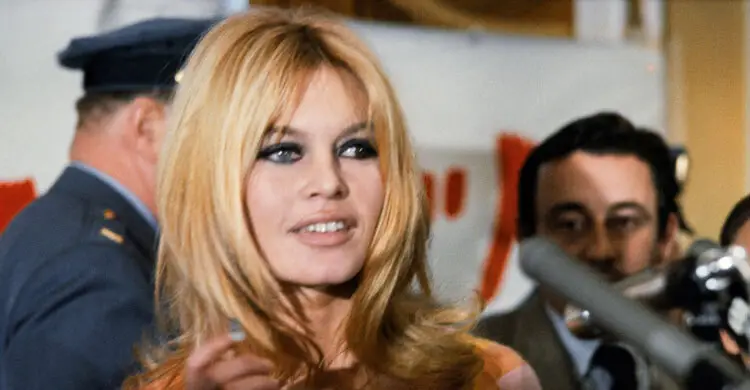
Brigitte Bardot, the legendary French actress, singer, and animal welfare advocate whose image defined an era of postwar glamour and rebellion, has died at the age of 91.
The Brigitte Bardot Foundation confirmed her passing on Sunday, though it did not disclose the time or location of her death. Bardot had been hospitalised in October and, as recently as November, issued a public statement denying earlier rumours of her demise.
"The Brigitte Bardot Foundation announces with immense sadness the death of its founder and president, Madame Brigitte Bardot – a world-renowned actress and singer who chose to abandon her prestigious career to dedicate her life and energy to animal welfare," the foundation said in a statement released to AFP.
Born on September 28, 1934, in Paris to a traditional Catholic family, Bardot rose to global fame in the 1950s as the embodiment of youthful sensuality and sexual liberation. Her breakthrough role in Roger Vadim’s 1956 film And God Created Woman shocked conservative audiences and catapulted her to international stardom. Over the next 17 years, she appeared in nearly 50 films, becoming a defining figure of the French New Wave and a global sex symbol – popularising the bikini, the beehive hairstyle, and a new archetype of feminine independence.
Yet Bardot grew disillusioned with the trappings of celebrity. “I’m sick of being beautiful every day,” she once remarked. In 1973, at the height of her fame, she abruptly retired from acting to devote herself entirely to animal rights – a cause that would dominate the second half of her life.
Her commitment began, poignantly, on the set of her final film, The Edifying and Joyous Story of Colinot, where she rescued a goat destined for slaughter and kept it in her hotel room. This moment sparked a lifelong mission. In 1986, she founded the Brigitte Bardot Foundation, which today boasts 70,000 donors and around 300 staff, campaigning against animal cruelty worldwide—from seal hunts in Canada to stray dog culling in Romania.
In a 2024 interview marking her 90th birthday, Bardot reflected: “I’m very proud of the first chapter of my life. It gave me fame, and that fame allows me to protect animals – the only cause that truly matters to me.” She lived her final years in “silent solitude” at her Saint-Tropez estate, La Madrague, surrounded by rescued animals and deliberately withdrawn from public life. She once said she wished to be buried under a simple wooden cross in her garden – “the same as for my animals” – and requested no “crowd of idiots” at her funeral.
A complex legacy
While revered as a cultural icon, Bardot’s later years were marred by controversy. She was convicted five times for inciting racial or religious hatred, primarily targeting Muslims and migrants. In a 2003 book, she declared herself “against the Islamisation of France,” and in her final publication, Mon BBcedaire –released weeks before her death – she disparaged modern France as “dull, sad, submissive” and made derogatory remarks about LGBTQ+ individuals.
These statements alienated many admirers and led to legal battles, including a highly publicised lawsuit from her only son, Nicolas-Jacques Charrier, after she wrote she would have “preferred to give birth to a little dog.” Despite this, tributes poured in from across France following news of her death.
President Emmanuel Macron hailed her as “a legend of the 20th century,” writing on X: “With her films, her voice, her dazzling glory, her initials (BB), her sorrows, her generous passion for animals, and her face that became Marianne, Brigitte Bardot embodied a life of freedom. We mourn a legend of the century.”
Jordan Bardella, leader of the far-right National Rally party, also paid homage, calling her “the Marianne the French people so loved, whose beauty astonished the world.”
Bardot is survived by her son, Nicolas, and her fourth husband, Bernard d’Ormale, a former adviser to far-right politician Jean-Marie Le Pen. Her life – marked by extraordinary fame, profound reinvention, and polarising views – reflects the contradictions of modern France itself: liberated yet traditional, global yet insular, adored yet contested.
Once the face of Marianne, France’s national symbol of liberty, Brigitte Bardot leaves behind a legacy as complex and enduring as the nation she both celebrated and critiqued.
Source: AFP, BBC