
Van Gogh Museum reunites postman Roulin, his family, and the chair

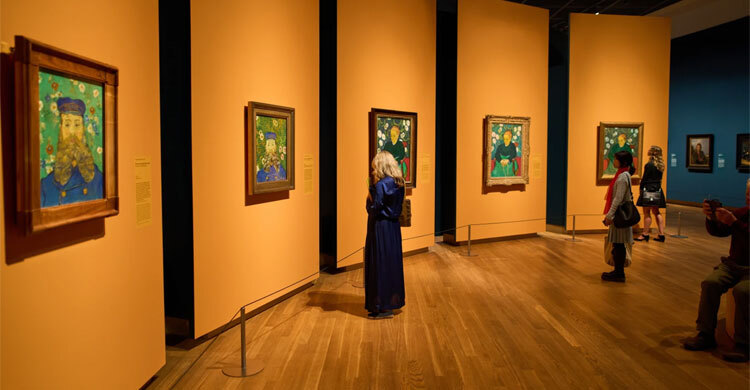
Amsterdam is playing host to an extraordinary reunion this autumn—not of long-lost relatives, but of paintings, people, and even a humble chair that once sat at the heart of Vincent van Gogh’s most human and heartfelt works.
In a quietly moving exhibition titled “Van Gogh and the Roulins: Together Again at Last,” the Van Gogh Museum has gathered the scattered portraits of Joseph Roulin, the bearded postal clerk of Arles, along with his wife Augustine, their sons Armand and Camille, and baby daughter Marcelle—subjects who offered the lonely Dutch artist far more than just their likenesses. They gave him friendship, stability, and a sense of belonging during one of his most turbulent yet creatively explosive periods.
From July 1888 to April 1889, while living in the sun-drenched town of Arles in southern France, Van Gogh painted 26 portraits of the Roulin family—a remarkable outpouring of empathy and colour that transformed ordinary working-class lives into luminous icons of dignity and warmth. Fourteen of these masterpieces are now on display in Amsterdam, having travelled from institutions across Europe and the United States, including the Museum of Fine Arts in Boston, which lent the centrepiece: The Postman (Joseph Roulin), resplendent in his navy-blue uniform with gleaming gold buttons, seated in a simple willow armchair.
But the true surprise of the exhibition isn’t on canvas—it’s in the room itself.
While preparing for the show, curators made a startling discovery in the museum’s own storerooms: the very chair Roulin sat in for that iconic portrait. Long deemed too fragile to travel, the modest Provençal armchair—crafted from local willow, worn smooth by time—had never been publicly displayed. Now, for the first time, it stands beside Van Gogh’s painting, inviting visitors to step into the artist’s studio and feel the tangible presence of history.
“As it turns out, we have this chair in our collection, but we’d never shown it before,” said Emilie Gordenker, Director of the Van Gogh Museum. “It just shows you—when you dive deep into a story, your own collection can surprise you all over again.”
The reunion goes beyond objects. In an upstairs gallery, the museum has recreated a life-size façade of Van Gogh’s famed Yellow House, where he dreamed of founding an artists’ colony and where the Roulins became his surrogate family. Letters reveal how deeply Van Gogh valued Joseph’s quiet companionship. “While Roulin isn’t exactly old enough to be like a father to me,” he wrote to his brother Theo in April 1889, “all the same he has silent solemnities and tenderness for me like an old soldier would have for a young one.”
For Van Gogh—who struggled to make friends in Arles and was often dismissed as eccentric—the Roulins were a lifeline. “He literally said that painting people brings out the best in him,” explains curator Nienke Bakker, who co-organised the exhibition with Boston’s Katie Hanson. “But it also made him feel part of humanity. That’s why these portraits are so powerful—they’re not just studies; they’re acts of connection.”
The exhibition also places Van Gogh in dialogue with his artistic ancestors, featuring works by Rembrandt and Frans Hals, whose bold brushwork and psychological depth inspired him, as well as pieces by Paul Gauguin, his short-lived housemate in the Yellow House. Yet it’s the Roulin family who anchor the show in emotional truth.
Standing before the actual chair—small, unadorned, almost fragile—visitors are reminded that Van Gogh didn’t paint gods or aristocrats. He painted postmen, mothers, children. People like us.
“It’s quite moving,” Bakker says softly, “to see this fantastic portrait—and then to realise the chair he sat in was so simple. That’s the beauty of it.”
“Van Gogh and the Roulins: Together Again at Last” opens this Friday at the Van Gogh Museum in Amsterdam and runs until 11 January 2025—a rare chance to witness not just art, but the quiet humanity behind it, finally reunited.
Source: UNB/AP