
Shankar takes final exit from Jana Aranya

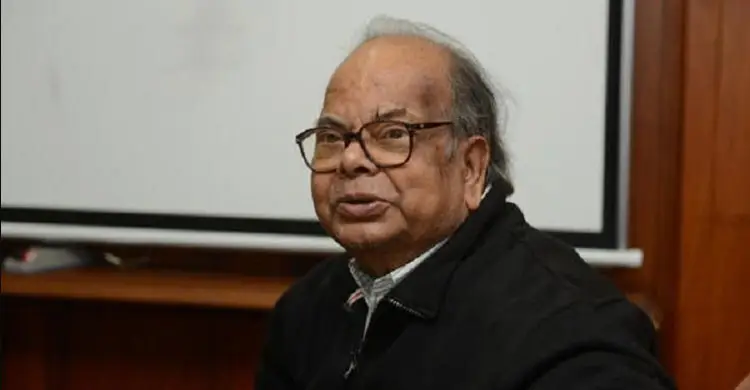
A towering voice of Bengali fiction has fallen silent. Eminent writer Mani Shankar Mukherjee, known to generations of readers simply as Shankar, passed away at around 1:30 pm on Friday while undergoing treatment at Peerless Hospital in Kolkata. He was 93.
He had long been battling age-related ailments and was diagnosed with a brain tumour. A fall at home last December left him with a fractured bone, though he recovered after treatment. About two weeks ago, he was admitted to hospital again when his condition worsened. He breathed his last there this afternoon.
Born on December 7, 1933, in Banagram in Jessore Jashore of the undivided Bengal, Shankar grew up in Howrah after his family moved to Kolkata before the Second World War. His father, Haripada Mukherjee, was a noted lawyer. From those early years in a changing Bengal, he would go on to draw the living, breathing characters who defined his fiction.
Through novels such as Chowrangi, Jana Aranya, Kumkum, Kato Ajanare, Charan Chuye Jai, Achena Ajana, Dwitiya Purusha and Manihar, he chronicled ambition, compromise, love, loneliness and the moral struggles of ordinary people. Several of his works found new life on screen, bringing his sharply observed Kolkata to cinema halls across the country.
Beyond literature, Shankar served in government service and was once the Sheriff of Kolkata. Yet it was the city’s streets, offices, hotels and middle-class homes that remained his true canvas. Few writers captured urban Bengali life with such intimacy and empathy.
His passing has cast a pall of grief over the cultural world of West Bengal. Chief Minister Mamata Banerjee expressed deep sorrow, saying that a bright star of Bengali literature had faded. She noted that from Chowrangi to Jana Aranya, his creations had captivated readers for generations and revealed the struggles and aspirations of common people.
In keeping with his quiet dignity, Shankar had expressed a final wish that there be no mourning procession. He wanted his body taken directly from the hospital to the Keoratala crematorium for the last rites.
He lived on Bondel Road in Ballygunge. His wife had passed away years ago. He is survived by two daughters, both settled abroad.
With Shankar’s departure, a chapter of Bengali storytelling closes. But in the pages of his novels, the city he loved and the people he wrote about will continue to breathe.
As enduring as his place in the hearts of readers was the appeal of his stories to filmmakers. His novels did not remain confined to the printed page. They travelled to cinema halls, where new generations encountered his characters through light and shadow.
Many recall that legendary director Satyajit Ray adapted Shankar’s Jana Aranya for the screen, making it a key part of his celebrated Kolkata trilogy. Ray’s film remains one of the most powerful portrayals of moral compromise and survival in a changing city.
Yet Ray was not alone in returning to Shankar’s pen.
Pinaki Bhushan Mukherjee
Based on Shankar’s iconic novel Chowrangi, the film Chowrangi was released in 1968. Directed by Pinaki Bhushan Mukherjee and starring Uttam Kumar, Anjana Bhowmik and Shuvendu Chatterjee, the film was a major success and is still regarded as a classic of Bengali cinema. Its portrayal of life inside a grand Kolkata hotel mirrored the novel’s sharp insight into ambition and loneliness.
Srijit Mukherji
Decades later, Srijit Mukherji revisited the same world in a contemporary setting with Shahjahan Regency. Featuring Abir Chatterjee, Parambrata Chatterjee, Swastika Mukherjee and Mamata Shankar, the film reintroduced Shankar’s hotel universe to a new generation, proving that his themes remain timeless.
Ritwik Ghatak
In 1959, Ritwik Ghatak began work on a film based on Shankar’s novel Kato Ajanare. Around twenty days of shooting were completed. Financial and production difficulties, however, forced the project to remain unfinished. Even in its incompleteness, it stands as a poignant footnote in the history of Bengali cinema.
Basu Chatterjee
Shankar’s reach extended beyond Bengal. Based on his novel Manasamman, the Hindi film Sheesha was directed by Basu Chatterjee and starred Mithun Chakraborty and Moonmoon Sen. Through this adaptation, his storytelling found an all-India audience.
Shankar was not merely a novelist. His writing carried a deep understanding of time, society and the fragile dreams of ordinary people. That is why filmmakers kept returning to his work, each interpreting it in their own language and style.
With his passing, Bengali literature loses one of its most observant chroniclers. But on bookshelves and cinema screens, his Kolkata, with all its light and shadow, will endure.