
Beyond the Bengalis: The many faces of Durga Puja in Bangladesh

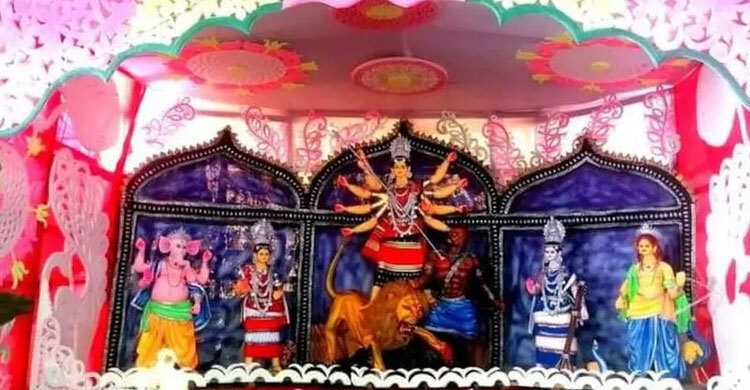
When most people picture Durga Puja in Bangladesh, they imagine the grand pandals of Dhaka’s Kalabagan or the glittering idols at Dhakeshwari Temple, festivities steeped in Bengali Hindu tradition. But look beyond the mainstream, and you’ll find a far richer, more diverse celebration unfolding in villages, hills and riverbanks across the country.
Durga Puja isn’t just a Bengali affair. In fact, at least 15 indigenous ethnic communities in Bangladesh, many of them small and often overlooked, observe the festival with their own rituals, rhythms and reverence. From the rinai-clad goddesses of the Tripura to the duck sacrifices of the Patra, Durga takes on many forms in this pluralistic landscape.
“Durga isn’t just a goddess to us—she’s a symbol of power, protection and the earth’s energy,” Sanjeeb Drong, leader of the Bangladesh Adivasi Forum, tells BBC Bangla. “For many of these communities, she’s been woven into traditions that long predate modern Hinduism.”
A tapestry of traditions
While Bengali Durga Puja is defined by Sanskrit mantras, elaborate clay idols and the ritual of Sindur Khela, indigenous celebrations follow a different script – one rooted in animism, ancestral customs and local cosmology.
Take the Tripura, one of Bangladesh’s largest indigenous Hindu groups, with over 1,30,000 members concentrated in the Chittagong Hill Tracts and parts of Sylhet and Cumilla. For generations, they’ve celebrated Durga Puja much like their Bengali neighbours – but with a distinct cultural twist.
“We used to dress Durga in a Bengali sari,” says Falguni Tripura, coordinator of the Bangladesh Indigenous Women’s Network. “Now, we clothe her in rinai-risa, the traditional handwoven attire of Tripura women. New ones are made specially for the puja.”
Even more significantly, the community has reclaimed its spiritual voice. “Earlier, we hired Bengali Brahmin priests,” Falguni explains. “But for the past few years, we’ve trained our own Tripura priests to chant the mantras—in our own way.”
Harvest Gods and duck sacrifices
Not all indigenous Durga Pujas revolve around the same narrative. For the Hajong people of Mymensingh, Netrokona and Sherpur, Durga Puja is observed—but it’s not their most sacred festival. That honour goes to Deuli Puja, a vibrant harvest celebration marked by mud wrestling, water games and community feasts.
“Durga Puja is part of our calendar, but it’s adapted to our agricultural life,” says Sujan Hajong, director of the Cultural Academy of Minor Ethnic Groups in Birishiri. “We use our own priests, build our own-style pandals, and keep the rituals close to our roots.”
Meanwhile, the little-known Patra community in Sylhet calls their version of the festival ‘Khemung Larang’. Introduced only 30–35 years ago, their Durga Puja is conducted entirely in their mother tongue—not Sanskrit—and includes the ritual sacrifice of ducks, followed by communal singing and dancing.
“Ours is not the Durga of marble temples,” says Gauranga Patra, head of the Patra Community Welfare Council. “She’s the Durga of our soil, our language, our survival.”
Nature, ancestors and the divine feminine
Many of these groups like the Oraon, Banai, Koch and Mahato were originally nature worshippers. Some venerate the sun; others revere rice, trees or even the human mind as divine. Over time, especially during the British colonial era, the figure of Durga was integrated into their spiritual frameworks, not as a replacement, but as an embodiment of the same cosmic force they’d always honoured.
The Banai, who live near Dhaka in Savar and Gazipur, now dress Durga in their traditional pathin garment and conclude the festival with ‘panck khela’ – a spirited mud play that echoes their agrarian joy.
The Koch community, meanwhile, blends Durga Puja with worship of Kali and Saraswati, reflecting a syncretic spirituality shaped by geography and history.
A slow convergence
Interestingly, over the past 25-30 years, many indigenous Durga Pujas have begun to resemble Bengali-style celebrations, more ornate idols, brighter lights, louder music. Yet community leaders insist this is not imitation, but evolution.
“We’re proud of our identity,” says Manindra Kumar Nath, president of the Metropolitan Universal Puja Committee. “Even as we adopt new forms, we hold fast to our core rituals. Our Durga may wear a rinai or a pathin, but she is still our mother.”
More than a festival
For Bangladesh’s indigenous communities, Durga Puja is more than a religious observance—it’s an act of cultural preservation. In a nation where their languages, lands and rights are often marginalised, the festival becomes a space to assert identity, pass down knowledge and celebrate resilience.
As dusk falls on Dashami and the idols dissolve into rivers from the Buriganga to the Karnaphuli, the message echoes across communities: Durga may ride a lion in Bengali lore—but in the hills and fields of Bangladesh, she also walks barefoot in rinai, dances in mud, and speaks in a hundred mother tongues.
And in that diversity lies the true spirit of the goddess.