
When the circus came to town and the world stopped

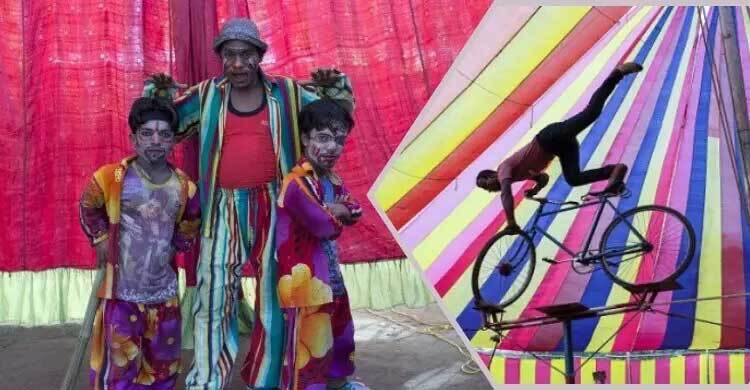
There was a time when the news travelled faster than the wind: the circus is coming.
In villages and small towns across Bangladesh, the words alone were enough to set hearts racing. Children ran barefoot through dusty lanes spreading the news. Colourful posters appeared overnight on market walls. By evening, a tall canvas tent would rise from an empty field like a small kingdom of wonder.
When the drums began to beat, the whole town seemed to gather.
Inside the ring, life felt larger than reality. A man walked across a rope as thin as hope. A cyclist spun in dizzy circles without touching the ground. Acrobat bodies flew through the air like birds. And in the middle of it all stood a painted clown, laughing louder than anyone else.
For a few magical hours, the ordinary world disappeared.
Today, that magic is slowly fading.
A circle of wonder
The word “circus” comes from the Latin circus, meaning a circle or ring. Long before it arrived in South Asia, the idea of a circular arena for entertainment existed in ancient Rome. Centuries later, the modern circus took shape in London in the late eighteenth century and gradually travelled across continents.
Wherever it went, the formula was simple but irresistible: a ring, a crowd and performers brave enough to turn danger into spectacle.
Tightrope walkers balanced between life and gravity. Jugglers tossed knives into the air. Acrobat troupes twisted their bodies into impossible shapes. The entire performance lived on suspense, skill and courage.
And then there was the clown.
The man behind the painted smile
Among all circus performers, the clown held a special place in the audience’s heart.
With faces buried beneath thick white paint and oversized costumes, they transformed simple clumsiness into art. One moment, they were slipping, falling and bumping into each other. The next moment, they were frightening the crowd with exaggerated gestures before bursting into another wave of laughter.
The strange beauty of the clown was that nobody knew who the real person behind the mask was.
Children laughed. Adults laughed even louder.
But behind the painted smile often lived a performer carrying years of training, exhaustion and quiet resilience.
When the circus travelled
Unlike theatres or cinemas, circuses lived on the road.
Huge tents, bamboo poles, ropes and wooden seats travelled from district to district. Sometimes, entire families grew up inside these moving worlds. Children of performers learned acrobatics before they learned to write their names.
In those days, the arrival of a circus was the biggest entertainment a town could imagine. People waited months for the next show. Even those who could barely afford a ticket would find a way to stand near the tent to hear the cheers.
For many communities, the circus was not just entertainment. It was an event that brought people together.
The silence after the applause
But the world outside the circus ring has changed.
The same crowds that once filled the tents now sit quietly at home, scrolling through endless videos on glowing screens. Spectacular performances from around the world are available instantly on mobile phones.
Against that endless stream of digital entertainment, the travelling circus struggles to survive.
According to the Bangladesh Circus Owners' Association, only about 25 registered circus troupes remain in the country today, along with a few others operating informally. Each troupe supports nearly a hundred people, from performers and assistants to stage workers and technicians.
Many of them belong to families who have served the circus for generations.
Yet the income that once sustained them is shrinking. Several historic troupes that flourished before and after the country’s independence have already disappeared. Some performers have abandoned the profession. Others face unemployment.
A heritage on the edge
For those who remain, the circus is more than a job. It is a way of life built on courage, discipline and tradition.
They believe the circus is a living piece of cultural heritage, where physical artistry, humour and storytelling come together under a single tent.
But without new audiences, stronger support and renewed appreciation, the fear grows that the circus may soon become nothing more than a nostalgic memory.
And when that day comes, the drumbeats that once summoned entire towns will fall silent.
The empty field will remain.
But somewhere in the fading twilight of memory, a clown will still be standing in the ring, smiling beneath his paint, waiting for the applause that may never return.