
8 killed in escalating protests in Azad Kashmir

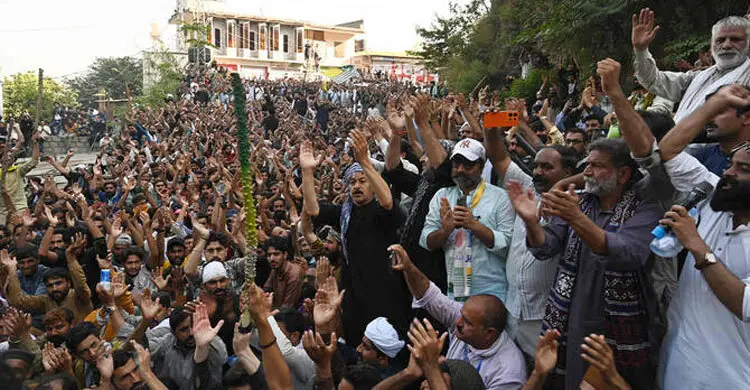
At least eight people, including three police officers and five civilians, have been killed in four days of violent unrest in Azad Jammu and Kashmir (AJK), Pakistani officials confirmed on Thursday, as Prime Minister Shehbaz Sharif urgently dispatched a high-level federal delegation to the region’s capital, Muzaffarabad, to broker peace.
The protests erupted on Monday when thousands from surrounding towns converged on Muzaffarabad, demanding an end to what activists describe as “elite privileges” enjoyed by local politicians and bureaucrats—and challenging the reservation of seats in the AJK legislature for representatives from mainland Pakistan, a practice critics say undermines local autonomy.
With phone lines and internet access severed across the region—a move authorities say is for “security reasons”—images from Muzaffarabad showed riot police firing tear gas on demonstrators gathered on a key bridge, while businesses, schools, and public transport remained shut for a fourth consecutive day.
In response to the escalating crisis, Prime Minister Sharif convened an emergency meeting and formed a special negotiation committee comprising senior federal ministers, senators, and former AJK leaders, including Ahsan Iqbal, Rana Sanaullah, Sardar Yusuf, Amir Muqam, and former AJK President Masood Khan.
“The government is always ready to resolve the problems of our Kashmiri brothers,” Sharif said in a statement, urging protesters to engage in dialogue and calling on law enforcement to “exercise restraint and patience.”
The delegation held formal talks on Thursday with the Joint Awami Action Committee (JAAC), the coalition leading the protests. Parliamentary Affairs Minister Tariq Fazal Chaudhry confirmed the start of negotiations on social media, posting photos of the federal team meeting JAAC representatives in Muzaffarabad.
Speaking before the talks, Ahsan Iqbal warned that “certain elements” might seek to exploit the unrest to destabilise Pakistan, urging Kashmiris to ensure their legitimate grievances were not hijacked by “enemies of the state.”
Other delegation members echoed calls for peace. Raja Pervaiz Ashraf described the JAAC as “honourable people” and stressed unity: “Their pain is our pain.” Rana Sanaullah added, “Violence is not the solution—we will resolve this within the framework of the Constitution.”
The core grievances stem from deep-seated resentment over economic inequality and political marginalisation. As Shaukat Nawaz Mir, a JAAC leader, told local media: “When hospitals lack medicines, they claim there’s no money—but they always have funds for luxury cars and lavish lifestyles.”
Similar protests last year led to four deaths before the federal government approved a ₨24 billion ($86 million) relief package, including subsidies on flour and electricity. But activists say systemic issues remain unaddressed.
Prime Minister Sharif has ordered a transparent investigation into the deaths, pledged immediate aid to affected families, and appealed to JAAC leaders to “cooperate fully” with the negotiation process. The committee is expected to submit its recommendations to the Prime Minister’s Office “without delay.”
In a final appeal, Sharif affirmed that peaceful protest is a constitutional right—but urged citizens to “refrain from actions that harm public order.”
As Muzaffarabad remains under a communications blackout and tension simmers, all eyes are now on whether dialogue can succeed where force has failed.