
Delhi’s diplomatic dare: India hosts Taliban FM, sparks global scrutiny

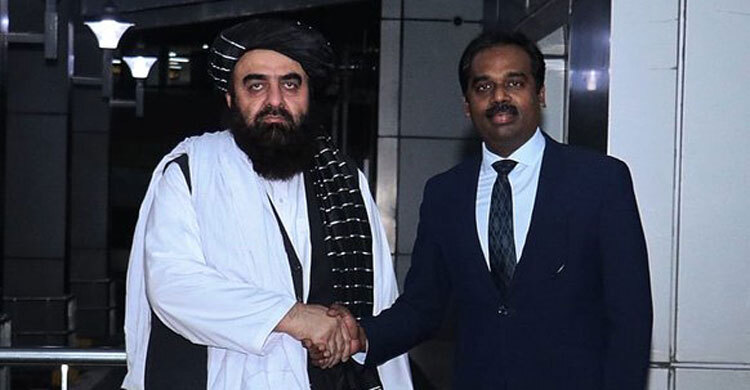
In a move drawing regional and international scrutiny, India has allowed Taliban Foreign Minister Amir Khan Muttaqi — a man listed under UN sanctions for terrorism — to visit New Delhi on an eight-day official trip beginning Thursday.
Muttaqi’s arrival comes after a special exemption was granted by the UN Security Council Committee, as confirmed by Indian Ministry of External Affairs spokesperson Randhir Jaiswal. The timing, however, has sparked speculation — coinciding with UK Prime Minister Sir Keir Starmer’s first visit to India, where trade and defence cooperation are high on the agenda.
A diplomatic balancing act or a double standard?
Observers say India’s decision to host a senior Taliban leader exposes a deep contradiction in its foreign policy — claiming to champion democracy and human rights while engaging a regime that has banned girls’ education, suppressed dissent, and ruled by fear.
Critics point out that New Delhi, which once backed Afghanistan’s democratic governments and denounced the Taliban as extremists, now appears willing to engage them for strategic gain. “India seems to have quietly shifted from isolation to cautious recognition,” one South Asian analyst told The Hindu.
Muttaqi, who remains under UN travel sanctions, will reportedly be accorded full ministerial protocol in Delhi, meeting External Affairs Minister S. Jaishankar on October 10 at Hyderabad House. He is also expected to meet business representatives, raising questions about the extent of India’s normalization with the Taliban regime.
Geopolitics behind the gesture
According to Afghan media outlet Amu TV, Muttaqi’s trip was personally authorized by Taliban supreme leader Hibatullah Akhundzada, who met him in Kandahar before his departure. The report suggests that India’s growing engagement with the Taliban reflects security and strategic motivations, especially amid the Taliban’s worsening ties with Pakistan.
“India has always favoured a democratic Afghanistan but is now showing interest in the Taliban primarily due to security concerns and its long-standing rivalry with Pakistan,” Amu TV noted.
In recent months, multiple Taliban officials have visited India, including Minister for Medicines and Food Hamdullah Zahid, who attended a pharmaceutical exhibition in September. India has also delivered humanitarian aid to Afghanistan via Iran’s Chabahar Port, signaling quiet but sustained diplomatic contact.
Pakistan factor and the recognition question
Analysts believe Delhi’s outreach to the Taliban is partly driven by Islamabad’s declining influence over Kabul. “Relations between the Taliban and Pakistan have soured, and India is moving quickly to fill that vacuum,” said Wahid Fakiri, an Afghan political commentator quoted by Tolo News.
Recognition of the Taliban government reportedly tops Muttaqi’s agenda. “I don’t think India will formally recognise the Taliban yet,” said political analyst Syed Akbar Shial Wardak. “But this visit will help New Delhi gauge how far it can go in expanding ties without upsetting Western partners.”
Reports in Afghan media suggest the two sides may also discuss expanding India’s diplomatic presence in Kabul, potentially through the appointment of a full-time ambassador — a step that would mark a major diplomatic shift.
Regional optics: Moscow format and western irony
Muttaqi’s India visit follows his participation in the Moscow Format Consultations, hosted by Russian Foreign Minister Sergei Lavrov, where India was also represented. The forum’s joint statement indirectly criticised US efforts to maintain military influence in the region, signalling Delhi’s quiet alignment with Moscow and Beijing on Afghanistan — a move seen by some as contradictory to its Western alliances.
Backlash and criticism
Delhi’s warm reception of a sanctioned Taliban leader has sparked outrage among Afghan civil society and international observers.
Prominent Afghan journalist Habib Khan posted on X: “Dear India, the hospitality of Taliban officials is a betrayal of the Afghan nation and a slap in the face to girls banned from school. The world’s largest democracy can do much better.”
Former US diplomat Jon F Danilowicz also weighed in sharply: “Imagine what the reaction in New Delhi would be if Bangladesh received a senior Taliban leader. This is such blatant hypocrisy.”
India’s quiet realpolitik
While the Indian government remains tight-lipped on whether it intends to recognise the Taliban, its actions point toward a pragmatic recalibration of policy — one shaped less by ideology and more by regional calculus.
As the world’s largest democracy rolls out the red carpet for a man still under UN terror sanctions, the question resonates across diplomatic circles: Is India normalising extremism in the name of strategic necessity — or quietly redrawing the moral lines of its foreign policy?