
Mamdani secures highest votes in nearly 60 years

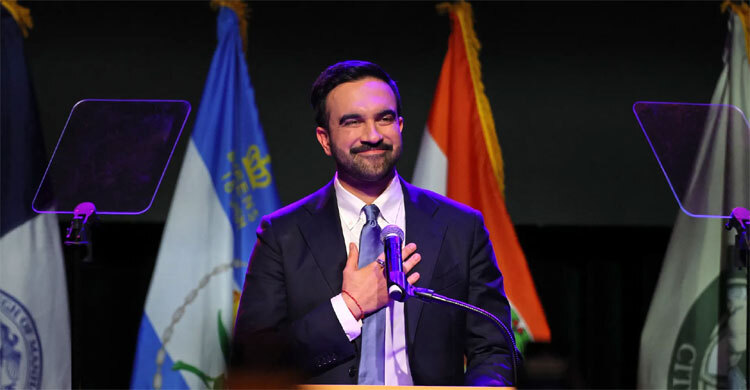
In a landmark moment for New York City politics, Zohran Kwame Mamdani has been declared the winner of the 2025 mayoral election, capturing over one million votes – a feat not achieved by any mayoral candidate since 1965.
With 91 per cent of ballots counted, Mamdani had secured 10,36,051 votes, representing 50.4 per cent of the total, according to the latest official tally from the New York City Board of Elections.
His closest rival, former Governor Andrew Cuomo, running as an independent, received approximately 8,50,000 votes (41.6 per cent), while Republican candidate Curtis Silva garnered 1,46,137 votes (7.1 per cent). Mamdani’s winning margin of roughly 186,000 votes signals a clear mandate from a diverse and engaged electorate.
Mamdani’s vote total is the highest in a New York City mayoral race in 60 years. The last candidate to surpass one million votes was Republican John V Lindsay, who won the 1965 election with 11,49,106 votes. However, even Lindsay’s total paled in comparison to the record-setting turnouts of the late 1950s and early 1960s under Mayor Robert F Wagner Jr, a Democrat who won re-election in 1961 with more than 1.2 million votes and, in 1957, set an enduring record with over 1.5 million – a figure that remains unmatched in the city’s history.
City election records indicate that turnout gradually declined after Wagner’s era, influenced by demographic shifts, changing voter registration laws, and evolving political engagement.
Mamdani’s achievement – reaching the one-million-vote threshold in today’s vastly different electoral landscape – reflects both a surge in voter mobilisation and the high stakes perceived by New Yorkers in this election.
Mamdani, a progressive city councillor known for his advocacy on housing justice, climate resilience, and public transportation reform, ran on a platform centred on “rebuilding the city for the many, not the few.” His campaign energised younger voters, immigrant communities, and working-class neighbourhoods across the five boroughs.
In contrast, Cuomo positioned himself as a pragmatic centrist, appealing to moderate Democrats and independents disenchanted with progressive policies. Curtis Silva, the Republican nominee, focused on public safety and fiscal restraint but struggled to gain traction in a city that has not elected a Republican mayor since 1993.
Analysts say Mamdani’s ability to consolidate support across traditionally fragmented coalitions –particularly among Black, Latino, South Asian, and young voters—was pivotal to his historic result.
Early voting and same-day registration initiatives also contributed to robust participation, especially in outer-borough communities.
Political historians note that raw vote totals alone do not always reflect a candidate’s popularity, as the city’s population and electorate have changed dramatically since the mid-20th century. Yet, reaching the one-million mark in 2025 – amid widespread voter apathy in many US local elections – carries symbolic and practical weight.