
Dhaka situation Delhi’s biggest strategic challenge since 1971: Lok Sabha panel

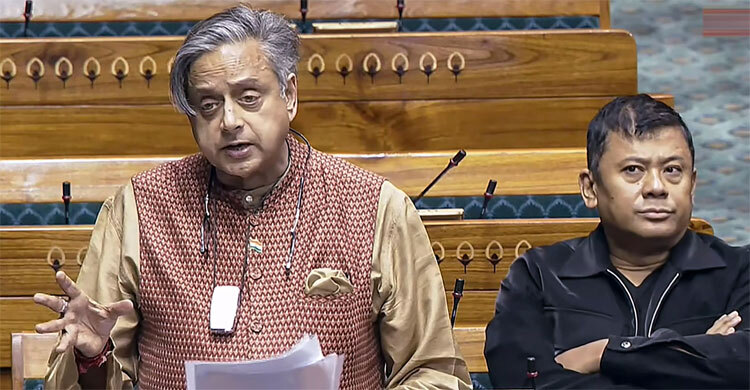
The unfolding situation in Bangladesh presents the “greatest strategic challenge” for India since 1971, a Lok Sabha committee led by Congress MP Shashi Tharoor has warned, urging New Delhi to recalibrate its approach to avoid losing strategic relevance in Dhaka.
While the panel noted that the situation in Bangladesh is unlikely to descend into “chaos and anarchy”, it cautioned that India must handle the moment with care.
The committee traced the roots of the unrest to a convergence of factors, including the rise of Islamic radicalism, “intensifying Chinese and Pakistani influence”, and the “collapse of the political dominance of Sheikh Hasina’s Awami League”.
“While the challenge in 1971 was existential – humanitarian and centred on the birth of a new nation –the present crisis represents something graver: a generational discontinuity, a shift in political order, and a potential strategic realignment away from India,” observed the Parliamentary Standing Committee on External Affairs.
“If India fails to recalibrate at this moment, it risks losing strategic space in Dhaka – not to war, but to irrelevance,” it added.
The committee expressed particular concern over Bangladesh’s evolving relationship with Pakistan and the expanding footprint of China, especially in infrastructure, port development and defence cooperation. It cited projects such as the expansion of Mongla Port, the Lalmonirhat airbase, and the submarine base at Pekua – capable of accommodating eight submarines, despite Bangladesh currently possessing only two.
China, the panel noted, has been engaging across Bangladesh’s political spectrum, including Jamaat-e-Islami. Leaders of the Islamic party have also visited China.
To counter these developments, the panel recommended that India strictly monitor and prevent any foreign military foothold in Bangladesh, while offering Dhaka a comparative advantage through development partnerships, enhanced connectivity and access to ports.
On the growing influence of Islamist forces, the committee pointed out that Jamaat-e-Islami has had its electoral registration reinstated, allowing it to contest upcoming elections. At the same time, Bangladesh’s interim government has imposed a ban on the Awami League, barring it from political participation.
“The continuing ban on the Awami League will obviously call into question the inclusiveness of any future elections in Bangladesh,” the panel warned.
Amid a deteriorating security situation, New Delhi has adopted a measured response to statements from Bangladesh that directly threaten India’s sovereignty and territorial integrity. The panel also flagged attacks on minorities and rising anti-India rhetoric – particularly targeting India’s northeastern states – under the interim administration led by Muhammad Yunus.
According to the report, the interim government has been actively seeking closer ties with Pakistan and China at the expense of Bangladesh’s historic relationship with India.