
Pakistan forces kill 145 after Balochistan attacks, combing for perpetrators

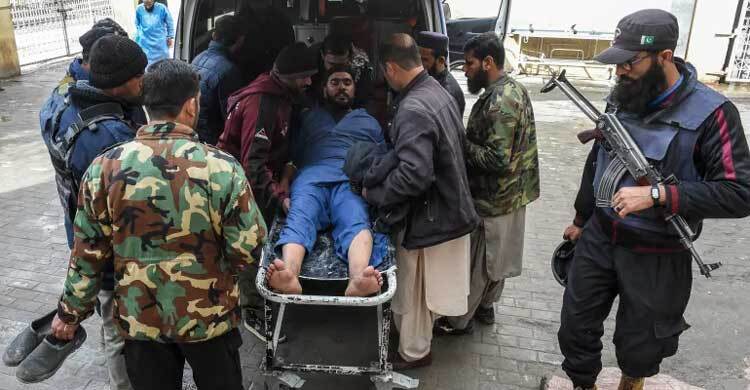
Pakistan’s security forces have killed at least 145 people following a wave of coordinated attacks across Balochistan, one of the deadliest flare-ups in the restive province in recent years, provincial authorities said on Sunday.
Balochistan Chief Minister Sarfaraz Bugti said the militants were killed during raids conducted over a 40-hour period on Friday and Saturday, as well as in ongoing clearance operations. Earlier, the military had reported the killing of 92 'separatists' on Saturday alone.
Bugti said the violence claimed the lives of at least 17 law enforcement personnel and 31 civilians, bringing the overall death toll to more than 190. He described the latest operation as the largest and most intense counterinsurgency response in the province in recent years.
The attacks were carried out simultaneously in several districts, including Quetta, Gwadar, Mastung and Noshki, with militants targeting banks, jails, police stations and military installations. Authorities said hospitals in several areas were placed on emergency alert, while mobile internet services were suspended across the province for more than 24 hours. Road traffic remained disrupted, and train services were suspended.
After explosions rocked the provincial capital, Quetta remained largely deserted on Sunday, with major roads empty and businesses closed amid heightened security. Shattered debris and damaged vehicles were seen on several streets.
“Anyone who leaves home has no certainty of returning safely,” said Hamdullah, a 39-year-old shopkeeper in Quetta. “There is constant fear.”
Security officials said separatists attempted to seize control of key installations, but the attacks were repelled. The military said no city or strategic site fell into militant hands.
The banned Baloch Liberation Army (BLA) claimed responsibility for the attacks, saying it had launched a coordinated operation named Herof, or “black storm”. In statements and videos shared with the media, the group said it targeted security forces, police and civil administration officials through gun attacks and suicide bombings.
Authorities said militants freed at least 30 inmates from a district jail, looted weapons and ammunition from police stations, and abducted a deputy district commissioner in Noshki district. Videos released by the insurgents showed armed fighters moving through towns on motorcycles, including footage featuring women insurgents. Pakistan’s defence minister later confirmed that at least one of the suicide bombers was a woman.
Chief Minister Bugti said all affected districts had been cleared by Sunday. “We are chasing them. We will not let them go so easily,” he said. “Our blood is not cheap. We will pursue them until their hideouts.”
Pakistan’s interior and defence ministers accused India of backing the attackers, an allegation New Delhi strongly denied.
“We categorically reject the baseless allegations made by Pakistan,” Indian foreign ministry spokesperson Randhir Jaiswal said, accusing Islamabad of attempting to divert attention from its internal challenges.
Balochistan, Pakistan’s largest but poorest province, has faced a decades-long separatist insurgency led by ethnic Baloch groups demanding greater autonomy and a larger share of revenues from the province’s rich natural gas and mineral resources. Militants have frequently targeted security forces, non-local Pakistanis and foreign companies involved in energy and infrastructure projects.
Security analysts said the scale and coordination of the latest attacks were particularly alarming.
“It was one of the most audacious assaults in recent years, carried out in broad daylight and reaching the provincial capital,” said Abdul Basit of the S. Rajaratnam School of International Studies in Singapore. “The visibility of women insurgents also signals a strategic shift.”
Pakistan continues to face militant violence in other parts of the country as well, including attacks by Islamist groups linked to the Pakistani Taliban, compounding the country’s security challenges.
Source: AFP, Al Jazeera