
Iran vows ‘eye for an eye’ as US declares ‘most intense day’ of strikes

Tensions in the ongoing war involving Iran, the United States and Israel intensified on Tuesday as Tehran warned it would retaliate against infrastructure targets if its own critical facilities are attacked.
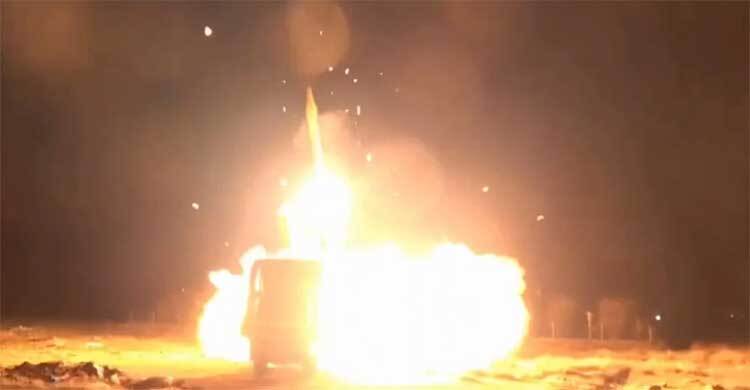
Iran has launched several types of missiles, including hypersonic weapons, in its latest round of attacks targeting US and Israeli facilities, according to a statement from the Islamic Revolutionary Guard Corps (IRGC).
The semi-official Mehr News Agency reported that the strikes were part of the 34th wave of attacks carried out by the IRGC against US and Israeli targets. The statement said Iran deployed three types of missiles, along with hypersonic missiles, which can travel at more than five times the speed of sound.
According to the IRGC, the attacks targeted US military installations in the Middle East, including American troops stationed at Al-Dhafra Air Base near Abu Dhabi in the United Arab Emirates and Jufair Air Base in Bahrain. The statement also said several Israeli sites were targeted, including Ramat David Air Base and Haifa’s civilian airport.
The IRGC further claimed that Iranian missiles struck what it described as hidden Israeli missile launchers east of Tel Aviv.
Meanwhile, the Israeli military said it had detected missiles fired from Iran toward Israeli territory. In a statement, the military said its air defence systems were actively working to intercept the incoming missiles.
The reports from Israel came shortly after the IRGC announced the latest wave of strikes, signalling a further escalation in the ongoing confrontation between Iran and Israel.
Iran’s Parliament Speaker Mohammad Bagher Ghalibaf declared that the country would follow an “eye for an eye” approach in response to any aggression.
“No act of aggression will go unanswered. Today we declare the rule of ‘an eye for an eye’ – without hesitation and without exception,” Ghalibaf wrote in a post on X.
He warned that if the “enemy” launches attacks against Iran’s infrastructure, Tehran would respond in kind. “If they begin a war against infrastructure, we will certainly target infrastructure in return,” he said.
The warning came as Iran’s Islamic Revolutionary Guard Corps (IRGC) rejected US claims that its missile capabilities had been destroyed. The force said it continues to deploy missiles in greater numbers, including projectiles carrying warheads weighing more than one tonne.
Meanwhile, the Israeli military said it had detected missiles launched from Iran toward Israeli territory. In a statement, the army said its defence systems were working to intercept the incoming threats.
Iran also announced a crackdown on suspected espionage activities linked to the conflict. The country’s Intelligence Ministry said it had arrested 30 people in recent days accused of spying or collaborating with the United States and Israel.
According to a statement cited by the Tasnim news agency, one of those detained is a foreign national accused of passing sensitive security information to two Persian Gulf governments, which allegedly shared the information with Washington and Tel Aviv. Nineteen others were described as “field and media operatives” linked to anti-government groups and alleged contacts of Israel.
Despite the escalating conflict, Israeli officials said they are not seeking an indefinite war. Israeli Foreign Minister Gideon Saar said the government would coordinate with the United States on determining when hostilities should end.
“We are not looking for an endless war,” Saar told reporters in Jerusalem, adding that consultations with Washington would determine the appropriate time to conclude military operations.
However, analysts say the war could become prolonged if both sides continue escalating. Andreas Krieg, an associate professor of security studies at King’s College London, said Iran currently holds “escalation dominance” in the conflict.
“The US may try to dictate the terms of the war and eventually claim victory, but the Iranians may not allow that,” he said, warning that prolonged conflict could disrupt energy supplies, maritime routes and regional security.
Iranian officials have indicated that Tehran is prepared for a prolonged confrontation. They said Iran’s armed forces are ready for a war of attrition and that the duration of the conflict will ultimately be determined by Tehran.
Iranian President Masoud Pezeshkian also issued a defiant message, dismissing claims that the country could be defeated.
“Anyone who entertains the illusion of destroying Iran knows nothing of history,” he wrote on X. “Aggressors have come and gone; Iran has endured.”
Meanwhile, the IRGC said its latest wave of missile strikes targeted US and Israeli military sites, including American forces stationed at the Al-Dhafra airbase near Abu Dhabi and Bahrain’s Jufair base, as well as Israeli facilities such as the Ramat David airbase and Haifa’s civilian airport.
In Washington, US Defence Secretary Pete Hegseth warned that Tuesday could mark the most intense day of strikes against Iran since the conflict began.
At the same time, the Trump administration is facing growing pressure at home as the economic consequences of the war begin to be felt. Rising fuel prices and concerns over global supply chains have led some lawmakers and voters to question the conflict’s long-term objectives.
Despite the tensions, daily life in Iran continues under the shadow of war. A shopkeeper in Tehran’s historic Grand Bazaar told Reuters that businesses had gradually begun reopening after initial closures caused by the strikes.
“Life has to go on, even in wartime,” he said, noting that while customer numbers remain lower than before, traders hope conditions will eventually stabilise.
Source: Al Jazeera