
Traditional media faces disinterest in Bangladesh

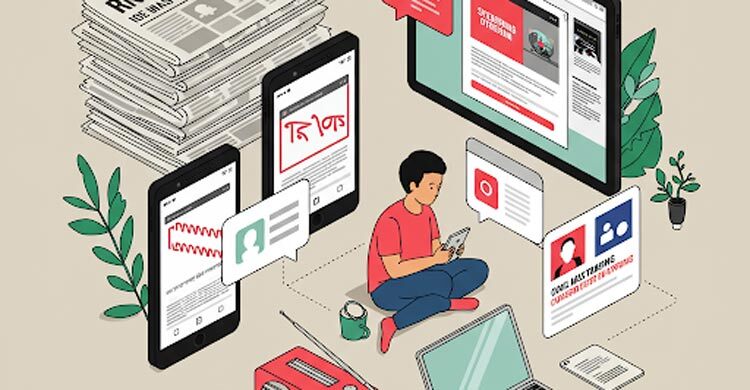
Seventy-three per cent of Bangladeshis no longer read printed newspapers, while an astonishing 94 per cent do not listen to radio, according to a survey conducted by the Bangladesh Bureau of Statistics (BBS) for the Media Reform Commission that reveals a stark shift away from traditional media.
This national-level study underscores the evolving landscape of media consumption and raises questions about the future of legacy outlets in the country in an era where digital technology dominates how people consume information.
A new era of media consumption
The survey paints a clear picture: mobile phones have become the primary gateway to news and information for most Bangladeshis. Here are some key takeaways:
Printed newspapers losing ground
Just 27 per cent of respondents still read printed newspapers, with nearly half (46 per cent) citing a lack of necessity as the main reason for abandoning them. Still, print media remains a trusted source for many but its relevance is waning as readers migrate online.
Radio's diminishing role
Radio faces an even greater challenge, with 94 per cent of respondents stating they don’t tune in. Reasons include both changing preferences and the unavailability of radios in households (35 per cent). For younger generations especially, podcasts and social media platforms have replaced traditional broadcasting.
Television: Still relevant but slipping
Television retains its dominance as a medium, with 65 per cent of respondents watching it regularly. However, this number is declining, particularly during non-crisis times. People turn to TV primarily during emergencies or national disasters, indicating its role as a fall-back rather than a go-to source.
Mobile phones dominate
An overwhelming 88 per cent of respondents use mobile phones to access media content, making smartphones the backbone of modern journalism in Bangladesh. Computers, laptops, and tablets lag far behind at just 7 per cent usage.
Online news gains traction
Despite the decline in print readership, 59 per cent of respondents now read the online versions of newspapers through their mobile phones, showing that established brands are adapting to digital trends. Only 2.5 per cent rely on desktop devices for similar purposes.
Social media takes centre stage
Social media platforms like Facebook (trusted by 31 per cent) and YouTube (trusted by 16.5 per cent) have emerged as significant sources of news. Their accessibility and real-time updates make them appealing alternatives to conventional outlets.
Teachers emerge as trusted educators
Interestingly, teachers were identified as the most trusted source of knowledge, with 42 per cent of respondents favouring them over media organisations. This reflects a growing preference for direct, reliable information outside the realm of traditional journalism.
Public scepticism toward media bias
Despite overall trust in the media, respondents expressed concerns about external influences compromising journalistic integrity. Political interference, government pressure, and manipulation by powerful groups were cited as major obstacles to objective reporting.
State-owned entities such as Bangladesh Television and Bangladesh Betar remain under government control, despite calls for greater independence. Many participants believe these institutions should stay within state jurisdiction, underscoring conflicting views on media autonomy versus accountability.
Behind the numbers: methodology and scope
Conducted between January 1 and January 7, the survey collected responses from members of 45,000 households across all 64 districts. Participants aged 10 and above provided valuable insights into their media habits, highlighting shifting trends in news consumption and public perception.
Implications for the future
The survey results signal a profound transformation in how Bangladeshis engage with media. Legacy outlets face mounting pressure to innovate and meet the demands of tech-savvy audiences. Meanwhile, digital platforms must strive to maintain accuracy and credibility amid rapid growth.
As the interim government seeks to reform the media sector, addressing public scepticism and ensuring transparency will be vital. Restoring faith in journalism—not just as a profession but as a democratic institution—will require concerted efforts to eliminate bias and uphold ethical standards.
This landmark study offers critical data for policymakers, media houses, and stakeholders navigating Bangladesh's evolving media ecosystem. By understanding these dynamics, traditional and digital players alike can work toward creating a more inclusive, accessible, and trustworthy media environment for all citizens.