
Vaccination card crisis hampers birth registration across country

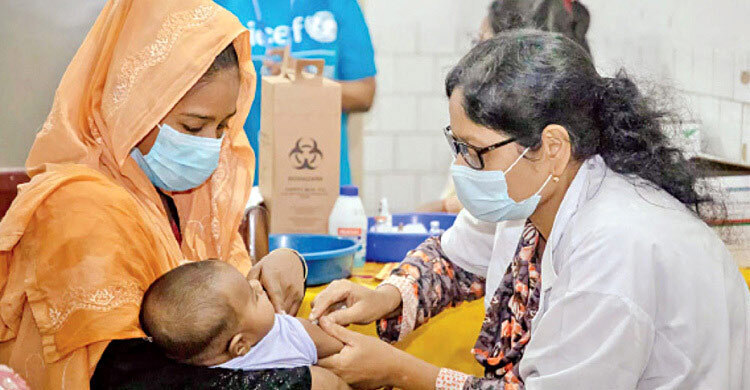
Children are supposed to receive vaccines under the Expanded Programme on Immunization (EPI) within a specific timeframe after birth. However, just a month ago, many parents returned home without vaccines after visiting hospitals or immunization centers due to shortages.
Although the vaccine supply has slightly improved, many parents are still not receiving official vaccination cards.
Due to the absence of vaccination cards, numerous parents are unable to apply for birth registration certificates for their children. In most areas, health workers are recording vaccination details manually on plain paper. In some cases, printed sheets from online sources are being handed out. However, these documents are not officially accepted for administrative purposes.
Authorities say the supply of vaccination cards has been halted since last year because there was no tender process, and therefore the cards were not printed. Officials now claim the issue has been resolved and the cards will be printed and distributed within two months.
One affected parent, Touhiduzzaman from Shailkupa Upazila in Jhenaidah, told Jago News, “My son was born last January. He received his first dose of vaccine 45 days after birth at the local Mother and Child Centre. But no vaccination card was given. When we asked, they said the cards had run out long ago and the government has yet to supply new ones. Even after the third dose, we haven’t received a card. Because of this, I can’t apply for my child’s birth certificate.”
Another parent from the same area, Abu Sayeed, said, “They gave us an online printout for now, and we are using that for vaccination. But no official card was issued. This could create problems in the future — we won’t be able to apply for a birth certificate or access related services.”
A similar situation prevails in Barguna. Although baby Asfia Tayyeba eventually received her vaccine after several visits to Barguna General Hospital, her mother, Shahima Akhter, said they have yet to receive the vaccination card.
“We can’t always get the vaccines on schedule. A weekly dose often ends up being delayed to the following week. And there’s no sign of the vaccine card. It’s been four months, and I still haven’t received it. As a result, I can’t apply for a birth certificate,” Shahima told Jago News.
The vaccine card shortage is also affecting families in Moulvibazar district. Nihar Ranjan Acharya, a health assistant in Sreemangal Upazila, said, “The shortage has been ongoing for a long time. The supply is far lower than the demand.”
Dr Abul Fazal Md Shahabuddin Khan, Programme Manager of the EPI, acknowledged the issue, saying, “This crisis didn’t happen all of a sudden. Last year, we didn’t have a tender. There was no supply. We didn’t make any payments either. The year ended—what could we do? Now it's going for printing. It might take a month or two. After that, we will distribute it everywhere.”
Under the EPI, vaccines are administered—subject to availability—against nine diseases: tuberculosis, diphtheria, tetanus, whooping cough, polio, hepatitis B, Haemophilus influenzae type B, measles, and rubella. After vaccination, recipients are supposed to receive a card with the date of their next dose. For those already enrolled, future vaccination dates are recorded on their existing cards. Additionally, women aged 15 to 49 are given five doses of the tetanus toxoid (TT) vaccine.