
CNG-run autorickshaw drivers block Banani for 8 hours

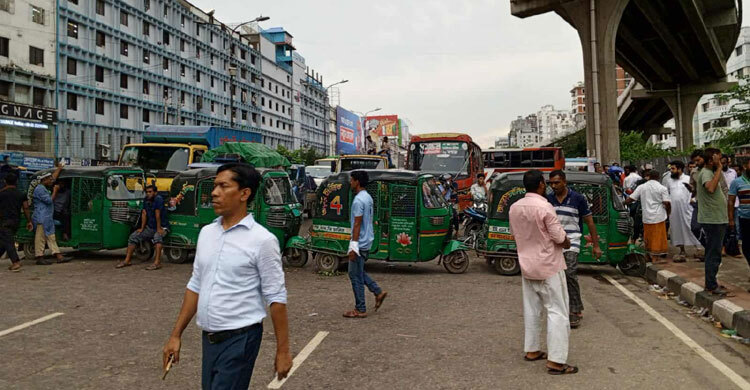
The busy Banani area ground to a halt as CNG-powered autorickshaw drivers blocked the road in front of the Bangladesh Road Transport Authority (BRTA) headquarters for eight hours on Sunday.
Their demand? Clear and fixed route allocations for their vehicles in the Dhaka metropolitan area.
The protest, which began around 10:30am and intensified by noon, has sparked severe traffic congestion, leaving commuters stranded and highlighting the growing tensions between autorickshaw drivers and regulatory authorities.
Wrapped in shrouds as a dramatic symbol of their desperation, the drivers blocked both sides of the busy Banani road, bringing traffic to a complete standstill. Banani Police Station Officer-in-Charge Md. Sarwar confirmed the situation, stating, “The CNG autorickshaw drivers began their movement after 12 noon to press their demands. We attempted to clear the road, but they remain steadfast, continuing the blockade.” Despite police efforts, the protesters vowed to persist until the BRTA addresses their call for designated routes.
The blockade has caused chaos for commuters, with many forced to walk long distances or seek alternative transport. However, in a small gesture of consideration, the drivers allowed ambulances and airport-bound vehicles to pass, while halting all other traffic. This selective allowance did little to ease the frustration of stranded passengers, who faced hours of delays in one of Dhaka’s busiest areas.
The autorickshaw drivers’ grievances stem from a lack of clear route permits, which they argue is essential for their livelihoods. Without designated routes, many drivers operate in a legal grey area, facing harassment from authorities and competition from illegal or unregistered vehicles. The protest echoes earlier demonstrations, such as those in February 2025, when drivers successfully overturned a BRTA directive enforcing metered fares, citing outdated rates and high operational costs.
Dhaka’s autorickshaw sector has long been plagued by systemic issues. With over 15,696 registered CNG autorickshaws in the capital, and an estimated 10,000 operating illegally, drivers face intense competition and financial pressures. Many pay exorbitant daily deposits—often between Tk 1,200 and Tk 2,000—far above the government-set rate of Tk 900, forcing them to charge higher fares to survive.
Dhaka, one of the world’s most densely populated cities, is no stranger to traffic woes. The blockade exacerbated the capital’s chronic congestion, with vehicles backed up for hours across Banani, Mohakhali, and surrounding areas. The city’s transport system, already strained by inadequate infrastructure and a growing number of vehicles, struggles to accommodate its 18 million residents. Experts note that Dhaka’s roads, covering just 7% of its land, are ill-equipped to handle the volume of traffic, with private cars occupying disproportionate space compared to public transport.