
The small flaw, the big risk: Expert warns Biman over recurring glitches

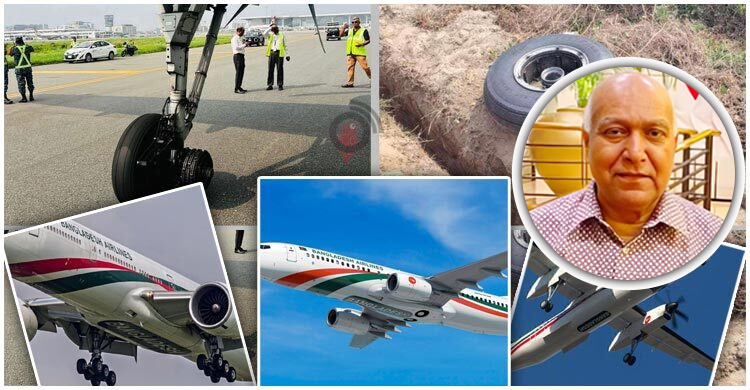
The national flag carrier, Biman Bangladesh Airlines, is experiencing one technical issue after another. In the past month alone, there have been at least 14 incidents involving technical faults on Biman’s Boeing 787s and Boeing 777s and DHC Dash-8 aircraft. Currently, at least four of the airline’s ten large aircraft are grounded – three Boeing 787s and one Boeing 777. This situation has severely disrupted Biman’s flight operations, leaving passengers facing significant inconvenience and hardship.
As a result, serious concerns have been raised regarding the airline’s aircraft maintenance and safety standards. Moreover, many are questioning the recruitment of unqualified and often favouritism-based appointments within the engineering and other key departments.
Jago News recently spoke with aviation expert and former Biman board member Kazi Wahidul Alam about these pressing issues. Senior correspondent Musa Ahmed conducted the interview over telephone.
Wahidul Alam explained: “Just as the human body develops various ailments with age, engine components and machinery naturally deteriorate over time. This means they require more frequent maintenance – and in many cases, parts must be replaced entirely. However, if any aircraft component is damaged beyond repair, it cannot be fixed; the entire unit or part must be changed.”
Emphasising the urgency of addressing mechanical faults, Wahidul Alam said: “Any fault in an aircraft must be repaired immediately. If there is negligence during maintenance work, it is impossible to predict how severe the consequences could be.”
On the growing public distrust towards Biman, Wahidul Alam remarked: “People now naturally hold a negative perception of Biman. There is a widespread belief that the organisation is riddled with corruption. Nepotism is rampant – unqualified individuals are being hired instead of skilled professionals. Most alarmingly, we’ve seen cases where pilots have secured jobs for their wives, sisters, and brothers. There was no adherence to proper recruitment procedures. Some of these pilots have been flying for years and have since been exposed.”
He added: “We need to examine whether the personnel currently working in Biman’s engineering department, particularly the engineers in our maintenance workshops, possess the correct qualifications. Were appointments made fairly, or were there instances of nepotism and corruption? These are critical questions, especially when an aircraft is repaired only for another fault to appear once it’s back in the air. When mechanical failures or accidents occur repeatedly, such concerns inevitably come to the forefront – and accountability must follow.”
On what steps Biman should take moving forward, the aviation expert advised: “Biman must strengthen its maintenance team and provide more rigorous training for its engineers. Maintenance errors often stem from inadequate training. The airline must carry out its responsibilities with far greater diligence and precision. Otherwise, these seemingly minor technical issues could escalate into catastrophic accidents. And in that event, the responsibility would rest on all of us. Naturally, none of us wants to see such a tragedy occur.”