
Telemedicine at a crossroads in Bangladesh: Nurses step in, veteran staff left behind

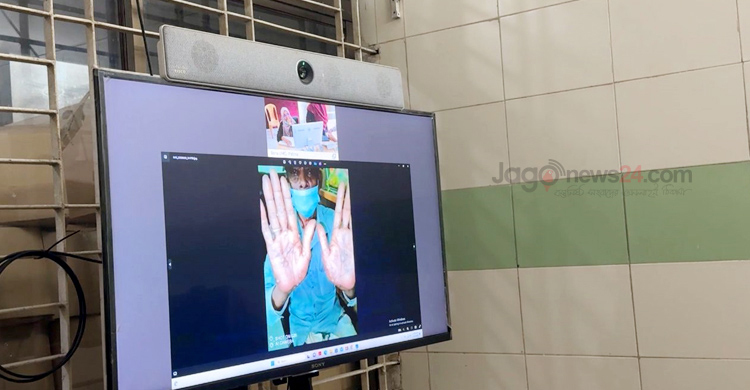
In a quiet corner of Khulna’s Dakop Upazila Health Complex, Mahbubur Rahman powers up the telemedicine console – the same machine he has operated with pride for 14 years. But this could be one of his final shifts.
No longer a temporary technician. No longer the vital link between rural patients and life-saving specialists. Just… replaced.
Across Bangladesh, a quiet revolution, and a quiet heartbreak, is unfolding in 234 telemedicine centres, where the promise of “healthcare at your doorstep” is being restructured, reimagined, and, for many, rewritten at a human cost.
Telemedicine: A lifeline for the marginalised
Since its humble launch in 2011 with just eight centres, Bangladesh’s telemedicine initiative has grown into a digital lifeline for millions. Patients in remote villages, once forced to travel hours, or even days, for a specialist’s advice, can now receive free, real-time consultations via video call from top doctors in Dhaka, Chattogram, and Rajshahi.
At its peak, the system served over 8,000 patients monthly. In 2023 alone, 83,093 patients accessed specialist care without leaving their upazilas.
“If the local doctor can’t diagnose, we used to send the patient to the district – then to Dhaka,” says Ishrat Jahan Kakon, a programmer at the Directorate General of Health Services (DGHS). “Now? We connect them directly. That’s the power of telemedicine.”
But in June 2024, the lights began to flicker.
Financial crisis halts a national dream
Funding dried up. Contracts expired. Salaries went unpaid, some staff have not been paid in over six months. By mid-2024, the entire network was on the verge of collapse.
Jago News’ earlier exposé, “Telemedicine on the Brink”, sparked public outcry. And now, the government is stepping in – but with a controversial new blueprint: Replace tech-savvy support staff with nurses.
Nurses to the rescue, but at what cost?
A directive from the Management Information System (MIS) Division of DGHS, signed by Additional Secretary Dr Ruksana Akhter, mandates that staff nurses be deployed to run telemedicine centres nationwide.
The logic? Nurses are already embedded in upazila hospitals. They are trusted. They are available. And – crucially – they are government employees.
Sukhen Shekhar Roy, MIS System Analyst, confirms: “Nurses will now manage the centres. Training will be provided. This will make the service more sustainable and public-focused.”
Sounds ideal – until you hear the other side.
‘We built this system. Now we’re being erased.’
For over a decade, technicians from Kajla Technologies Limited, the project’s original IT partner, have been the invisible backbone of telemedicine. They set up systems, troubleshoot video links, manage data, and ensure seamless calls between patients and specialists.
Now, they’re being phased out.
“On 20 August, we were told: No more contracts. Don’t come back,” said Tanvirul Islam, Engineer, Kajla Technologies.
Even after their contracts expired, many staff continued working without pay, hoping the government would step in. Some were paid half-salary in January. Others worked for months on empty promises.
And now?
“We built this from scratch. We kept it alive. And now they’re handing it to nurses who’ve never touched the system,” says a Kajla staffer, speaking anonymously.
Can nurses really run the show?
While nurses are medical professionals, telemedicine operations require technical fluency – managing video conferencing software, troubleshooting network issues, handling patient data, and coordinating between hospitals.
An official from Kajla warns: “These systems have complex devices. It’s not just clicking a Zoom link. Training takes time. And we don’t know how much nurses can actually learn.”
Even the government admits nurses will need training, and Kajla is being asked to provide it, despite no formal contract.
Two-tier system: A temporary fix?
The DGHS has divided the 234 centres into two groups: 94 centres with contracts valid until March 2026 – will keep support staff alongside nurses for now and 140 centres whose contracts expired in December 2024 will be run solely by nurses.
After 2026, all centres will transition to nurse-led operations.
‘Our lives are tied to this machine’
Alamgir Hossain, a technician in Satkhira, joined in 2010, before the centres even launched.
“I passed my HSC, joined Kajla, and completed my degree while working. I thought this would lead to a government job. Now? I’m 40. My service age is over. Where do I go?”
Mahbubur Rahman in Khulna echoes the pain: “This centre is my life. I’ve seen patients cry with relief after a diagnosis. Now they’ll keep the centre, but throw us out? Is this how the state treats loyalty?”
A system at a crossroads
The government’s move may be fiscally pragmatic, integrating telemedicine into the existing health workforce. But at what cost to expertise, continuity, and morale?
An expert warns: “You can’t replace technical experience with goodwill. If systems fail, patients suffer. And nurses, already overburdened, may not have the bandwidth.”
Yet, the dream of digital healthcare for all must survive.
What’s next?
The DGHS hopes this nurse-led model will make telemedicine more sustainable, public, and resilient. But without a clear plan to absorb or compensate veteran staff, the transition risks becoming a human tragedy wrapped in policy.
As one technician put it: “We don’t want pity. We want justice. We want recognition. We want to be part of the future we helped build.”