
CJ questions if caretaker govt revives, from when it will take effect

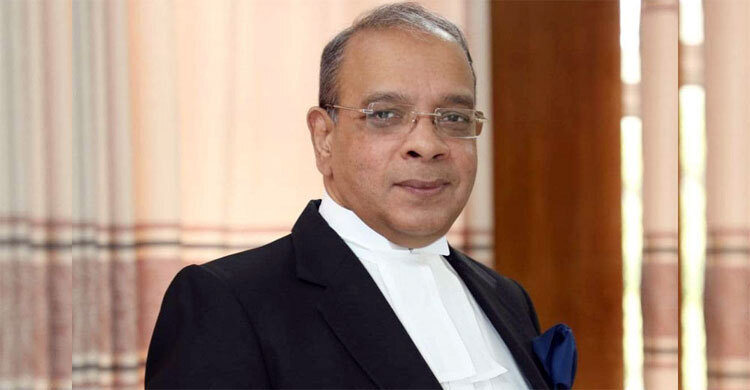
Chief Justice Dr Syed Refaat Ahmed has raised a pivotal constitutional question before the Supreme Court: If the non-partisan caretaker government system is revived, from when will it take effect?
Presiding over a seven-member full bench of the Appellate Division, the highest court in Bangladesh, the Chief Justice emphasised that the judiciary seeks not a temporary fix, but a workable and sustainable institutional framework to ensure free, fair, and credible elections, thereby preventing future political crises.
The hearing, held on Wednesday, August 27, marked the second day of deliberations on four separate review petitions challenging the Supreme Court’s landmark 2011 verdict, which struck down the 13th Amendment and abolished the non-party caretaker government system.
At the conclusion of the day’s proceedings, the bench granted petitioners the right to file an appeal against the 2011 judgment and scheduled the next hearing for October 21, 2024.
The caretaker government system was first introduced in 1996 through the 13th Amendment to the Constitution, establishing a neutral interim administration to oversee national elections. It was successfully used in the general elections of 1996, 2001, and 2008, before being annulled by the Supreme Court in 2011.
Now, amid growing political demand, particularly from the Bangladesh Nationalist Party (BNP), Jamaat-e-Islami, five prominent citizens, and freedom fighter Mofazzal Hossain of Naogaon, the court is re-examining the issue.
Chief Justice Ahmed underscored the court’s responsibility: "We do not want to offer a stopgap solution. The Appellate Division aims to deliver a durable resolution – one that ensures the election-time administration remains impartial and that democracy is not repeatedly disrupted."
During Wednesday’s hearing, the Chief Justice posed a critical legal and procedural query: "If the caretaker government system is reinstated, from which point will it become effective?"
This question strikes at the heart of constitutional continuity and practical implementation – whether the system would apply immediately, after a specific election cycle, or under defined conditions.
In response, lawyer Barrister Ruhul Quddus Kajal said that as a lawyer, he cannot answer this question. Attorney General Md Asaduzzaman, representing the state, then said that they will answer all the questions during the detailed hearing.
He also told the court that the Appellate Division holds the authority to issue guidelines or directives to ensure a stable and enforceable framework. He added, "In the interim, the current interim government will carry out its duties as mandated."
Senior lawyers Barrister Md Ruhul Quddus Kajal and Advocate Md Shishir Manir argued in favour of restoring the caretaker system, citing its proven track record in ensuring credible elections and reducing partisan influence during polls.
They emphasised that without an impartial election-time administration, public trust in the electoral process remains vulnerable.
The seven-judge bench, sitting in full formation, reflects the constitutional significance of the case. The court’s eventual decision could reshape Bangladesh’s democratic architecture, either by reinstating the caretaker system with new safeguards or by endorsing an alternative model for neutral election management.
The Chief Justice iterated the court’s broader vision: "Our goal is not just to revisit a past verdict, but to lay the foundation for a lasting democratic mechanism – one with far-reaching impact for generations to come."
As the nation awaits the October 21 hearing, all eyes are on the Supreme Court to determine whether the caretaker government era may return – and under what terms.