
Commission finds AL, external-link in BDR massacre, identifies Taposh key coordinator

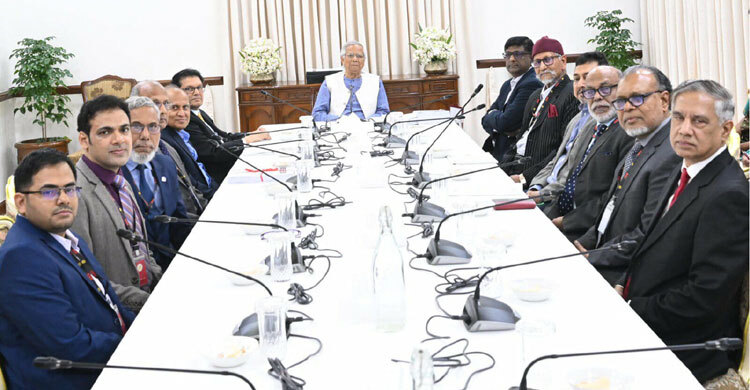
The National Independent Investigation Commission has found what it describes as strong and conclusive evidence of involvement by external actors and senior leaders of the then ruling Awami League in the 2009 BDR massacre.
The commission has specifically identified then Member of Parliament Sheikh Fazle Noor Taposh as the “main coordinator” behind the planning of the massacre.
The long-awaited report of the commission – formed to uncover the truth behind one of the deadliest mutinies in Bangladesh’s history – was formally submitted to Chief Adviser Professor Muhammad Yunus on Sunday, November 30, at the State Guest House Jamuna.
Major General (Retd) ALM Fazlur Rahman, the head of the commission, along with other members, handed over the final report.
Deputy Press Secretary to the Chief Adviser Abul Kalam Azad Majumdar confirmed the submission of the report Sunday night.
The seven-member inquiry body includes Major General Md Jahangir Kabir Talukder (Retd), Brigadier General Md Saidur Rahman Bir Pratik (Retd), former Joint Secretary Munshi Alauddin Al Azad, Dr M Akbar Ali DIG (Retd), Dhaka University Associate Professor Md Shariful Islam, and Jagannath University Assistant Professor Md Shahnewaz Khan Chandan.
‘Nation kept in the dark’
After receiving the report, Chief Adviser Professor Muhammad Yunus said the country had waited far too long for the truth.
“The nation was in the dark about the BDR massacre for a long time,” he said. “Through your work, unanswered questions have finally been addressed. The nation will remember this effort.”
He said the findings carry important lessons and will serve as a “valuable national document.”
Commission outlines coordination, motives and political involvement
Commission Chief Fazlur Rahman said investigators maintained a high level of professionalism despite major obstacles – including destruction of evidence and disappearance of witnesses linked to the event over the last 16 years.
The commission interviewed dozens of witnesses – some for up to eight hours – and reviewed past investigations and classified documents.
Rahman said the inquiry answered all major public questions surrounding the mutiny, including why the army did not intervene in the early stages.
Brigadier General (Retd) Jahangir Kabir Talukder elaborated on the commission’s findings.
According to him:
The mutiny was planned in advance, not spontaneous.
Sheikh Fazle Noor Taposh played the role of the main coordinator.
Local Awami League leaders actively shielded participants, entering Peelkhana with a group of 20-25 people and exiting with more than 200.
The massacre proceeded under a “green signal” from then Prime Minister Sheikh Hasina, the report alleges.
The inquiry found direct involvement of external forces, which were not named publicly.
Law enforcement and intelligence agencies – including the police and RAB – failed to respond effectively during the crisis.
The report also pointed to what it called amateur and unprofessional reporting by some media outlets and journalists during the incident, which it said obstructed the situation rather than helping resolve it.
Unrecorded meeting raises questions
The commission said it found no official documentation or preserved list of the BDR personnel who reportedly met Sheikh Hasina at the then Prime Minister’s residence during the ongoing killings – raising further concerns about transparency.
Accountability and recommendations
The inquiry assigns responsibility to:
The then Prime Minister
The then Army Chief
National security agencies that allegedly allowed the situation to be “politically managed rather than professionally resolved.”
The commission also issued several recommendations to prevent similar incidents in the country's disciplined forces and ensure justice for the families of the 74 people killed — most of them army officers.
The report submission event was attended by National Security Adviser Dr Khalilur Rahman, Lieutenant General (Retd) Abdul Hafiz, Special Assistant to the Chief Adviser on Defense and National Integration, and Home Secretary Nasimul Ghani.