
Cyclone shelters evolve to shield communities from rising heat

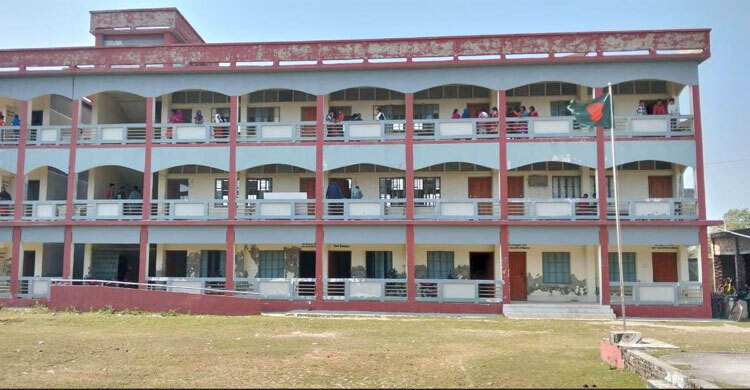
At Baradal Aftab Uddin Collegiate School in Satkhira’s Assasuni, construction crews are working on something Bangladesh has never seen before. The building they are upgrading has already served as a school and a cyclone shelter for years.
Soon, it will become the country’s first “Adaptation Fortress” – a new type of climate refuge built to protect people not just from storms but also from the rising heat that is reshaping life across the southwest.
The initiative is led by the Jameel Observatory Climate Resilience Early Warning System Network (CREWSnet), a collaboration between MIT and Community Jameel, working alongside BRAC. Their goal is simple to describe but ambitious to carry out: turn existing cyclone shelters into multi-purpose climate-safe spaces that communities can rely on year-round.
What exactly is an Adaptation Fortress?
The term describes a shelter designed for a future where disasters no longer arrive one at a time. In coastal Bangladesh, storms and heatwaves now collide within the same season. Many families can survive a cyclone only to face dangerous temperatures days later, often while dealing with power cuts, water shortages, and damaged homes.
An Adaptation Fortress is built to handle both extremes.
It keeps people safe from cyclones with the sturdy structure they already know. But it also stays cool during heatwaves through added ventilation, shaded design, and solar-powered backup energy. When the grid goes down, as it often does during storms, the building can continue to run fans and cooling equipment. Rainwater harvesting provides clean water when supply lines fail. The solar system, if it produces surplus energy, can share electricity with nearby homes.
It’s not only a shelter, but also a local resilience hub.
In a region where households often rely on fragile infrastructure, that extra support can make a measurable difference. A cool building becomes a safe classroom during heatwaves. A backup power source becomes a place to charge phones after storms. A rainwater tank becomes a lifeline in a drought.
Why Satkhira was chosen
The southwest has become one of Bangladesh’s most climate-exposed regions. More than 30 million people live in areas where sea-level rise, salinity, storms, and heatwaves converge. Cyclones between 2019 and 2021 left lasting damage. Temperatures now climb higher for longer periods. Schools shut down. Outdoor work becomes unsafe. Health emergencies spike.
Against this backdrop, a cyclone-only shelter isn’t enough anymore. Communities need a space that protects them from overlapping threats, not just the one that arrives first.
A model built for scale
The Baradal pilot project is the first step in a plan that could extend to 1,250 sites across Satkhira, Khulna, and Jashore. If fully scaled, the fortresses could offer heatwave relief to half a million people.
The project partners have already selected a second pilot at Satbaria High School in Jashore.
The design is intentionally simple. Rather than building new structures, the team upgrades existing ones: better insulation, energy-efficient fans, improved shading, solar panels, battery storage, water systems, and community charging stations. This approach keeps costs manageable and makes future expansion more feasible.
Voices behind the project
For Community Jameel, the fortress is part of a shift toward proactive climate planning. Founder Mohammed Abdul Latif Jameel said the project lays the groundwork for responding to disasters before they turn deadly, rather than after the fact.
Professor Elfatih Eltahir of MIT, the lead principal investigator for CREWSnet, said the idea builds on Bangladesh’s proven cyclone shelter network while adding protection from heat – a risk the country can no longer afford to overlook.
Dr Deborah Campbell, executive director of the Jameel Observatory-CREWSnet, noted that many people in the southwest lack the means to stay cool as temperatures rise. She said the fortress could become a model for other parts of South Asia.
BRAC’s Dr Md Liakath Ali highlighted the value of using local knowledge to upgrade structures that communities already trust. He also said the project aims to inform national planning, so lessons from the pilots support long-term strategies for heat and disaster resilience.
Building a refuge for a changing climate
Each fortress will undergo detailed monitoring once completed. The team will track how it performs during heatwaves, how much energy it produces and uses, how comfortable people feel inside, and how often community members rely on the space. That data will help refine the design for future sites.
But beyond the technical features, the strength of the model lies in its simplicity. A building that protects from cyclones and heat at the same time might sound like a modest idea. Yet in southwest Bangladesh, where climate change affects almost every part of life, it represents a shift in how communities prepare, respond, and recover.
The Adaptation Fortress aims to be the place where a family can find safety during a storm, where students can learn during a heatwave, where a mother can get water after a drought, and where neighbours can connect to electricity when the grid fails. It’s a practical solution for an era when climate risks overlap and intensify.
If the pilot succeeds, thousands of these upgraded shelters could form a network of climate-ready spaces across the southwest. And for a region living on the front lines of climate change, that network could be the difference between enduring the next decade of warming and being overwhelmed by it.
Community Jameel is a global organisation that supports science, education, and humanitarian initiatives. It works on issues including climate change, health, and education. Launched in 2022, CREWSnet develops systems to forecast climate impacts and guide proactive responses. In Bangladesh, it brings together MIT, BRAC, and the International Water Management Institute, with a focus on resilience in climate-vulnerable regions.