
Feb 12 vote a test of trust after violence, minorities tell Al Jazeera

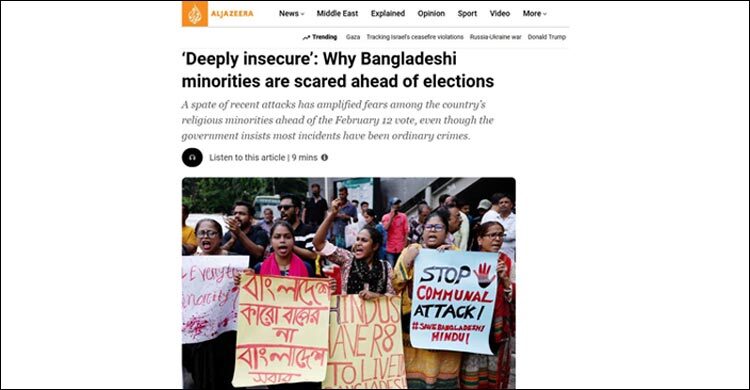
Sukumar Pramanik, a Hindu schoolteacher in Rajshahi, says the upcoming national election may be his final test of faith in Bangladeshi politics.
“This could be the last time I place my trust in them,” he told Al Jazeera, referring to political leaders who have promised safety ahead of the February 12 vote.
Bangladesh’s elections have historically been marked by spikes in political and communal violence, with religious minorities often caught in the crossfire. But fears have deepened since August 2024, when former prime minister Sheikh Hasina was ousted, triggering unrest that left minority communities feeling exposed and vulnerable.
Although the government insists most recent incidents were not motivated by religious hatred, minority leaders say attacks, killings and arson targeting their homes and businesses have surged, reviving old anxieties ahead of the polls.
Pramanik said mobs attacked the Hindu community in Rajshahi’s Bidyadharpur area after Hasina’s fall, beating him and breaking his hand. He required surgery and spent several days in the hospital.
“I stood in front of the mob thinking they knew me,” he said. “They broke my hand, but more than that, they broke my trust.”
Hindus make up about 8 per cent of Bangladesh’s population, with Christians, Buddhists and other minorities forming much smaller groups. Minority leaders say election seasons have repeatedly been used to exploit religious identity, intimidate voters and settle local political scores.
“Oppression of minorities never truly stopped, even during the Awami League’s rule,” said Manindra Kumar Nath, acting general secretary of the Bangladesh Hindu Buddhist Christian Unity Council (BHBCUC). “What made it worse is that there has been no proper justice.”
According to the BHBCUC, at least 522 communal attacks were recorded in 2025, including 61 killings. The group claims more than 2,100 incidents occurred in the months following Hasina’s removal in 2024.
The government disputes those figures, saying only a small fraction of incidents involving minorities had communal motives and that most were general criminal acts. Officials also argue the issue has been politicised internationally.
Shafiqul Alam, press secretary to interim government Chief Adviser Muhammad Yunus, said authorities had taken steps to ensure minority safety and a credible election.
“We have taken adequate measures so that people of all communities – minorities and majorities, followers of all faiths and identities – can vote in a festive atmosphere,” Alam said. “They could not vote freely under Sheikh Hasina over the last 15 years, as the elections were rigged. Our priority is to ensure everyone can vote this time.”
Rights groups present different figures, but interviews with minority communities reveal deep anxiety shaped by recent experience.
Shefali Sarkar, a homemaker from Bidyadharpur, recalled August 5, 2024, the day Hasina fled the country, as mobs began targeting minority homes.
“They vandalised our house. I thought we were going to die,” she said. The trauma later required mental health treatment. With elections approaching, her fear has returned. “I cannot go through another mental trauma.”
Not all minority voters share the same concerns. In Faridpur, Durga Puja committee secretary Shaymol Karmokar said his area has remained calm and that political leaders have assured protection.
“We will vote and expect a peaceful election,” he said.
Major parties have stepped up outreach to minorities. BNP leader Tarique Rahman has pledged an inclusive Bangladesh, while Jamaat-e-Islami has nominated a Hindu candidate for the first time.
Still, in districts like Gopalganj, where Hindus make up a significant share of voters, anxiety remains high. Independent candidate Govinda Pramanik warned that unrest could spread around the election.
Back in Rajshahi, Sukumar Pramanik remains cautious.
“If we are attacked again,” he said, “this will be the last time I trust any assurances.”