
Power without question: Yunus’ 18 silent months

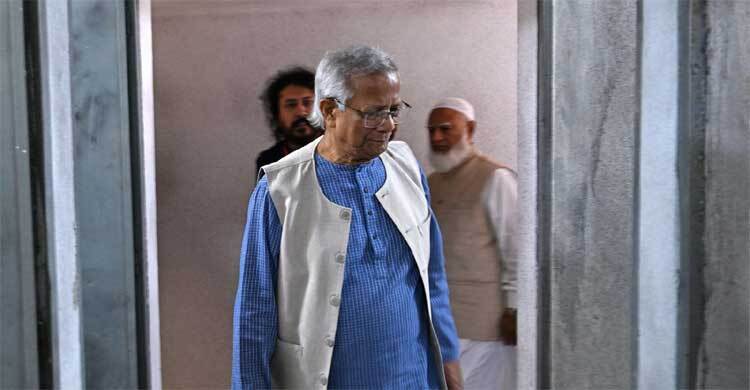
In 18 months at the helm of Bangladesh’s interim administration, Nobel laureate Muhammad Yunus has not stood before journalists for a single open question-and-answer session.
The confirmation came from the Chief Adviser’s own Press Wing.
Since taking the oath on August 8, 2024 – three days after the fall of the Awami League government amid mass student-led protests – Professor Yunus has relied entirely on his communications team to interface with the media. Not once has he directly fielded questions from reporters.
‘International standard,’ says press secretary
Chief Adviser’s Press Secretary Shafiqul Alam defended the approach, arguing that it aligns with practices in developed democracies.
“Heads of state in the developed world do not usually face journalists directly. This is the international standard,” he said, adding that the media have been kept informed through structured briefings and written communications.
Shafiqul, formerly the Dhaka bureau chief of Agence France-Presse, was appointed press secretary on August 13, 2024. The press wing was subsequently formed with deputy press secretaries Abul Kalam Azad Majumder and Apurba Jahangir, senior assistant press secretary Foyez Ahammed, and assistant press secretaries Suchismita Tithi and Naeem Ali.
A structured, but controlled, flow of information
The press wing has maintained a steady rhythm of communication. Briefings have been held three to four times a week at the Foreign Service Academy in the capital. Additional briefings were occasionally conducted outside the state guest house Jamuna.
These sessions typically outline decisions taken at advisory council meetings chaired by the Chief Adviser. Most briefings are delivered by Shafiqul Alam and Abul Kalam Azad Majumder, with other officials present.
Beyond press conferences, the wing has distributed press releases, photographs and video footage of government activities via official WhatsApp groups – ensuring regular updates but limiting unscripted interaction.
Access without interaction
Coverage of the Chief Adviser’s events has also been tightly managed.
A selected group of journalists – vetted by the Special Branch of police – were granted special passes to attend key programmes. While more than a hundred reporters have covered various events over the past year and a half, none were allowed to directly speak with or question Professor Yunus.
Repeated queries from journalists about whether the Chief Adviser would hold a direct media exchange before leaving office have received the same response: such interactions are reserved for special circumstances or foreign VVIP visits, in line with international norms.
Growing discontent in newsrooms
Among reporters who have regularly attended the briefings, frustration has quietly mounted.
Several journalists expressed disappointment, saying that regardless of global practices, the absence of even a single open media appearance by the head of government during a politically sensitive transition period would remain a notable gap.
For many in the press corps, the issue is not the frequency of briefings – but the absence of accountability in real time.
Eighteen months on, the record stands unchanged: no live questions, no direct answers, and no unscripted exchange between Bangladesh’s interim leader and its media.