
Planned zakat management can play key role in poverty alleviation: PM

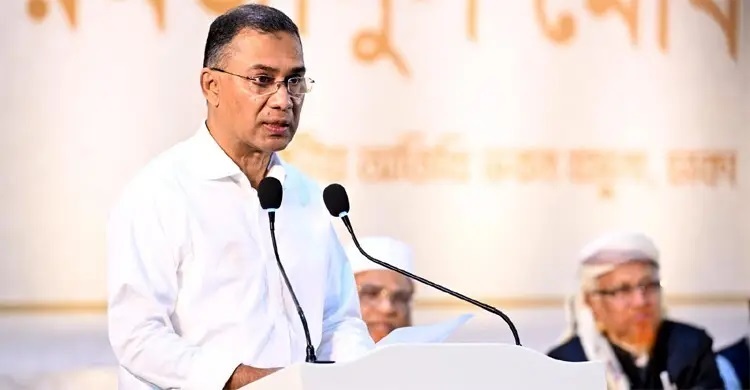
Prime Minister Tarique Rahman on Saturday said that a planned and targeted zakat management system could play a significant role in reducing poverty in Bangladesh within the next 10 to 15 years.
He made the remarks while addressing an iftar gathering held in honour of Islamic scholars, religious leaders and orphan children at the State Guest House Jamuna.
The prime minister said the country has nearly 4 crore poor families, and if zakat is distributed through a structured and coordinated plan, it could become an effective tool for poverty alleviation.
Referring to past traditions, Tarique said iftar programmes were previously arranged during Ramadan in honour of people from different professions. Typically, the first iftar of the month was organised for Islamic scholars, religious leaders and orphan children. However, this year the programme was held later due to the current situation in the country.
He added that only two iftar events have been organised this Ramadan as part of government efforts to reduce expenditure amid the global economic situation and rising costs in sectors such as gas, electricity and fuel. If the situation does not improve, this may be the final iftar gathering of the month.
Describing the orphan children attending the event as the most important guests, the prime minister said the Quran and Hadith strongly emphasise the protection of their rights.
“If affluent individuals take responsibility for orphan children in line with Islamic teachings, they will be able to grow up in society with confidence,” he said.
Tarique also criticised the tendency of increasing prices of essential commodities during Ramadan. He said the holy month is meant for restraint and spiritual purification, but some dishonest traders raise prices during this period, causing hardship for people.
Speaking about zakat distribution, the prime minister said studies show that more than Tk 20,000 to Tk 25,000 crore in zakat is given annually in Bangladesh. However, due to the lack of a coordinated distribution system, the full benefits often fail to reach the poor.
He said the government plans to identify poor families and gradually provide Tk 100,000 each to 500,000 families every year through zakat, which could help many families become financially self-reliant.
To strengthen the system, the government is also considering restructuring the Zakat Board under the Ministry of Religious Affairs, incorporating leading Islamic scholars and relevant officials.
The prime minister said Bangladesh has the opportunity to present itself as a model in the Islamic world by effectively utilising zakat as a tool for poverty reduction.
He concluded by praying for the successful implementation of government programmes aimed at improving the welfare of the people.
KH/MHK