
What will be the fate of 133 ordinances of interim govt?

The 13th Jatiya Sangsad is set to go into session on Thursday, March 12, marking the start of the first elected BNP-led government since the fall of the Awami League administration in a mass uprising that forced the former prime minister to flee the country.
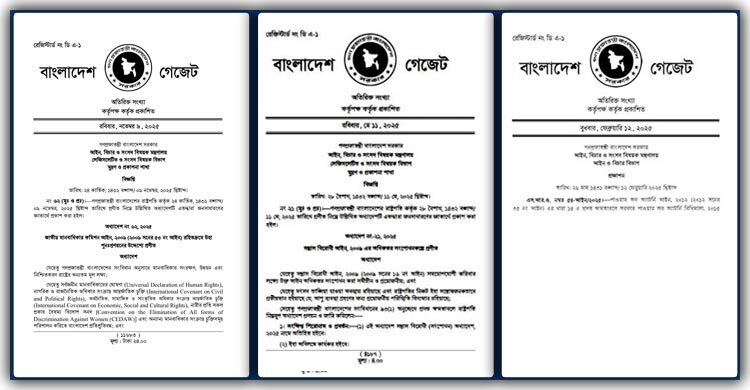
But as the new parliament prepares to convene, a crucial legal and political question hangs over the opening sitting: what will happen to the 133 ordinances issued during the 18-month rule of the interim government?
These ordinances – covering everything from major financial decisions to criminal law reforms – must now pass through the scrutiny of the newly elected parliament. Their fate could shape the early legislative agenda of the government and influence the country’s broader transition toward democratic governance.
A legislative legacy of the interim government
According to information from the Ministry of Law, the interim administration issued 133 ordinances during its tenure, using presidential powers under the constitution when no elected parliament was in place.
Such ordinances temporarily function as laws but must be placed before the first session of the next parliament for approval.
Home Minister Salahuddin Ahmed confirmed that the government is constitutionally bound to present them before lawmakers.
“The interim government issued 133 ordinances. We are obliged to place them before parliament in the first session,” he said while addressing an iftar gathering organised by the Nationalist Lawyers Forum at the Supreme Court Bar Association auditorium on Tuesday.
However, he emphasised that the final decision rests entirely with parliament.
“How these ordinances will ultimately be treated is the jurisdiction of the National Parliament,” he said.
Constitutional clock begins ticking
Legal experts say the Constitution clearly outlines what happens next.
Supreme Court lawyer Barrister Ruhul Quddus Kajal explained that under Article 93 of the Constitution, ordinances issued when parliament is not in session must be presented at the next parliamentary sitting.
Once tabled, they remain valid for 30 days, during which lawmakers must either approve them, amend them or allow them to lapse.
“If parliament does not pass them within 30 days, they will automatically cease to exist,” Kajal said.
At the same time, he noted that parliament retains the authority to introduce new laws or amendments even if certain ordinances are rejected.
Sensitive and controversial measures
While some of the ordinances deal with routine administrative matters, others involve major policy decisions that could trigger political debate inside parliament.
Among them are ordinances related to:
Major financial decisions, including the acquisition of several banks
Removal powers over elected local government representatives, including union councils, municipalities, city corporations and upazila parishads
Amendments to criminal and civil procedure laws
Revisions to laws governing rape and criminal penalties
Changes to the International Crimes Tribunal framework
One particularly debated measure is the July National Charter (Constitutional Reform) Implementation Order, which some political leaders have questioned on constitutional grounds.
Home Minister Salahuddin Ahmed said there were serious concerns about the legal basis of such orders.
“After the adoption of the Constitution, the authority to issue such orders ended. How such an order was issued is a question that we raised,” he said.
He added that the newly elected parliament must ensure that the authority of the sovereign legislature is not undermined.
Risk of legal uncertainty
Legal analysts say the stakes are high because many government actions have already been taken under these ordinances.
“If the ordinances are not approved, the activities conducted under them could create legal complications,” Kajal said.
To maintain legal continuity, he suggested that the parliament may choose to convert many of them into formal legislation.
Supreme Court Senior Advocate Mohammad Shishir Manir also stressed the importance of careful handling.
“As far as we know, all 133 ordinances will be placed before parliament on the first day of the session,” he said.
He warned that rejecting key reform-related ordinances – such as those related to judicial independence, criminal procedure reforms and legal changes surrounding enforced disappearances – could create confusion in the legal system.
“If they are not approved, those ordinances will simply lapse. But since many actions have already taken place under them, the situation could become complicated,” he said.
Parliament’s first major test
With a two-thirds majority in parliament, the BNP-led government has the numbers to approve, amend or replace the ordinances with new legislation.
However, analysts say the way lawmakers handle the issue will signal how the new administration intends to balance reform, legal continuity and democratic accountability.
For many observers, the debate over the interim government’s 133 ordinances may become the first major legislative test for the newly elected parliament – one that could shape Bangladesh’s legal and political landscape in the months ahead.