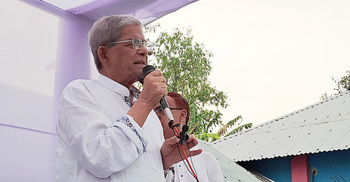
Workers’ sweat smells like perfume to me: Jamaat amir

Jamaat-e-Islami amir Dr. Shafiqur Rahman has said that industries are built on the blood and sweat of workers. “I want to tell the workers—your sweat smells like perfume to me,” he said.
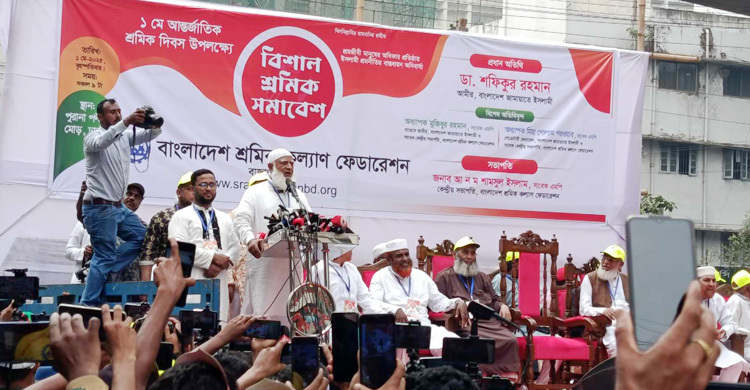
Speaking as the chief guest at a workers’ rally organised by the Bangladesh Workers Welfare Federation at Paltan intersection in Dhaka on Thursday (May 1), he added, “Whenever we go somewhere, many workers feel embarrassed to shake hands with us due to the sweat on their bodies. I pull them towards me and hug them. The sweat of the workers is the essence, fragrance, and perfume.”
Shafiqur Rahman emphasized, “We do not want to see inequality among people. We view all professions with equal respect. We no longer want conflict between owners and workers. If workers survive, industries and businesses will survive. At the same time, workers must also understand that if industries or owners are destroyed, their jobs will vanish. Therefore, both owners and workers have great responsibilities.”
He further said, “The day an owner embraces their worker with love and compassion, that worker will give their best effort—even at the cost of their life. A functional and productive society must be built through the harmony of owners and workers. This is what the Workers Welfare Federation is working towards.”
Calling for prayer spaces for women in workplaces, Dr. Shafiqur Rahman urged factory owners to provide prayer spaces for women, as even small prayer areas are typically provided for men but not for female workers. He also stressed the need to create safe workplaces for women.
Other speakers at the rally, including Jamaat’s Assistant Secretary Generals Professor Mujibur Rahman and Rafiqul Islam Khan, Dhaka South City Jamaat Ameer Nurul Islam Bulbul, and various leaders of the Workers Welfare Federation, voiced their concerns about workers’ rights. They said, “For 17 years, we were not able to hold workers’ rallies. Our workers have faced harsh deprivation and even killings. Now that we have this opportunity, it is time to organize and secure the rights of workers. We aim to establish a labor policy based on Islamic law, where there is no discrimination between owners and workers, and no worker will go hungry.”