
Media was controlled before, still is: Nahid

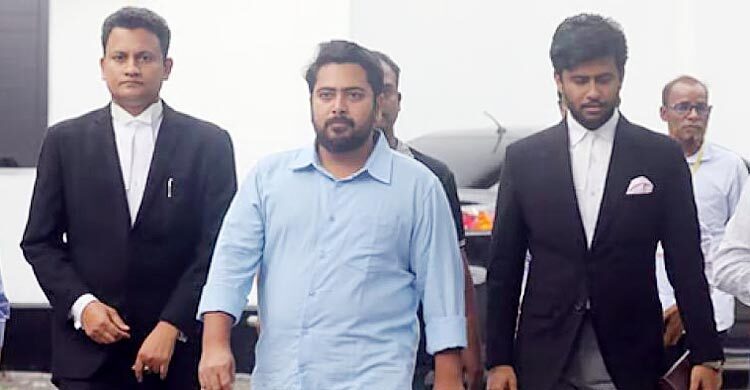
National Citizens Party (NCP) convener Nahid Islam has accused Bangladesh’s media of remaining under political and institutional control, just as it was before, despite expectations of reform following the July–August uprising.
Speaking to journalists on Thursday (18 September) after giving testimony as the 47th witness at the International Crimes Tribunal, Nahid said: “The media was controlled before and it is still controlled in the same way.”
His statement came after he presented evidence against three individuals including former Prime Minister Sheikh Hasina and former Home Minister Asaduzzaman Khan in connection with alleged crimes against humanity committed during the July-August 2024 protests.
Nahid, who previously held responsibility for media affairs in the interim administration, admitted the sector had not been reformed to the extent expected. “Even though I was in charge, I must say the media has not been restructured as we envisioned,” he said.
He acknowledged the media’s shifting allegiances during different phases of the movement, citing specific dates, July 18 and 19, 2024, when coverage appeared to favour either the protest movement or the establishment.
“At times, sections of the press and electronic media supported the movement; at others, they lent themselves to authoritarianism,” he said. “But the kind of independent, ethical media we hoped for — that transformation never happened.”
Nahid claimed that mechanisms of control remain entrenched. “The way the DGFI [Directorate General of Forces Intelligence] used to manipulate news output, that practice persists. Today, media outlets are still beholden to political parties and powerful corporate interests,” he added.
He recalled efforts made during his tenure to initiate reform: “We established a Media Reform Commission, tasked with proposing structural changes and guiding implementation through government channels. We also formed a ministry-level committee to review all pending cases against journalists with the aim of making recommendations to the Law Ministry.”
Those recommendations, he said, included measures to hold accountable journalists who actively supported “fascist forces”. “The next steps, prosecution and legal action, rested with the Law and Home Ministries,” he added.
Nahid began his testimony at 11:15am and concluded around noon, after which the tribunal adjourned briefly. The next session will see state-appointed lawyer Md Amir Hossain cross-examine one of the “heroes of the July uprising” on behalf of Sheikh Hasina and Kamal.
The prosecution team included Chief Prosecutor Mohammad Tajul Islam, along with prosecutors Mizanul Islam and Gazi MH Tamim. Also present were prosecutors Shahidul Islam, Abdus Sattar Palawan, and Mamunur Rashid.
Earlier that morning, former Inspector General of Police (IGP) Chowdhury Abdullah Al-Mamun, one of the accused in the crimes against humanity case, appeared before the tribunal as a public witness.