
Jamaat's 'silent army': Half a million women join to reshape electoral landscape

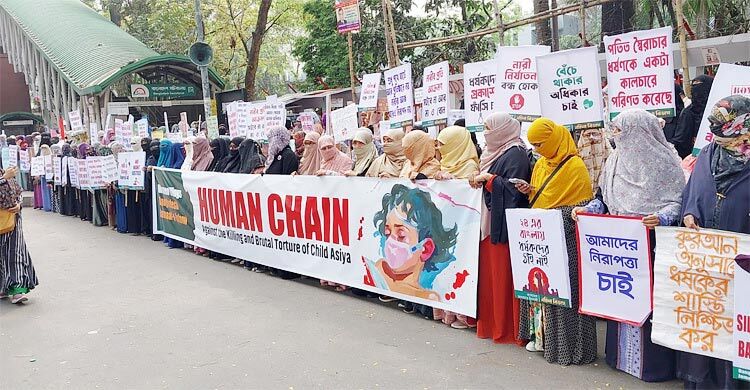
In a bold and unprecedented electoral gambit, Jamaat-e-Islami is deploying its vast, grassroots women’s wing as a central pillar of its strategy for the upcoming national elections signalling a seismic shift in Bangladesh’s political calculus.
With over 500,000 female activists, and above 50,000 trained “Rukn” members and a nationwide network of doctors, teachers, and homemakers, the Islamist party is positioning its women’s division not merely as campaigners but as potential kingmakers.
Political analysts warn: if successfully mobilised, this disciplined, ideologically driven female force, long underestimated, could become the “silent game-changer” in constituencies across rural and semi-urban Bangladesh.
From secret cells to diplomatic salons
Once forced underground under the previous Awami League regime enduring arrests, lawsuits, and intimidation Jamaat’s women’s wing has surged back into public view since the August 5, 2024 mass uprising that toppled the Sheikh Hasina government.
Now, they’re not just visible, they’re vocal, organised, and politically assertive.
In a series of high-profile moves:
On March 15, they formed a human chain at the National Press Club demanding justice for “child Asia”, the rape-murder victim whose case ignited national outrage.
On March 22, they rallied again, this time condemning Israeli atrocities in Palestine, signalling their ability to tap into both local and global moral currents.
On May 19, a nine-member delegation led by Women’s Wing Secretary Nurunnisa Siddika met British High Commissioner Sarah Cook, discussing “women’s empowerment and political participation” — a diplomatic nod few anticipated.
On July 21, they hosted US Chargé d’Affaires Tracy Ann Jacobson at Jamaat’s Moghbazar headquarters, seated beside Ameer Dr Shafiqur Rahman, in what insiders call a “soft power flex”.
These aren’t random protests. They’re calculated political theatre designed to rebrand Jamaat’s women as socially conscious, internationally connected, and electorally indispensable.
The numbers game: Half a million women ready to campaign
According to internal party data obtained by Jago News, Jamaat’s organisational structure is staggering:
Total active members: Over 1 million
Women’s share: 40% (approx. 400,000+ workers + 500,000 Rukn members)
Three-tier hierarchy: Associate members → Workers → Rukn (elite cadre)
“From housewives in Gaibandha to university professors in Sylhet our women are organising yard meetings, voter rallies, and door-to-door campaigns,” says Maulana Abdul Halim, Jamaat’s Assistant Secretary General and Northern Region Supervisor. “When we call 100, 200 show up. The momentum is real.”
And it’s not theoretical. In past local elections:
2014: 36 women elected as Upazila Vice-Chairmen
2009: 12 elected
2001–2005: 4 reserved female MPs in Parliament
Now, they’re eyeing general seats. “There’s serious discussion about fielding women candidates, even non-Rukn, Hindu, or minority candidates, if the Executive Council approves,” reveals a senior Jamaat policymaker.
“We don’t chase votes, we awaken conscience,” says Women’s Wing chief
In a revealing interview, women’s division secretary of Jamaat central committee Nurunnisa Siddika frames the mission in moral, not merely political, terms: “We don’t work for votes. We work for da’wah to awaken Muslim women to their rights, duties, and conscience. But when elections come, we remind them: your vote is an amanah, a sacred trust. Vote not for party, but for justice.”
She acknowledges cultural barriers, women pressured by husbands or sons, reluctance to visit polling stations, but insists Jamaat’s ground game is breaking them down.
“The August 5 uprising changed everything. Young people and now women are asking: Who delivered? Who extorted? Who served? That’s the question they’ll take to the ballot box.”
Her message is clear: Jamaat’s women won’t just vote, they’ll influence entire households.
Countering the “misogyny” label with data and diplomacy
Jamaat leaders are aggressively pushing back against decades of being branded “anti-women”.
“Half our party is women. Soon, it’ll be more than half,” says Maulana Halim. “Yet we’re called misogynists. Our student wing faces this lie on campuses daily, while our women doctors fundraise, teach, and lead.”
The diplomatic outreach to British and US officials is no accident. It’s a deliberate effort to counter the narrative and position Jamaat as a modern, inclusive, female-empowered political force despite its conservative theology.
Analysts: A formidable force but can it deliver seats?
Political scientists are watching closely.
“This is Jamaat’s most sophisticated electoral play yet,” says Dr Sabbir Ahmed, Professor of Political Science, Dhaka University. “Half a million organised women if mobilised with discipline can swing close constituencies. Their student wing’s DUCSU success proves they can energise youth. Now they’re replicating that with mothers, sisters, and wives.”
“They’re not just campaigning, they’re building an ecosystem,” adds Dr SM Ali Reza, also of Dhaka University. “From campus to kitchen, they’re embedding themselves. In the new political reality post-August 5, Jamaat is no longer fringe. They’re consolidating as the principal opposition. And women are their secret weapon.”
But challenges remain. Can Jamaat convert street mobilisation into parliamentary seats? Can it overcome historical baggage and voter scepticism? And will rival parties particularly the BNP counter with their own women-led strategies?
The stakes: More than seats, a battle for political identity
Jamaat’s women’s wing is no longer auxiliary. It’s central command.
If successful, it won’t just win votes — it will redefine:
How Islamist parties engage women
How rural female voters are courted
How moral and religious messaging translates into electoral power
As one party strategist put it: “The next election won’t be won in TV studios — it’ll be won in tea stalls, courtyards, and women’s circles. And we’ve spent a decade building that network.”
With the election clock ticking, all eyes are on whether Jamaat’s female army, silent for years, now roaring back, will deliver the breakthrough the party has craved for decades.