
Jamaat logo change move sparks fierce backlash within party and beyond

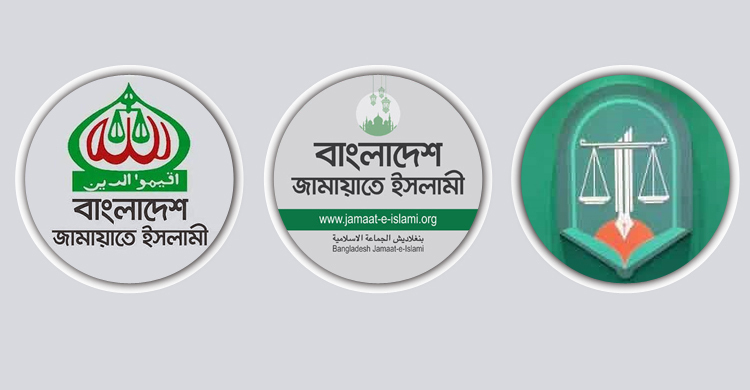
The Bangladesh Jamaat-e-Islami is facing a storm of internal discontent and wider political criticism after a redesigned emblem surfaced that drops Quranic text and introduces imagery resembling the national flag.
The proposed logo, which appeared on the wall of the Amir’s office during a meeting with Spanish Ambassador Gabriel Cistiaga Ochoa de Chinchetru on 28 September, has sparked heated debate both online and within the party.
The emblem features a rising sun on an open book set against a green flag, with a pen forming the bar of the party’s long-standing electoral symbol – the scales. Semi-parallel lines appear on either end of the book.
Absent, however, are the Islamic inscriptions that defined the traditional emblem: the name of Allah, the scales, and part of verse 13 from Surah Ash-Shura (“Aqimud Deen”).
The design has prompted pushback from party workers and supporters. A Jamaat activist from Dhaka Metropolitan South, speaking to Jago News on condition of anonymity, said: “People know Jamaat as an Islamist party. In that case, it would not be right to create a new logo without the words ‘Allah’ and ‘Akimud Deen’ in the current logo. Not only will people be confused by this, many Jamaat activist will also be disappointed. It would be wrong to take such a decision with the national elections in mind. We should not forget the mentality of the large number of devout Muslims to save them from the fundamentalist tagging of a few secular people.”
Nurul Huda Habib, a former student of Tamirul Millat Kamil Madrasa and ex-member of the Islami Chhatra Shibir, wrote in a Facebook post: “The previous logo used to exude an atmosphere of tradition, seriousness and ideals. The previous logo was the heartbeat of millions of lives – the tranquillity of millions of eyes. I expressed my disagreement and protest about the new logo.”
A former member of the Dhaka University branch of Shibir echoed similar concerns: “Jamaat is reforming many things. They are bringing various changes in their strategy. But this change in the logo is being criticised even at the grassroots level. The previous logo was Jamaat’s tradition. If the logo is to be changed due to political strategy, at least keep the verse from the Quran. If this logo is in force, its impact may be felt in the next elections as well.”
The change has been interpreted in political circles as part of Jamaat’s effort to rebrand itself, with some suggesting the emblem’s resemblance to the national flag is designed to soften its Islamist image and signal credibility to Western audiences.
On Facebook, one user argued: “The change in Jamaat’s logo is giving a new message in politics. They are trying to be secular. They are trying to be trusted by the West.”
In response, Jamaat’s Central Executive Council member and Assistant Secretary General, Maulana Abdul Halim, sought to downplay the controversy: “Our logo is being changed. Several logos have been designed under the direction of the Amir. This logo has accidentally appeared in the film. The final logo will be released in the next few days.”
He added: “Discussions are underway in the executive council about the logo. Once finalised, it will be used as the official logo.”
Jamaat’s existing emblem had not been widely used in recent years, after the party changed its official name from Jamaat-e-Bangladesh to Bangladesh Jamaat-e-Islami to distinguish itself from Jamaat-e-Islami Pakistan. Since then, media outlets had often relied on unofficial graphics featuring the party’s name and website rather than a formal emblem.
With the controversy now spilling into public debate, Jamaat’s leadership faces a delicate balancing act: whether to retain its Islamic identity rooted in tradition or press ahead with a secular-facing rebrand that risks alienating its grassroots support.