
Khaleda’s condition critical, put on ventilator

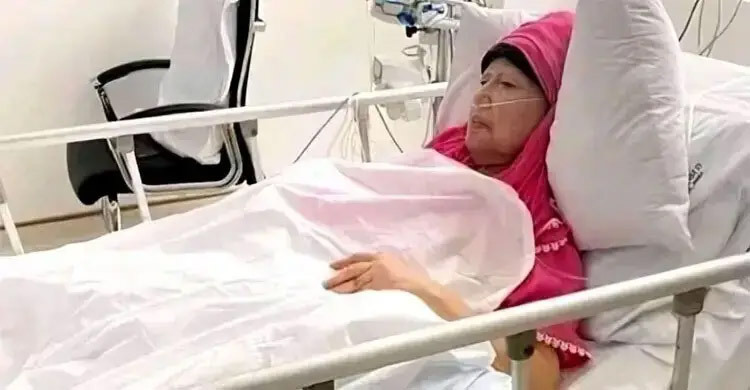
The health condition of former Prime Minister and BNP Chairperson Begum Khaleda Zia has deteriorated further, prompting doctors to place her on ventilator support.
The update was provided by the medical board overseeing her treatment – comprising local and foreign specialists – in a statement issued at on Wednesday, December 11, 2025.
The statement, signed by Professor Dr Shahabuddin Talukder of Evercare Hospital, was circulated to the media by the BNP Media Cell.
Khaleda Zia, 79, has long been suffering from chronic complications involving her liver, kidneys, heart, as well as diabetes and arthritis.
She was admitted to Evercare Hospital on November 23 after her breathing difficulties, cough, and fever worsened late last month.
Post-admission tests revealed severe deterioration of her lungs, heart, and kidneys, prompting doctors to shift her from a cabin to the Critical Care Unit (CCU).
According to the medical board, Khaleda was initially supported with a high-flow nasal cannula and a BiPAP machine due to worsening breathing distress, falling oxygen levels, and rising carbon dioxide in her blood.
As her condition continued to decline, she was placed on elective ventilator support to reduce stress on her lungs and other vital organs.
She was diagnosed with acute pancreatitis on November 27, for which treatment is ongoing.
Doctors also detected serious bacterial and fungal infections, necessitating strong antibiotics and antifungal medications.
Due to worsening kidney failure, Khaleda has been placed on regular dialysis.
She is also receiving blood and blood component transfusions following complications from gastrointestinal bleeding and disseminated intravascular coagulation (DIC).
An echocardiogram detected abnormalities in her aortic valve, and a subsequent TEE test confirmed infective endocarditis, for which treatment has been initiated in line with international guidelines.
A multidisciplinary team of Bangladeshi and foreign specialists is monitoring her condition round the clock.
The medical board has urged the public and the media to rely solely on official updates, avoid spreading unverified information, and respect the patient’s privacy.