
Hasina can’t evade responsibility for Khaleda’s death: Nazrul

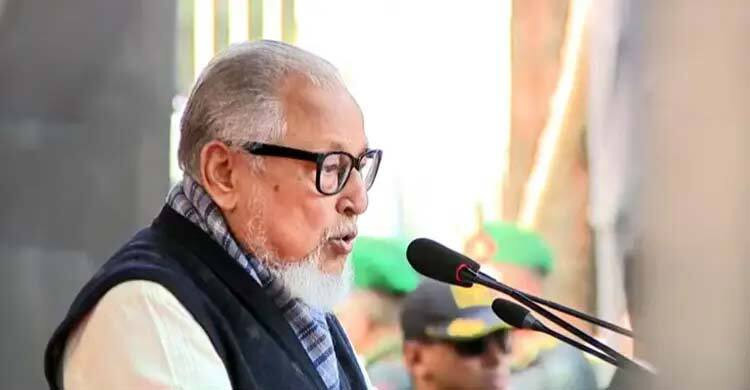
BNP Standing Committee member Nazrul Islam Khan on Wednesday, December 31, alleged that former Prime Minister Sheikh Hasina would never be able to evade responsibility for the death of BNP Chairperson and former Prime Minister Begum Khaleda Zia.
“On February 8, 2018, Khaleda Zia walked into jail on her own feet after being subjected to personal vengeance of fascist Hasina. But she came out of prison seriously ill,” he said while speaking at Manik Mia Avenue shortly before Khaleda Zia’s namaz-e-janaza.
Nazrul Islam said Khaleda’s prolonged imprisonment, denial of proper medical treatment and restrictions on treatment abroad had severely damaged her health and ultimately led to her death.
“According to doctors at home and abroad, her illness worsened because she was denied the opportunity to receive treatment overseas during four years of house arrest. As a result, this unconquerable leader eventually succumbed to death. So, the fascist Hasina will never be free of responsibility for this death,” he said.
Khaleda’s body was taken to a temporary stage set up at the South Plaza of the Jatiya Sangsad around 2:45pm for her janaza.
Later, Nazrul Islam Khan read out a brief life sketch of Khaleda Zia on behalf of the party.
He explained the circumstances that led her to enter politics and highlighted her long struggle for democracy, her unwavering commitment to democratic values and her deep patriotism.
The BNP leader also recalled her contributions to the country and urged everyone to pray for her departed soul.
Inspiration Against Fascism
Nazrul said Khaleda Zia never bowed before any domestic or foreign force, nor did she compromise on democracy, freedom of expression or voting rights, despite facing repeated repression. “She was jailed during the rule of autocrat Hussein Muhammad Ershad, during the so-called 1/11 regime and again under Sheikh Hasina,” he said.
The BNP leader said Khaleda was evicted from her residence linked to the memory of her martyred husband, late President Ziaur Rahman, and sentenced to 17 years in prison on what he described as false charges.
“Yet she never compromised with authoritarian politics. This is why she became an enduring inspiration in the struggle against fascism,” Nazrul said.
He said Khaleda Zia was now being bid farewell amid the love, respect and prayers of millions of people.
“Those who sent her to jail and made her homeless could not live in peace and were forced to flee,” he said referring to former Prime Minister Sheikh Hasina, who was ousted in a mass uprising on August 5, 2024, and forced to seek refuge in India.
Political Journey
Nazrul said Khaleda Zia joined BNP on January 3, 1982, to keep the morale of party leaders and activists intact after the assassination of President Ziaur Rahman in 1981.
“She began her tireless political journey at a time of national crisis…the entry of Begum Khaleda Zia into politics was sudden, but it was inevitable in the interest of the country,” he said.
Despite being the party founder’s wife, Nazrul said Khaleda Zia rose through its ranks constitutionally, first as a primary member, then vice-chairperson, acting chairperson and later elected chairperson through the party council.
Of her 43-year political life, he said, she led BNP for 41 years as its top leader, strengthening and organising the party.
Role in Restoring Democracy
Nazrul said Khaleda Zia led a continuous nine-year movement against Ershad’s military rule and restored democracy through a free, fair and neutral election in 1991.
“For this, the nation honoured her with the title ‘Uncompromising Leader’,” he said.
The BNP leader noted that she served as prime minister three times and won all parliamentary seats she contested, describing her electoral success as rare both nationally and internationally.
“She was the first woman prime minister of Bangladesh and the second in the Muslim world,” he said.
Governance and Legacy
Nazrul said Khaleda Zia introduced landmark programmes for public welfare, including female education stipends, the ‘Food for Education’ programme, and separate ministries for expatriates and freedom fighters.
He said Bangladesh gained international recognition as an “emerging tiger” during her tenure.
“She used to say, ‘We have friends abroad, not masters,’” Nazrul recalled.
Contributions to Liberation War
Nazrul said during the 1971 Liberation War, Khaleda Zia was detained by Pakistani forces along with her two young sons from July 2 until victory, while her husband declared independence and served as a sector and forces commander.
“The contribution of this family to the Liberation War is unparalleled,” he said.
Final Farewell
Nazrul said Khaleda Zia used to say Bangladesh was her only address, as she had no home outside the country. “She breathed her last on this soil and will rest forever beside her martyred husband.
He expressed his confidence that BNP will move forward under the leadership of Tarique Rahman, following Khaleda Zia’s ideals of democracy, peace, development and public welfare.
Bidding farewell to Khaleda, the BNP Standing Committee member said, “She is departing with the respect, love and prayers of the entire nation, regardless of political affiliation. She leaves behind the unique legacy of a great woman, a fighter in politics and a patriotic stateswoman—an example that will remain a guiding inspiration for future generations of political leaders and activists.”
Nazrul thanked the Chief Adviser, members of the advisory council, political leaders, chiefs of the three services, law enforcement agencies and all those involved in maintaining security and discipline during the funeral.
Begum Khaleda Zia passed away early Tuesday morning at Evercare Hospital at the age of 80 after suffering from multiple critical health complications.
Source: UNB