
Yunus urges fearless turnout in election, referendum

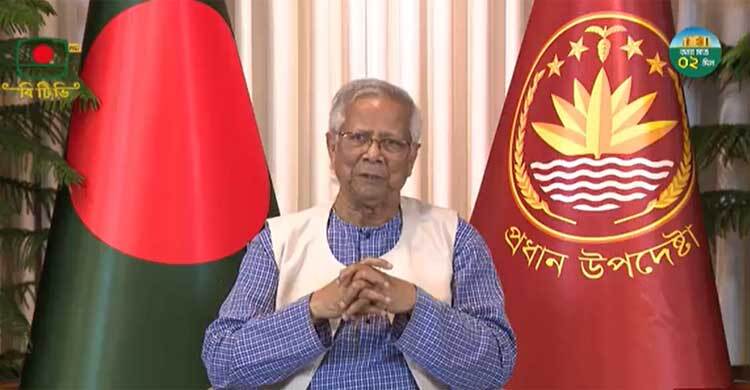
Chief Adviser Professor Muhammad Yunus has called on citizens to participate peacefully and decisively in the upcoming 13th national parliamentary election and the referendum on the July National Charter, describing the twin votes as a defining moment that could reshape Bangladesh’s political future and democratic structure.
In a televised address to the nation on Tuesday evening, delivered just hours before voting begins, the chief adviser said the country stands at a “historic and future-defining” juncture following years of political turmoil and a mass uprising that paved the way for the current transition. He urged voters to exercise their constitutional rights without fear, stressing that the ballot would determine not only the next government but also the framework of future reforms through the referendum.
‘Milestone’ election after mass uprising
The chief adviser described the upcoming vote as the first national election after a nationwide uprising, calling it the constitutional expression of people’s demand for justice, equality and accountability. He paid tribute to martyrs of the Liberation War and the July uprising, saying their sacrifices enabled the democratic transition now underway.
According to him, the election marks one of the largest participatory contests in the country’s history, with 51 political parties and more than 2,000 candidates, including independents, in the race. He said such broad participation reflects a renewed political awakening and public desire for change.
While expressing satisfaction that campaigning remained comparatively peaceful, he acknowledged several violent incidents that claimed lives during the election period, calling any loss of life in democratic practice unacceptable.
Call for restraint and democratic spirit
Addressing political parties and candidates, the chief adviser urged them to accept the results in a democratic spirit and place national interests above partisan gains. He warned against chaos, intimidation, centre capture or the spread of rumours, saying the state would not tolerate any attempt to undermine the electoral process.
He also rejected what he described as “planned propaganda”, suggesting the interim administration would delay handing over power, assuring that the government’s mandate would end once elected representatives assume office.
Focus on youth and women voters
In a significant portion of his speech, the chief adviser directly addressed young and women voters, many of whom he said were participating in a truly competitive national election for the first time in years. He praised women’s contributions to political movements, economic growth and social change, calling the election a new beginning for inclusive participation in state decisions.
He urged young voters to see the ballot as an opportunity to respond to years of political frustration and shape the country’s direction through democratic means.
Extensive security and technology measures
Outlining preparations for polling day, the chief adviser said a record number of law enforcement personnel have been deployed alongside members of the armed forces with magisterial powers to maintain order. Authorities have introduced large-scale technological monitoring, including CCTV surveillance, body-worn cameras for polling officials, drones and dog squads to ensure safety and transparency.
He highlighted several “historic steps” aimed at expanding participation, including voting opportunities for expatriate Bangladeshis for the first time and postal ballots for government officials on duty, law enforcement members and eligible citizens in custody.
Referendum to decide reform path
The chief adviser placed strong emphasis on the referendum on the July National Charter, describing it as a landmark democratic exercise allowing citizens to directly decide whether to endorse a reform framework developed through consultations with more than 30 political parties.
He said the charter outlines proposals for governance reforms, accountability, economic restructuring and equal rights, and argued that lasting national transformation requires public consent rather than decisions imposed solely by the state.
Warning against misinformation
The chief adviser warned of organised attempts to spread rumours and create confusion ahead of the polls, urging citizens to verify information and avoid sharing unconfirmed claims. He encouraged voters to use official channels, including the Election Friend hotline, to access verified updates.
Pledge of peaceful transfer of power
Reaffirming the interim government’s role as a transitional authority, he said the administration is prepared to hand over power quickly and “with pride” to the newly elected government once the election process concludes.
Concluding his address, the chief adviser called on citizens to go to polling stations in a festive and peaceful atmosphere, saying their participation could mark the beginning of a “new Bangladesh” shaped by democratic choice and collective responsibility.