
Win at the ballot, wait for the verdict: 4 BNP candidates’ fate hangs in the balance

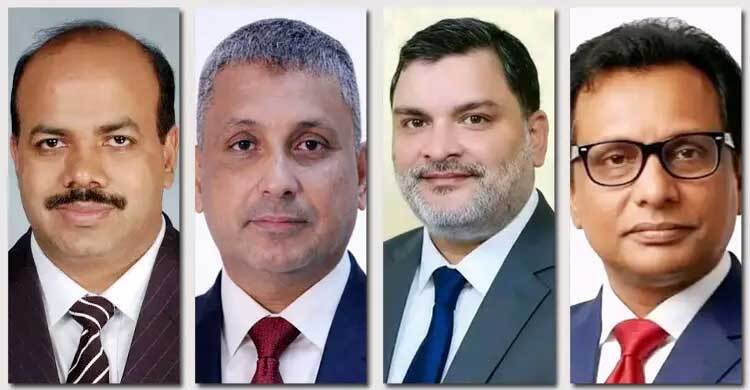
In four constituencies, election night may not deliver closure. The cheers, the garlands, the victory processions – all of it could pause at the courthouse door.
For BNP nominees Aslam Chowdhury (Chattogram-4), Sarwar Alamgir (Chattogram-2), Fahim Chowdhury (Sherpur-2) and Mobasher Alam Bhuiyan (Cumilla-10), the 13th National Parliament election is not just a political contest. It is a constitutional waiting game. Even if they secure the highest number of votes, their fate will ultimately depend on the Appellate Division of the Supreme Court.
A conditional green signal
In early February, the Appellate Division granted leave to appeal in separate cases challenging the validity of these candidates’ nominations. The court allowed them to contest the polls – but with conditions in key cases.
For Aslam Chowdhury and Sarwar Alamgir, both accused of loan default, the court ordered that if they win, the Election Commission cannot publish the official gazette notification of their victory until the appeals are resolved.
Without gazette notification, there can be no oath, no assumption of office.
In effect, they may win the ballot but remain in legal limbo.
Legal observers describe this as a rare judicial balancing act – preserving democratic participation while keeping legal accountability intact.
The loan default dispute
The controversy in Chattogram-4 and Chattogram -2 stems from allegations that the BNP candidates are loan defaulters.
Jamaat-e-Islami rivals challenged their nominations before the Election Commission.
In one case, a bank also moved against the candidate.
Returning officers initially declared the nominations valid. The Election Commission later dismissed the objections. The High Court upheld the EC’s decisions. But the challengers escalated the matter to the Appellate Division.
The apex court granted leave to appeal, signalling that the legal questions are substantial enough for a full hearing.
At the same time, it stopped short of disqualifying the candidates outright.
Senior lawyer Syed Mamun Mahbub said the court sought to protect both democracy and judicial integrity.
“The court does not want to pass orders that allow loan defaulters to enjoy benefits,” he said. “But since the matters are at an advanced stage, it would not be appropriate to keep them out of the election entirely.”
Former Additional Attorney General MK Rahman termed the order “exceptional.” According to him, such conditional participation is uncommon in Bangladesh’s electoral jurisprudence.
Citizenship cloud over Sherpur-2
In Sherpur-2, Fahim Chowdhury faces a different challenge – allegations relating to dual citizenship, specifically Australian nationality.
The Appellate Division upheld his candidacy, removing any immediate barrier to contesting. However, the appeal on the citizenship issue remains pending. Lawyers for the appellant argue that if he wins, the result could be suspended until the legal question is finally settled.
Thus, Sherpur-2 may vote under the shadow of an unresolved constitutional query.
Nomination technicality in Cumilla-10
Mobasher Alam Bhuiyan’s case involves a dispute over nomination documentation. The Appellate Division granted leave to appeal but permitted him to remain in the race.
His lawyer confirmed that there is no bar to contesting, though the ultimate outcome will hinge on the court’s final verdict.
What happens if they win?
The implications are significant.
If any of these candidates lose the election, the pending appeals will effectively lose relevance. But if they win and subsequently lose in court, the scenario could become unprecedented.
According to legal experts, the candidate with the second-highest votes in the constituency may then be declared elected.
Such an outcome would set a powerful precedent for future elections.
Barrister Saiful Alam observed that political parties should have exercised greater caution in nominating candidates facing legal complications.
“If someone wins and later loses in court, it will send a strong message for the future,” he said.
Democracy on pause
The situation has created an unusual dynamic in four constituencies: voters will decide, but the final chapter may be written in the Supreme Court.
It is a reminder that in a constitutional democracy, electoral legitimacy and legal validity must walk side by side. One cannot permanently override the other.
As campaigning enters its final stretch, the four candidates remain on the ballot, addressing rallies, mobilising supporters and seeking votes like any other contender.
Yet in their case, victory will not simply be counted.
It will be confirmed – or undone – by the highest court of the land.