
The defining mandate of the next govt: Reform, restore, rebuild

As Bangladesh enters a pivotal political phase, the next government faces a mandate far deeper than electoral victory. With steady GDP growth and rising exports masking inflation, banking stress and youth unemployment, the challenge is consolidation – not expansion. Political harmony, rule of law, institutional credibility and job creation will determine whether the country matures into a stable middle-income democracy. From implementing the spirit of the July Charter to reforming education, banking, energy and governance systems, the agenda is clear: restore trust, depoliticise institutions and create measurable youth employment. The coming administration will be judged not by rhetoric, but by reform, stability and delivery, writes Md Nazrul Islam.
Bangladesh is getting into consequential politics. The new administration will be taking over when both economic stability and institutional pressure are experienced simultaneously. The GDP has been growing at about 56 per cent regardless of the global turbulence. The exports have passed the mark of 50 billion. The installed power generation capacity is more than 25,000 MW. However, inflationary pressure, banking industry stress, foreign currency risk, and the increasing unemployment of the young population are reminding us that macro-stability is not enough to make a country confident.
The key issue that the next government will face is not expansion, but consolidation. Political harmony, institutional credibility, job creation, and the rule of law would be consolidated to decide whether Bangladesh will become a mature middle-income democracy or continue predisposed to recurrent instability.
Harmony in politics: The first recourse
Political stability should first be achieved before economic reform can be successful. Political harmony does not imply the absence of conflict; it implies a conflict that is controlled by as well as according to the constitution. The political history of Bangladesh demonstrates that the long-term confrontation undermines investor confidence, slows the administrative decision-making processes, and produces social anxiety.
The coming government will thus have to make a deliberate shift towards inclusive rule. The parliamentary input must be enhanced, and dissertations encouraged, and opposition institutionalised. Neutrality by the administration must be apparent, especially in law enforcement and regulatory agencies. Discriminative enforcement discards legitimacy; unbiased enforcement constructs it. In political maturity, the victory must be restricted, and power must be magnanimous. It is not dominance that is reacted to; predictability is what is being reacted to by investors and citizens.
The July Charter: Mobilisation to policy
The July movement did not simply represent the complaints of the time; it enshrined the desire for rightfulness, responsibility, and integrity of the institutions. The July Charter, with or without its codification or even a moral comprehension, is a social contract between the state and its people. It had a spirit of transparency, employment opportunity, governance responsibility, and depoliticised institutions. Any disregard for this feeling would intensify cynicism. Its conversion to reform would enhance the legitimacy of democracy. The procurement and public finance systems need to be digitised in case the movement requires accountability. In case it requires transparency, the revenue administration has to lower discretion and increase automation. In case it requires a youth opportunity, employment objectives should be quantifiable and openly monitored. Unmet expectations make movements destabilising.
Youth employment: Structural imperative
The number of young people in the labour market is almost two million every year. The rate of youth unemployment is still very high when compared to the rest of the country, especially among those who have graduated from university. It is not just an economic problem; it is a strategic problem. Bangladesh has a notable growth in higher education; however, there is a poor match with market demand. Technical and Vocational Education and Training (TVET) continue to represent a rather limited portion of overall enrolment. At the same time, the skills of technicians, IT specialists, and middle-level supervisors are often cited as insufficient in industries. The new government should consider employability, rather than enrolment, as the main indicator of educational achievement. The employment policy should be based on curriculum reform, the development of digital skills, the creation of partnerships between the government and the business sector for the training of employees, the assistance of SMEs, and the facilitation of startups. Political stability is very much associated with youth employment in any country. An economically marginalised generation will hardly feel institutionally invested.
Rule of law: Equal application, equal confidence
Without a powerful rule of law, economic growth cannot be deepened. Investors need forecastable tax, effective enforcement of contracts and unbiased regulation. The tax-to-GDP ratio has always been approximately 7-8 in Bangladesh, which is very low in comparison to other Asian countries, indicating that there is a lack of compliance and a lack of confidence in the enforcement of tax laws. Business litigations can take years before they are solved, which paralyses the capital and deters investment. Reform of the judicial system, reinforcement of commercial courts, alternative dispute resolution systems and computerised case management would greatly increase confidence. The rule of law must be uniform. It cannot be changed depending on political orientation or administrative will. When the laws are enforced uniformly, then people will be willing to be compliant. Justice is not a principle of the law only; it is an economic property.
De-politicising the administrative machinery
The civil service in Bangladesh still has many talented recruits, but the institutional trust has been eroded by the feeling of politicised transfers and postings due to loyalty. The Annual Development Programme is prone to project delays and cost overruns, which are usually associated with risk aversion in the administration.
Reform areas should include non-renewable tenure of senior posts, openness of promotion policies, and good-faith lawful decisions. When the institution has administrative protection, administrative courage develops. Well-established institutions prevail over governments. They are exhausted by weak institutions.
Trade, investment and energy: Elimination of structural friction
The export engine in Bangladesh is still strong, although logistics competitiveness is low. Chattogram Port manages more than 90 per cent of the sea-borne trade, yet container dwell times and bottlenecks in the procedure reduce the cost of transactions. With Bangladesh nearing the post-LDC graduation stage, efficiency will play an important role in competitiveness instead of preferential treatment. The level of foreign direct investment is also low at slightly more than $3billion a year compared with other economies. Among the main challenges cited by investors are regulatory unpredictability, complexities in land acquisition, delays in contract enforcement and energy limitations. Even with a power capacity of over 25,000 MW, the shortage of primary fuel, especially gas, is still a problem when it comes to the reliability of industries. The process of diversification into LNG, renewables, and regional energy trade should increase.
Financial stability and banking discipline
The banking industry needs to be solidified. Non-performing loan ratios (officially) are in the range of 910 per cent, but larger stress insurers reveal underlying weaknesses. Financial discipline has been undermined through politically motivated lending and forbearance by the regulator. This will restore confidence by strengthening the independence of the central bank, implementing rigorous standards used to classify loans, professionalising bank boards and by consolidating the weaker institutions where necessary. Sustainable growth entails giving credit on a viability basis and not an influence basis.
Accountability of development strategy
Openness will decrease discretion; less discretion will decrease corruption. Public trust can be enhanced through digital procurement systems, compulsory disclosure of assets among senior officials, an independent audit system and whistleblower security. The promise of e-governance projects has been demonstrated in terms of less human interface and higher efficiency. The extension of these systems to other ministries will add credibility to the institution. There should be systemic accountability and not episodic.
An institutional maturity demanding moment
The fundamentals of Bangladesh are also quite high, such as strategic geographic location, robust entrepreneurs, thriving export industry, and a young population. However, the next phase demands austerity institutionalisation. Reform needs to be pegged on political harmony. Governance should be based on the aspirations of the July Charter. Employment among the youth should be a quantifiable national goal. The rule of law should be equal and fair. This must be substituted with administrative professionalism. The approach with the next generation will not be as much judged by the rhetoric, but by whether the graduates are getting employment, the businesses are getting some security, and the citizens are getting justice. Reform, restore, rebuild, these are not catch phrases. These are the need for stability and the basis of a full-fledged democratic state.
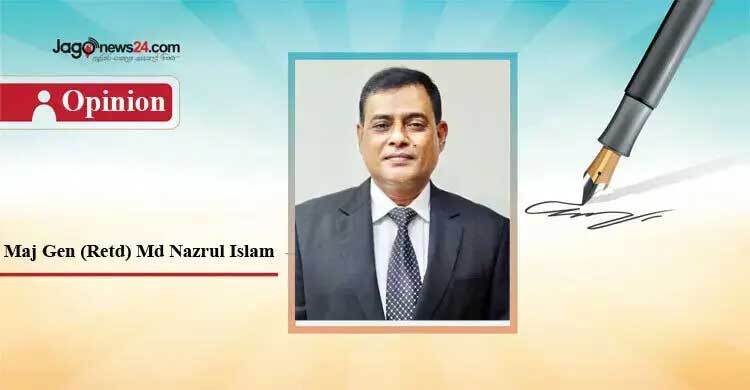
Maj Gen (Retd) Md Nazrul Islam is a former executive chairman of BEPZA, a retired Major General of the Bangladesh Army, and a PhD researcher on technology, workforce transformation, and industrial competitiveness.