
Political heavyweights stumble as voters redraw electoral map

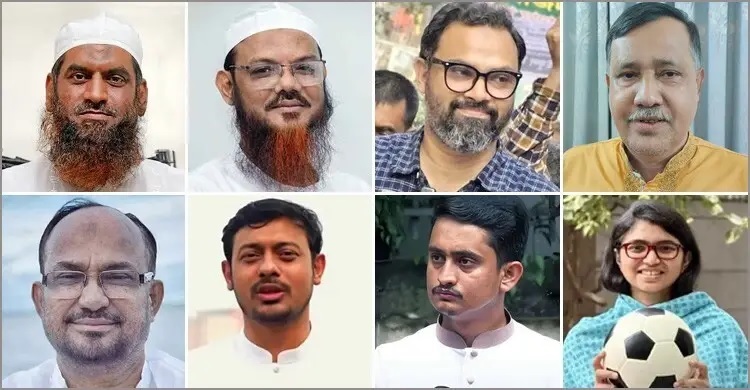
The 13th National Parliamentary Election has done more than determine who will form the next government. It has shaken the foundations of several established political camps, with a string of high-profile defeats signalling a bigger change in voter behaviour across the country.
From Dhaka’s urban battlegrounds to coastal constituencies in Barishal and Khulna, prominent leaders with strong organisational backing and national recognition found themselves unexpectedly rejected at the ballot box. Analysts say the results reveal a more competitive political environment where local credibility, grassroots mobilisation, and campaign messaging mattered more than seniority or reputation.
Dhaka’s tight races expose shifting urban mood
The capital delivered some of the most dramatic contests. In Dhaka-13, Bobby Hajjaj narrowly defeated Mamunul Haque of Bangladesh Khelafat Majlis in a race that remained virtually tied across all polling centres. The slim margin suggested a divided electorate where small shifts in turnout proved decisive.
Dhaka-16 also drew attention as former national footballer Aminul Haque fell short despite a high-profile campaign. Political observers say celebrity status no longer guarantees electoral success in the capital’s rapidly changing political landscape.
Meanwhile, Dhaka-8 reaffirmed the strength of established party structures when veteran BNP figure Mirza Abbas secured victory over Mohammad Nasir Uddin Patwary. The result highlighted how organisational discipline and long-term political networks remain decisive in densely populated constituencies.
Southern setbacks for influential Islamist leaders
One of the most striking developments came from Barishal, where Mufti Syed Muhammad Faizul Karim of Islami Andolan Bangladesh faced defeats in both Barishal-5 and Barishal-6. Despite his strong religious following and sustained campaign efforts, voters opted for BNP candidates by significant margins.
Political analysts believe the outcome may reflect a consolidation of votes under a single political banner, reducing the space for smaller ideological parties to expand their parliamentary presence.
Coastal and northern contests signal changing alliances
In Cox’s Bazar-2, senior Bangladesh Jamaat-e-Islami leader Hamidur Rahman Azad lost by a wide margin, underscoring a shift in coastal voter sentiment. The large gap between candidates suggested a clear swing rather than a fragmented vote.
Further north, Sarjis Alam of the National Citizen Party mounted a competitive challenge in Panchagarh-1 but ultimately fell short. The close result indicated that emerging parties are gaining ground but still face challenges against entrenched political machinery.
Khulna emerges as a battleground of surprises
Khulna’s results reflected one of the most dramatic reshuffles of political influence. Krishna Nandi suffered a wide-margin defeat in Khulna-1, while former BNP city president Nazrul Islam Manju lost Khulna-2 in a closely contested race.
Perhaps the most symbolic loss came in Khulna-5, where Jamaat Secretary General Mia Golam Parwar narrowly failed to retain his seat. The tight margin showed how even senior party leaders were vulnerable amid shifting alliances and voter priorities.
Independent and alternative voices struggle to break through
Dhaka-9 offered another glimpse into the evolving political reality. Independent candidate Tasnim Jara could not overcome the strong party-backed campaign of BNP’s Habibur Rashid, illustrating how independent candidates continue to face structural disadvantages in highly organised electoral contests.
Beyond individual defeats: A broader political message
The fall of multiple heavyweight candidates reflects more than isolated constituency outcomes. Political observers argue that voters are becoming less influenced by legacy status and more focused on local issues, campaign performance and perceived effectiveness.
The results may also reshape party strategies going forward. Larger parties are likely to double down on grassroots mobilisation, while smaller or emerging groups may rethink coalition politics and constituency-level alliances.
As Bangladesh moves toward forming its new government, these unexpected defeats serve as a reminder that the electorate remains fluid and increasingly assertive, capable of reshaping the political hierarchy in a single election cycle.