
Omar becomes 16th Muslim Nobel Laureate for building homes for molecules

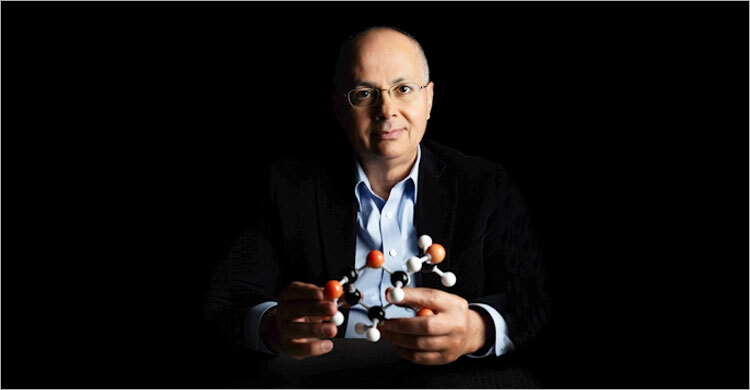
From a single-room home in Amman, Jordan, shared with livestock and without electricity, to the pinnacle of global science, Omar Mwannes Yaghi has been awarded the 2025 Nobel Prize in Chemistry, becoming the 16th Muslim individual in history to receive a Nobel Prize and the fourth Muslim scientist to win in a scientific category.
Yaghi, 60, shares the prestigious award with Susumu Kitagawa of Japan and Richard Robson of Australia for their pioneering work in developing metal–organic frameworks (MOFs), ultra-porous, designer materials that have redefined how scientists capture, store, and transform molecules. But for Yaghi, the journey to Stockholm began not in a lab, but in hardship, hope, and an unshakable belief that chemistry could build a better world.
Born in 1965 to a Palestinian refugee family in Jordan, Yaghi grew up in extreme poverty. His family of many children lived in one room, often without clean water or power. At just 15 years old, with minimal English, he moved to the United States on his father’s urging. He started at Hudson Valley Community College, later transferring to the University at Albany, before earning his PhD in chemistry from the University of Illinois in 1990.
Today, he holds the highest academic rank at the University of California, Berkeley, University Professor, and occupies the James and Neeltje Tretter Endowed Chair in Chemistry.
He is also an elected member of the US National Academy of Sciences and the German National Academy of Sciences Leopoldina, and in January 2025, he was named the 7th President of the World Cultural Council, an international body promoting science, culture, and philanthropy.
A new language of matter
Yaghi is widely regarded as the father of reticular chemistry, a field he founded in the 1990s that treats molecules like building blocks, stitching them together with strong bonds to create crystalline frameworks with atomic precision. At a time when most chemists believed such ordered, porous structures were impossible, Yaghi proved otherwise.
His 1995 breakthrough—creating the first stable, crystalline metal–organic framework—laid the foundation for a materials revolution. In 1999, he unveiled MOF-5, a material so porous that a few grams contain more surface area than a football pitch. This enabled unprecedented applications: storing hydrogen for clean vehicles, capturing carbon dioxide from industrial emissions, and—most poetically—harvesting drinking water from desert air.
He later extended this vision to covalent organic frameworks (COFs) and even pioneered molecular weaving, creating the world’s first woven material at the molecular scale.
From lab to life-saving impact
Yaghi didn’t stop at discovery. He co-founded startups – Atoco (for atmospheric water harvesting and carbon capture) and H2MOF (for hydrogen storage) –to bring MOF technology to the real world. His water-harvesting MOFs have been deployed in arid regions, offering hope to communities facing drought. His carbon-capture materials are now being tested in industrial plants from Canada to the Middle East.
His work has earned him nearly every major scientific honour: the Wolf Prize, the Albert Einstein World Award of Science, the VinFuture Prize, the Tang Prize, the Balzan Prize, and over 30 other international awards. In 2021, he was granted Saudi citizenship by royal decree in recognition of his scientific contributions to the Muslim world.
A milestone for the Muslim world
With this Nobel, Yaghi joins an elite group of 16 Muslim Nobel laureates in history. He is the fourth Muslim scientist to win in a scientific field, following:
Abdus Salam (Physics, 1979)
Ahmed Zewail (Chemistry, 1999)
Aziz Sancar (Chemistry, 2015)
Moungi Bawendi (Chemistry, 2023)
The other laureates include peace and literature recipients such as Muhammad Yunus, Anwar Sadat, Malala Yousafzai, Naguib Mahfouz, Orhan Pamuk, and Abdulrazak Gurnah.
For many in the Muslim world, Yaghi’s achievement is more than personal—it is symbolic.
As the 16th Muslim Nobel laureate, Omar M Yaghi doesn’t just join history—he helps write its next chapter: one where science serves humanity, and molecules build hope.