
Explainer: Why aftershocks happen, how long can they continue?

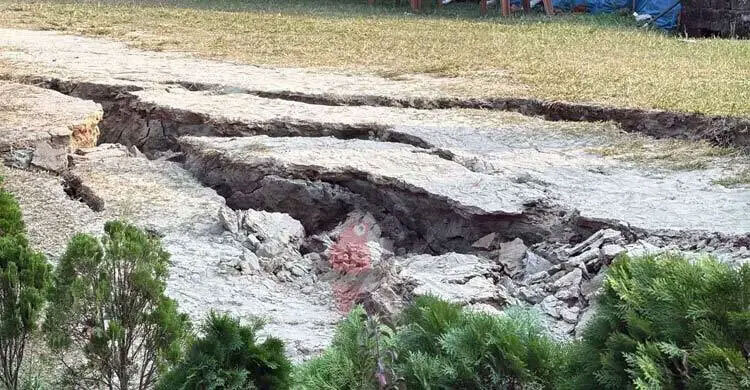
When an earthquake strikes, many assume the danger ends once the main tremor stops. But in reality, earthquakes rarely occur alone. Smaller quakes – known as aftershocks – often follow the main event, sometimes repeatedly and unpredictably. These tremors can continue for hours, days, or even months, depending on the size and intensity of the original quake.
So, why do aftershocks happen — and how long should people remain alert?
Why aftershocks occur
Earthquakes occur when stress builds up between tectonic plates deep underground. When the accumulated pressure exceeds the earth’s resistance, the crust breaks releasing energy in the form of seismic waves.
However, this release of energy during the main quake doesn’t happen neatly or completely.
According to geologists: The cracks formed during the main earthquake do not stabilize immediately. The surrounding rock layers continue to shift and adjust.
This adjustment process creates smaller tremors – the aftershocks. They are essentially the earth reorganizing itself after the sudden movement.
Although aftershocks usually register lower magnitudes than the main quake, they are part of the same fault line and originate from nearby points along the same rupture zone.
How soon and how often do aftershocks happen?
Aftershocks can begin within minutes of the main earthquake – but their timing varies.
According to the United States Geological Survey (USGS), aftershocks can occur minutes, hours, days, weeks or even years after a major earthquake.
Their frequency and strength usually decrease over time, following a pattern known as Omori’s Law, which explains that the number of aftershocks declines exponentially as time passes. There is no set number of aftershocks that must occur – a sequence may include only a few, dozens, hundreds or, in rare cases, even thousands.
How many aftershocks occur depends on several factors, including the magnitude of the main earthquake, the geological structure of the fault line and the amount of residual stress still trapped underground.
In simple terms, the stronger the main earthquake, the longer and more persistent the aftershocks tend to be.
How dangerous are aftershocks?
Not all aftershocks are harmful, but the risk remains real – particularly when buildings and infrastructure have already been weakened by the initial quake.
The first 72 hours after a major earthquake are considered the most dangerous, as aftershocks tend to be stronger and more frequent during this period.
Even a relatively small aftershock can cause serious destruction if buildings are already damaged, walls or floors have become unstable, or if gas, water or electrical lines have been compromised.
Experts caution that the end of the main tremor does not mean the danger has passed.
The ground may continue shifting as pressure redistributes underground, increasing the likelihood of structural collapse.
For this reason, safety authorities advise people to stay in open areas immediately after an earthquake, avoid entering damaged buildings without official approval and keep emergency supplies accessible in case further tremors occur.
Can aftershocks or earthquakes be predicted?
For decades, scientists have tried to accurately forecast earthquakes and aftershocks. But despite advances in technology, precise prediction remains impossible.
Geologists can identify: Fault lines, high-risk regions, and likelihood of future seismic activity but they cannot predict the exact time, location, or strength of a future earthquake or aftershock.
Earthquake forecasting remains a scientific challenge – not due to lack of knowledge, but because tectonic processes occur deep underground with unpredictable triggering mechanisms.
Preparedness: The only practical defence
While earthquakes cannot be stopped or precisely predicted, the damage they cause can be significantly reduced.
Experts emphasize the importance of earthquake-resistant construction, strict building codes, and thoughtful urban planning that includes open spaces where people can gather safely during emergencies.
Alongside these structural measures, effective emergency communication systems and widespread public awareness and preparedness training play a crucial role in reducing casualties.
These strategies have already saved countless lives in earthquake-prone countries such as Japan, Chile and Turkey – and adopting similar approaches could make a vital difference in vulnerable regions like South Asia.
Bottom line
Aftershocks are not accidents – they are a natural and expected part of the earthquake process. Their frequency and duration depend on the size of the initial quake and the geological conditions beneath the surface.
What the recent tremors remind us is simple: When the earth shifts once – it may shake again. The key is staying alert, informed, and prepared.