
Data centers: A view from inside digital powerhouses

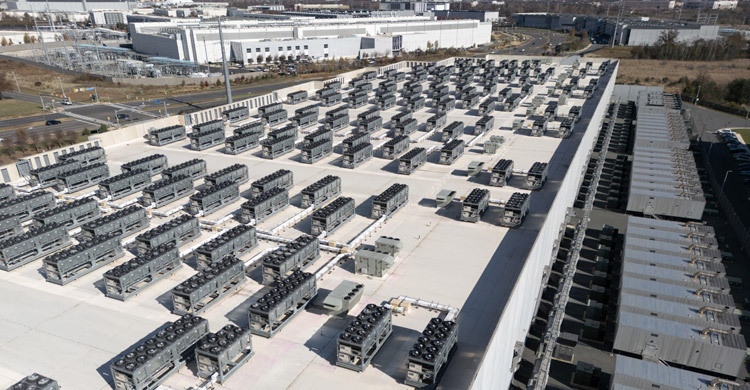
As artificial intelligence drives unprecedented demand for computing power, data centers, the physical backbone of the digital world, are expanding rapidly.
AFP was granted an exclusive look inside these critical infrastructures to understand how they operate.
At their core, data centers are enormous concrete warehouses filled with thousands of servers, arranged in standardised 19-inch racks. Globally, roughly 12,000 data centers are in operation, with half located in the US, according to Cloudscene, a data center directory. Facilities vary in size, from small single-company centers to massive multi-tenant complexes, with some spanning multiple floors or high-rise structures. Each server works in tandem, processing and storing vast amounts of data, while networking equipment, switches, routers, and fiber optics, moves terabytes of information every second.
Data centers close to end users deliver faster performance, a necessity for high-frequency trading, gaming, live streaming, and AI applications. Ashburn, Virginia, for example, hosts the world’s highest concentration of data centers due to its proximity to Washington, DC Urban locations, however, are expensive and face zoning challenges, prompting operators to place core infrastructure in rural regions while keeping latency-sensitive systems near population centers. This hybrid approach balances performance with cost.
A single server rack generates heat equivalent to several household ovens. Modern GPUs, essential for AI training, can exceed 90°C, risking permanent damage without adequate cooling. Traditional air conditioning is insufficient, leading operators to adopt liquid cooling, evaporative cooling, and “free cooling” using outside air. Data centers also consume massive amounts of water: US facilities used 21.2 billion liters in 2014, rising to 66 billion liters by 2023. Cooling efficiency is increasingly tied to environmental sustainability, as companies seek to reduce water and energy consumption while maintaining performance.
High-performance servers require immense power. Facilities draw electricity from the grid but often invest in “behind-the-meter” solutions for greater reliability and cost control. Backup systems, including massive battery banks and diesel generators, ensure 24/7 operation. Some operators supplement power with solar panels or gas turbines, while others await small modular nuclear reactors (SMRs) to meet future demand. Leading data centers guarantee uptime of 99.995%, as even brief outages can disrupt global services.
The rise of AI has dramatically increased demand for GPU-powered facilities. Tech giants have invested tens of billions of dollars in new centers capable of handling AI workloads. These facilities often prioritise proximity for inference tasks while training AI models in larger, more affordable rural centers. Edge computing is becoming vital, with smaller satellite centers processing time-sensitive data close to users.
Data centers consume enormous energy, estimates suggest they account for around 1% of global electricity use, and generate substantial heat. Operators are exploring renewable energy integration, water-efficient cooling, and AI-driven energy management to reduce environmental impact. Additionally, the construction and maintenance of these centers create jobs and drive local economies, though they also face community concerns over noise, traffic, and resource use.
From towering server racks and high-speed networking to advanced cooling and energy systems, data centers are the unseen engines of our digital lives. As AI, cloud computing, and high-speed internet continue to expand, these facilities will play an ever-greater role in shaping technology, economy, and daily life worldwide.
Source: AFP