
Land import ban: A costly gamble for Indian economy

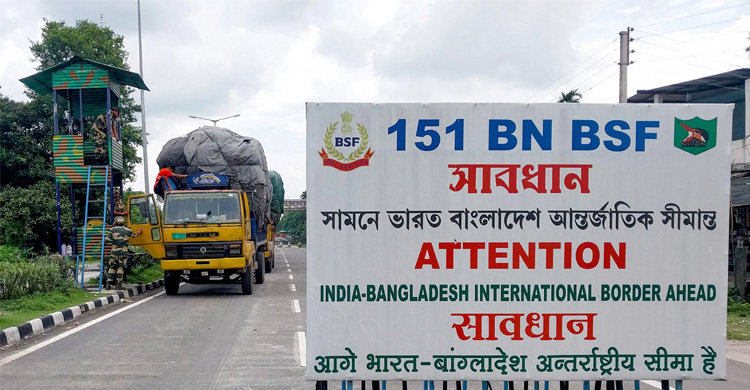
On May 17, India dropped a bombshell on its trade relationship with Bangladesh, banning the import of key Bangladeshi goods—ready-made garments, processed foods, plastics, fruit juices, cotton, wooden furniture, and more—through land ports.
According to the Global Trade Research Initiative (GTRI), this move could slash Bangladesh’s exports to India by $770 million, a staggering 42% of its total shipments to its giant neighbour.
But while the ban aims to flex India’s economic muscle, it’s poised to backfire, hitting Indian importers, consumers, traders, and the broader economy harder than anticipated.
From skyrocketing costs in the northeast to strained bilateral ties, here’s how India’s gamble could turn into a costly misstep.
Indian importers and traders: Caught in the crossfire
Bangladeshi garments, known for their affordability, are a staple in India’s northeastern states—Assam, Tripura, Meghalaya—and West Bengal. These regions, often called the Seven Sisters, have long relied on Bangladesh’s low-cost supply to meet local demand. Now, with land ports like Phulbari and Changrabandha off-limits, importers must reroute shipments through distant seaports in Kolkata and Mumbai. The result? Soaring logistics costs that erode profit margins.
Processed foods, fruit juices, and plastics from Bangladesh also enjoy a competitive edge in these markets.
Debasish Singh, Head of Business at Danish Food, told Jago News, “Bangladeshi products dominated the Seven Sisters because they reached markets cheaper than Indian mainland competitors. This ban seems designed to choke that advantage.” Importers now face the daunting task of sourcing pricier alternatives, a process that’s both time-consuming and costly. Small traders, in particular, may struggle to absorb these shocks, risking business closures and market disruptions.
Consumers: Facing price hikes and shortages
For Indian consumers, especially in the northeast, the ban spells higher prices and fewer choices. Bangladeshi garments and foods, prized for their affordability, are now either costlier to import or simply unavailable via land routes.
In the Seven Sisters, where local economies lean heavily on these goods, shoppers could see clothing and food prices climb as importers pass on added costs.
Supply shortages are another looming threat, particularly for soft drinks and snacks from companies like Bangladesh’s Akij Food and Beverage Limited, which exported 400,000–500,000 cartons annually to India. “We’ve halted production for Indian orders,” said Akij’s Head of Marketing, Maidul Islam, signalling a potential gap in store shelves.
Northeast economy: Jobs and logistics in jeopardy
The ban disrupts more than just trade—it threatens the economic fabric of India’s northeastern states. Land ports are vital hubs, sustaining jobs for truck drivers, warehouse workers, and logistics staff.
Kartik Chakraborty of the Petrapole Clearing Agents Staff Welfare Association told The Hindu that even after India’s earlier transshipment ban, 20–30 trucks of premium Bangladeshi garments crossed daily. With the new restrictions, that flow has dried up, leaving border logistics hubs eerily quiet. “Truck drivers and workers will bear the brunt,” Chakraborty warned, pointing to potential layoffs and income losses that could ripple through local communities.
The transport industry, already reeling from reduced trade volumes, faces further strain as rerouting to seaports slows delivery times and raises costs. For a region where economic opportunities are scarce, this could deepen unemployment and fuel discontent.
India’s export trade: A boomerang effect
India’s $12.2 billion in exports to Bangladesh in 2023–24 dwarfs Bangladesh’s $1.8 billion in return, giving India a clear trade surplus. But the ban risks provoking retaliation. Bangladesh has already restricted imports of Indian yarn, rice, paper, fish, tobacco, and powdered milk, and further countermeasures could hit Indian exporters hard.
Bangladesh’s Trade Adviser Sheikh Bashir Uddin didn’t mince words on May 18: “Indian businessmen will suffer more than us. Their exports to Bangladesh far outweigh ours.”
Key Indian sectors, like cotton and yarn, are especially vulnerable. Bangladesh’s garment industry, a major buyer of Indian raw materials, may scale back orders if its own exports falter, creating a domino effect. Posts on X echo this sentiment, warning that Bangladesh could pivot to alternative suppliers, further denting India’s export revenues.
Industry impacts: A double-edged sword
India’s garment manufacturers might see a short-term boost as Bangladeshi imports wane, but the benefits are shaky. If local producers can’t match Bangladesh’s low prices, consumers will face shortages or higher costs, potentially dampening demand.
Meanwhile, India’s cotton and yarn exporters, who supply Bangladesh’s textile hub, could see demand slump if Bangladesh’s garment exports decline. This interconnected trade web means India’s ban could inadvertently harm its own industries.
Bilateral relations: Tensions on the brink
The ban comes at a delicate moment. India-Bangladesh relations, already strained by the fall of Sheikh Hasina’s government and earlier trade spats, are teetering. India’s withdrawal of transshipment facilities in April and Bangladesh’s yarn import curbs set the stage for this latest clash. The ban risks further souring ties, threatening not just trade but India’s strategic influence in South Asia. Bangladesh, increasingly courted by China, may turn to alternative markets like Europe or East Asia, reducing India’s regional clout.
Domestic pressure is another wildcard. Traders and consumers in West Bengal and the northeast, hit hardest by the ban, could spark political backlash. Social media posts on X highlight growing frustration, with some calling the ban a misstep that prioritizes political posturing over economic sense.
The bigger picture: A lose-lose scenario?
India’s ban, framed by some as a bid to “restore equality” in trade relations, may yield short-term gains for domestic industries. But the costs are mounting. Higher prices and shortages risk alienating consumers, while job losses and trade disruptions could destabilize the northeast.
If Bangladesh retaliates or pivots to other markets, India’s export juggernaut could take a hit, undermining its $12.2 billion trade surplus. Add to that the diplomatic fallout, and India’s move looks less like a masterstroke and more like a high-stakes gamble.
As Bangladesh’s Commerce Ministry gears up for diplomatic talks, India faces a critical choice: double down or dial back. For now, the ban’s ripple effects are clear—India’s economy, traders, and consumers are paying a price, and the road to resolution looks anything but smooth.