
Dhaka, Washington to begin tariff talks amid Trump’s threat

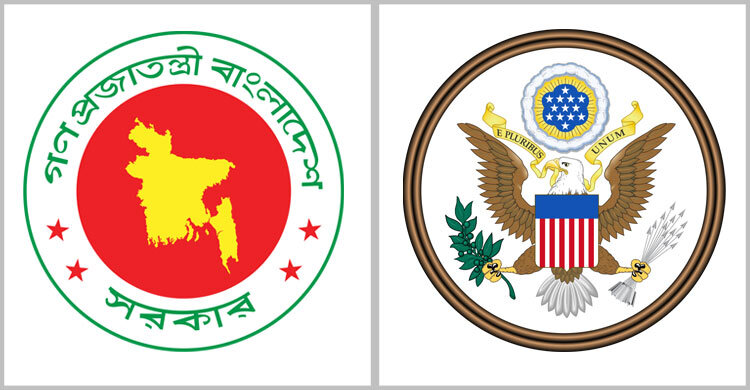
The second round of negotiations on the Agreement on Reciprocal Tariff between Bangladesh and the United States is sent to commence Wednesday, July 9, and will continue through July 11 in Washington, DC.
The US Trade Representative (USTR) invited Bangladesh, one of 14 countries selected for renewed talks following President Donald Trump’s letter to global leaders on July 7, according to a statement from the Chief Adviser’s Press Wing in Dhaka.
Commerce Adviser Sk Bashir Uddin is leading the Bangladesh delegation in person, joined by senior officials including the Commerce Secretary and an Additional Commerce Secretary. National Security Adviser Dr Khalilur Rahman will participate virtually from Dhaka.
The talks aim to build on the progress of the first round held on June 27, with Bangladesh seeking to finalise a mutually beneficial agreement swiftly.
Chief Adviser’s Press Secretary Shafiqul Alam emphasised Bangladesh’s goal of securing a “win-win” tariff deal, as stated on Tuesday following Trump’s letter to Chief Adviser Professor Muhammad Yunus. The letter, received on July 7, announced a 35% tariff on Bangladeshi goods entering the US starting August 1, 2025, unless Bangladesh opens its markets and eliminates tariff and non-tariff barriers.
Trump noted that the tariff could be adjusted based on the trade relationship and waived if Bangladeshi companies manufacture within the US, promising expedited approvals.
“Dhaka is looking forward to a tariff deal with Washington, DC, which we hope will be win-win for both countries,” Shafiqul said, noting multiple prior discussions with US counterparts.
The proposed tariff, described by Trump as “far less than needed to eliminate the trade deficit disparity,” has raised concerns in Dhaka, given Bangladesh’s reliance on garment exports, which constitute 16% of its GDP.
The negotiations are critical as Bangladesh, under the interim government led by Muhammad Yunus, prepares for its 2026 graduation from Least Developed Country status, which could impact its preferential trade access.
A reciprocal tariff agreement could stabilise trade relations, address US demands for market access, and mitigate potential economic fallout from the tariffs.
However, analysts warn that aligning tariff structures and labour standards remains a challenge amid Trump’s “America First” trade policy.
Trump’s letter underscored long-term partnership potential, saying, “You will never be disappointed with the United States of America.” Yet, the tariff threat has sparked domestic criticism, with opposition leaders like BNP’s Mirza Fakhrul Islam Alamgir accusing the interim government of insufficient preparation for US trade pressures. The talks’ outcome will likely shape Bangladesh’s economic strategy and its geopolitical positioning in South Asia.