
Industry leaders warn: US tariffs threaten Bangladesh with export catastrophe

US tariffs threaten Bangladesh's exports, particularly $23 billion textile sector, imperilling 70 per cent of garment yarn/fabric and leather exports. Industry leaders urge swift government action to prevent massive job losses and economic crisis.
Industry leaders fear that without swift government intervention – such as appointing lobbyists, engaging stakeholders, and securing competitive tariff rates – the sector could face significant losses, impacting millions of jobs and foreign exchange earnings.
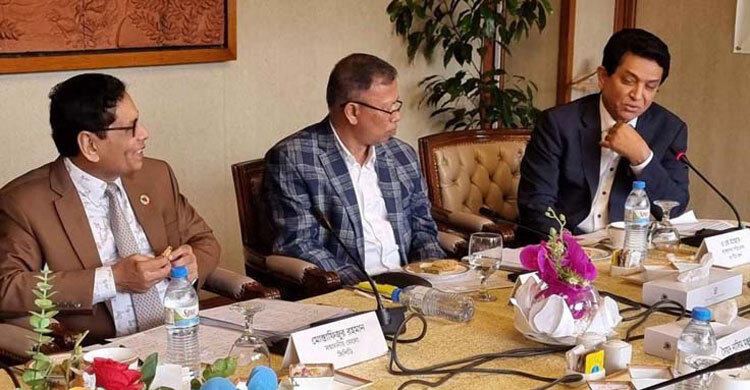
They came up with the opinion during a roundtable discussion hosted by Daily Prothom Alo on Sunday, July 20, at a Dhaka hotel.
Titled US Counter-Tariffs: Which Way Should Bangladesh Go?, the event highlighted growing concerns among exporters as the US proposes a 35 per cent tariff on Bangladeshi goods, threatening industries like garments and leather.
A dire warning from industry leaders
Former FBCCI President and Ha-Meem Group Managing Director AK Azad described the looming US counter-tariffs as the worst crisis in his 40-year business career, criticising the Bangladesh government’s lacklustre response.
Azad expressed frustration over stalled tariff negotiations, noting that major US brands, key buyers of Bangladeshi exports, are pessimistic about a favourable outcome.
“These brands are lobbying in the US and have told us Bangladesh isn’t getting good results,” he said. Citing a recent email from a buyer, Azad revealed that his $80 million export deal could lose significant value if he’s forced to absorb 35 per cent of the tariff cost, slashing his $1.37 million profit margin.
“After seven to eight months, the interim government will leave. Who will we be left with?” he asked, urging stronger action.
Syed Nasim Manzur, President of the Leather Goods and Footwear Manufacturers and Exporters Association, echoed the confusion, saying, “We’re unclear on the government’s direction regarding these tariffs.”
The US, a major export market for Bangladesh’s $50 billion garment and leather industries, has placed the country under intense trade pressure, with proposed tariffs far exceeding those of competitors like Vietnam and Malaysia.
Weak bargaining and geopolitical challenges
Selim Raihan, executive director of the South Asian Network on Economic Modelling (SANEM), criticised Bangladesh’s lack of bargaining expertise. “Our negotiations on countervailing duties have been disappointing compared to other countries. Malaysia, despite NDAs, engages key partners effectively,” he said.
Raihan highlighted the complex geopolitical landscape, noting, “Balancing relations with China, India, and the US is critical. Bangladesh must identify sectors where we can leverage advantages in the US market.”
Raihan warned that the World Trade Organization (WTO) is “practically ineffective,” with powerful nations like the US, India, and Vietnam prioritising bilateral deals. He cited high US tariffs on Chinese goods (up to 100 per cent) and Cambodia (40-45 per cent), underscoring that Bangladesh’s proposed 35 per cent tariff could erode its competitive edge.
“We must act realistically, reducing reliance on the WTO and focusing on strategic negotiations,” he urged.
Calls for transparency and action
Anwar Ul Alam Chowdhury Parvez, President of the Bangladesh Chamber of Industries (BCI), lambasted the government’s lack of transparency. “In April, we were told efforts were underway, but businesses were kept in the dark about progress,” he said.
Parvez revealed that the private sector sought to hire international lobbyists to bolster negotiations, a common practice among competitors like Vietnam. “Stakeholders from all sectors must be involved, and we need to align our tariff rates with those of competing nations,” he added.
The roundtable underscored the urgency of coordinated action to protect Bangladesh’s export-driven economy.
Azad recounted being told by the Chief Adviser’s office that a 95 per cent resolution had been achieved, only to receive discouraging updates from buyers. “Everyone expects someone at the top to blow a whistle and solve this, but that’s not happening,” he lamented.
Economic stakes and future steps
The proposed US tariffs threaten Bangladesh’s $23 billion textile sector, which supplies 70 per cent of the yarn and fabric for its garment industry, and its growing leather exports. Industry leaders fear that without swift government intervention – such as appointing lobbyists, engaging stakeholders, and securing competitive tariff rates – the sector could face significant losses, impacting millions of jobs and foreign exchange earnings.
As Bangladesh navigates this unprecedented trade crisis, the interim government faces mounting pressure to adopt a proactive, transparent strategy. With global brands watching closely, the outcome of these negotiations will shape the future of Bangladesh’s export economy in an increasingly competitive and geopolitically complex world.