
Nitaiganj’s glory fades, now a shadow of its former self
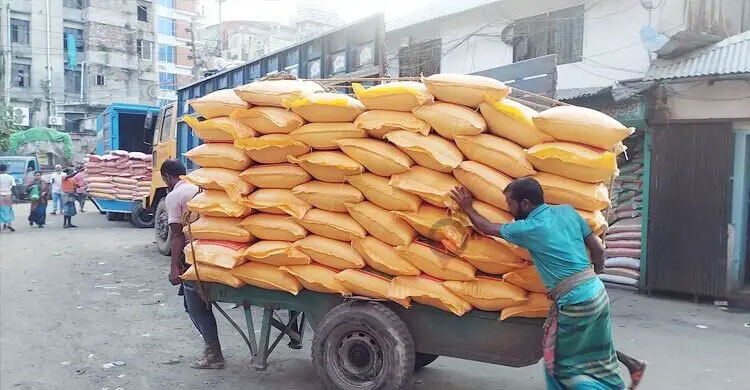
Once hailed as the “Dandi of the East,” the Nitaiganj business hub of Narayanganj was a byword for trade, prosperity, and relentless activity. From dawn till midnight, the air was filled with the clang of metal shutters, the rumble of trucks, and the shouts of porters loading salt, sugar, rice, pulses, oil, and flour.
For nearly two centuries, Nitaiganj stood shoulder to shoulder with Khatunganj in Chattogram and Moulvibazar in Old Dhaka — the holy trinity of Bangladesh’s wholesale commerce. Today, that familiar roar has quieted into an echo. The warehouses are dusty, the docks idle, and the workers — once the beating heart of this market — are struggling to survive.
The slow death of a trading empire
“I’ve been doing business here for 35 years,” said Krishna Babu, manager of Joy Traders, his voice heavy with resignation. “Before, more than a hundred trucks used to load and unload goods every day. Now, not even half that. There was trading from morning till night — now the pace has died down. The buyers are fewer, and the energy is gone.”
That sentiment is shared by almost every trader in the narrow, congested lanes of Nitaiganj. Once lined with stacks of jute bags and busy tea stalls serving hurried breakfasts to traders and labourers, the area now moves at a sluggish rhythm.
Paritosh Saha, manager of Bhai Bhai Traders, remembers a time when the market overflowed with opportunity. “From the nineties to 2005, it was a golden age,” he recalled. “More than a hundred trucks would come every day. Now, we barely get 30 to 40. The rise of big corporate companies dealing directly with consumers has pushed out medium traders like us. We’re struggling to stay alive.”
The workers’ crisis
For the workers who once earned their livelihoods unloading the endless streams of goods, the slowdown has been devastating.
Harunur Rashid, a porter with two decades of experience, described the downturn bluntly: “Traders are in disaster. The workers are in distress. Our income has dropped to a third of what it used to be. It’s not enough to feed a family anymore.”
Another worker, Sarwar Khan, spoke of the unbearable pressure of survival. “Even if you earn a thousand taka now, it’s not enough. Before, I could live decently on five hundred. Many workers have left their jobs and gone back to their villages — there’s no work, no minimum income to live.”
The numbers tell the story. According to Abdur Rahman, president of the Dialpatti Load-Unload Workers Union, the union once had 857 registered members. Now, fewer than 400 remain active.
“If there’s no business, how will workers live?” Rahman asked. “They come to us, desperate, asking for financial help. If this continues, it will be impossible to retain them.”
From salt to sorrow
The collapse has been widespread. Salt and grain trading — once the lifeblood of Nitaiganj — has almost vanished. “There are almost no salt traders left in Narayanganj,” said Jahangir Khan, general secretary of the workers’ union. “The dal and flour traders are barely surviving.”
Mazharul Islam Joseph, director of the Bangladesh Yarn Merchants Association, linked the crisis to the broader economic squeeze. “As people’s income shrinks, so does market activity,” he said. “The busyness and income of workers have both fallen sharply. Maybe business will pick up again if the new government brings stability.”
Waiting for revival
The traders’ hopes now hinge on politics — a rare admission for a group known more for pragmatism than protest.
“The lack of excitement in Nitaiganj today is a reflection of the political situation,” said Shankar Saha, president of the Nitaiganj Wholesale and Retail Traders’ Association. “The country needs a stable, elected government. Only then will people regain confidence — and Nitaiganj might return to its old self.”
For now, the wooden signboards hang faded and the godowns stand half-empty. The market that once fed cities, employed thousands, and symbolised Narayanganj’s commercial pride now struggles to stay awake.
At sunset, as the last few trucks roll out and the clang of chains fades into silence, Nitaiganj seems to whisper to itself — not of what it sells, but of what it once was.