
Traders brace for $1b hit after HSIA blaze

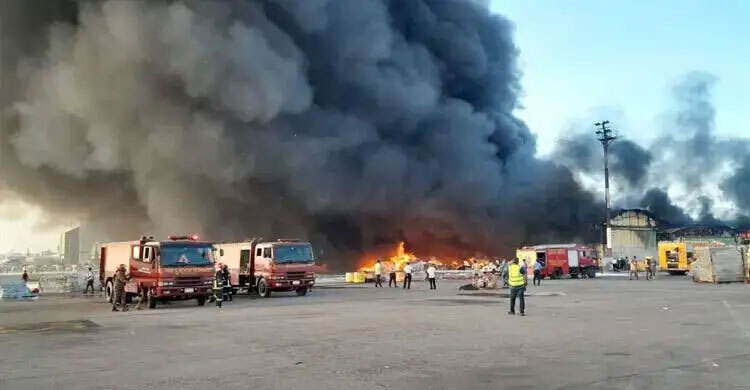
A devastating fire at the Cargo Village of Hazrat Shahjalal International Airport (HSIA) has sent shockwaves through Bangladesh’s export-import ecosystem, with industry leaders warning of potential losses exceeding $1 billion and long-term damage to the country’s global trade reputation.
The blaze, which erupted on Saturday afternoon (October 18) at around 2:30 pm in the heart of the airport’s air cargo hub, brought all cargo operations to a grinding halt for over six hours. Though brought under control by 37 fire units and emergency personnel from the Army, Navy, Air Force, BGB, and Ansar—leaving at least 25 Ansar members injured—the fallout is only beginning.
“A catastrophe for trade”
“This isn’t just a fire—it’s a national trade emergency,” declared Kabir Ahmed Khan, President of the International Air Express Association of Bangladesh (IAEB). “We’re looking at a direct and indirect impact of well over $1 billion on imports and exports.”
The Cargo Village serves as the nerve centre for Bangladesh’s air freight logistics, handling time-sensitive shipments for sectors that power the national economy—especially ready-made garments (RMG) and textiles, which account for nearly one-third of all air cargo by value. Over 60 international courier companies, including DHL, FedEx, and UPS, operate out of the complex, managing everything from raw material imports to finished garment exports.
With warehouses reduced to ash and critical infrastructure damaged, businesses are now scrambling to reroute shipments—often at 3–5 times the normal cost—or face cancellations, penalties, and lost buyer trust.
Ripple effects across industries
Fazle Shamim Ehsan, Executive President of the Bangladesh Knitwear Manufacturers and Exporters Association (BKMEA), confirmed the worst fears: “Buyer samples, fabric consignments, and just-in-time deliveries are stuck. If we miss delivery windows, orders vanish—and so do future opportunities.”
The knock-on effects are already mounting:
Production delays due to missing raw materials
Forced air freight rerouting via Colombo or Dubai at exorbitant costs
Loss of buyer confidence from missed deadlines
Inability to confirm new orders without sample approvals
“This isn’t just about today’s losses,” Ehsan warned. “It’s about eroding Bangladesh’s reliability as a global supplier.”
Business confidence in jeopardy
Taskin Ahmed, President of the Dhaka Chamber of Commerce and Industry (DCCI), called the incident a “severe blow to investor confidence.”
“HSIA isn’t just an airport—it’s a critical trade artery,” he said. “When entrepreneurs can’t guarantee that goods will move safely and on time, they look elsewhere. This fire doesn’t just burn cargo—it burns trust.”
The airport resumed passenger flights by 9 pm Saturday, but cargo operations remain severely disrupted. Industry insiders say full recovery could take weeks, with no clarity yet on insurance coverage or government compensation.
Calls for urgent reform
In the aftermath, trade bodies are demanding an immediate audit of fire safety protocols at HSIA and other logistics hubs, along with a national contingency plan for air cargo emergencies.
“This can’t happen again,” said Kabir Ahmed Khan. “If Bangladesh wants to be taken seriously as an export powerhouse, we need world-class, resilient infrastructure—not warehouses that turn into infernos.”
As smoke clears over Dhaka’s skies, the business community braces for a costly reckoning—one that could reshape how Bangladesh moves its goods in an increasingly competitive global market.