
Dhaka, Kathmandu push for joint hydropower, cross-border power trade

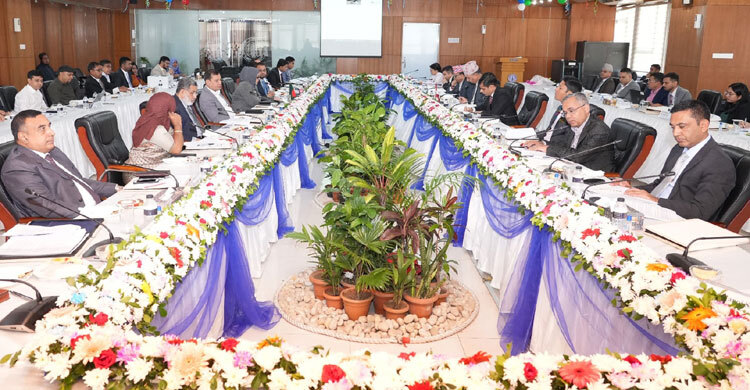
Bangladesh and Nepal have reaffirmed their commitment to deepen collaboration in the power sector, with a strong focus on joint hydropower development and cross-border electricity trade, during the 7th meeting of the Bangladesh-Nepal Joint Steering Committee (JSC) on Cooperation in the Power Sector.
Held at the Bijay Hall of Bidyut Bhaban in Dhaka, the high-level meeting underscored the strategic importance of harnessing Nepal’s vast hydropower potential through bilateral investment and establishing a reliable transmission corridor to export clean energy to Bangladesh.
A key agenda item was the proposed joint-venture hydropower plant in Nepal, to be financed by both countries, alongside plans to import electricity from Nepal via an interconnection grid.
Given that the transmission route would traverse Indian territory, both sides acknowledged the necessity of a tripartite agreement involving Bangladesh, India, and Nepal to facilitate seamless power transfer.
The delegations also explored the possibility of importing an additional 20 MW of electricity through the existing high-voltage direct current (HVDC) link at Bheramara.
Discussions further included encouraging private-sector investment in Nepali hydropower projects and exporting surplus electricity from Bangladesh to Nepal during winter months, when domestic demand falls below production capacity.
Notably, the meeting addressed recent regulatory changes in Bangladesh. Following the repeal of the Special Power Act to promote transparency and competitive tendering in the energy sector, the Letter of Intent (LOI) for importing 500 MW of electricity from the Upper Karnali Hydropower Project – led by India’s GMR Group – has been formally cancelled.
The Bangladesh Power Development Board notified GMR of this decision on August 28.
Beyond infrastructure, the two nations exchanged insights on renewable energy expansion. Bangladesh shared its experience with the national Rooftop Solar Programme, which has already generated approximately 3,000 MW, and offered technical support to Nepal in energy efficiency and energy auditing.
Capacity building emerged as another priority. Bangladesh presented details of the training facilities at the Bangladesh Power and Energy Institute (BPMI) and both sides agreed to launch joint training initiatives.
The potential for tripartite cooperation among Bangladesh, India, and Nepal in technical skills development was also discussed.
The JSC meeting followed the 7th session of the Bangladesh–Nepal Joint Working Group, held on November 26 at the same venue.
The delegations were led by Farzana Momtaz, Secretary of Bangladesh’s Power Division, and Chiranjeevi Chatout, Secretary of Nepal’s Ministry of Power, Water Resources and Irrigation.
The previous JSC meeting took place in Nepal in 2024.
The next gathering – the 8th JSC meeting – is scheduled for October 2026 in Nepal, reflecting the ongoing momentum in bilateral energy cooperation.