
Govt approves direct purchase of 1 lakh tonne crude amid West Asia escalation

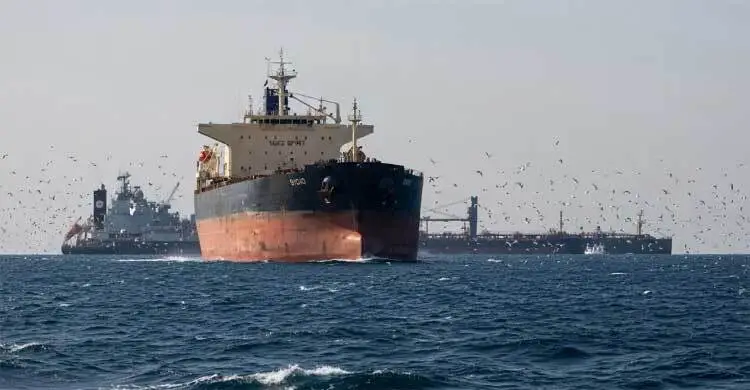
In a decisive move to safeguard national energy security amid escalating geopolitical tensions, the Cabinet Committee on Economic Affairs has granted in-principle approval for the emergency import of 1,00,000 tonnes of crude oil through direct procurement from international markets.
The decision, taken at a meeting chaired by Finance Minister Amir Khosru Mahmud Chowdhury on Tuesday, reflects the government's urgent response to supply chain vulnerabilities arising from the ongoing conflicts involving Iran and the US-Israel axis.
The proposal, presented by the Energy and Mineral Resources Division, authorises the acquisition of crude oil from 'Abir Trade and Global Markets' via a direct purchase mechanism, bypassing conventional tender processes to expedite delivery.
Officials emphasised that the initiative is a precautionary measure designed to bolster strategic fuel reserves and ensure an uninterrupted domestic supply in the face of potential market disruptions. "The ongoing geopolitical situation has created significant instability in international energy markets," a meeting source confirmed. "In this context, maintaining adequate fuel reserves is not merely prudent; it is essential for economic continuity."
Alongside the crude oil approval, the committee also granted in-principle clearance for the purchase of 60,000 tonnes of gas oil with 0.5 per cent sulphur content (diesel) from PT Bumi Siak Pusako Japin (BSP Japin) of Indonesia. This dual-track approach underscores the government's strategy to diversify supply sources while accelerating procurement timelines.
A further approval was issued for 1,00,000 tonnes of EN590-10 ppm sulphur-standard diesel from Exxon Mobil Kazakhstan Inc. (EMKI), reinforcing Bangladesh's efforts to secure high-quality, low-emission fuel amid tightening global specifications.
Not all proposals advanced, however. Two submissions were withdrawn during the meeting at the request of the Energy and Mineral Resources Division: a plan to procure 1,00,000 tonnes of crude oil from Hong Kong-based Falco Corporation Limited, and a separate bid for 60,000 tonnes of diesel via direct purchase from US-based Archer Energy LLC.
A further proposal to acquire 100,000 tonnes of 50 ppm sulphur-standard diesel from Maxwell International SPC was also removed from discussion.
While the specific reasons for these withdrawals were not disclosed, industry observers suggest that pricing, logistical feasibility or compliance considerations may have influenced the decisions.
The shift towards direct procurement reflects the heightened urgency of the current environment. Traditional tender processes, while transparent and competitive, can entail lengthy evaluation periods incompatible with crisis response timelines.
By opting for direct purchases from pre-vetted international suppliers, Bangladesh aims to secure critical fuel volumes within weeks rather than months.
This approach, however, carries its own risks, including reduced price competition and heightened scrutiny over due diligence protocols.
Finance Minister Amir Khasru Mahmud Chowdhury, chairing the Committee, emphasised that fiscal prudence would remain paramount even amid emergency measures. "We are acting decisively to protect our energy security, but every expenditure must be justified, every contract scrutinised," he stated.
The Energy and Mineral Resources Division is now tasked with finalising contractual terms, arranging shipping logistics and coordinating with the Bangladesh Petroleum Corporation for refining and distribution.
As the West Asia conflict continues to evolve, the risk of further supply chain disruptions cannot be discounted. Shipping routes through the Strait of Hormuz remain vulnerable, insurance premiums for tankers have risen sharply, and currency fluctuations add another layer of complexity to import financing.