
Mocked to his breaking point: Mushfiq’s death haunts EWU
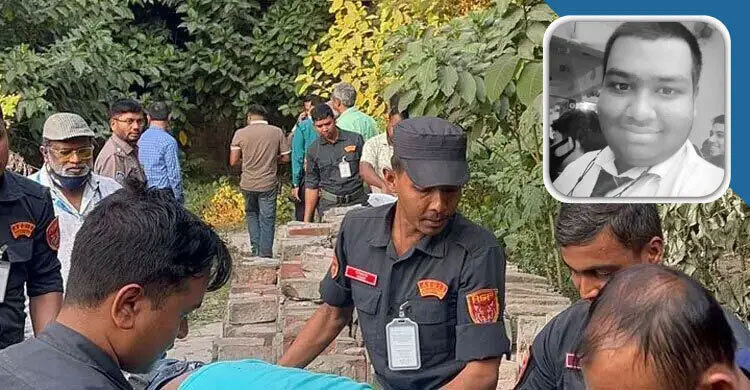
What does it take to push a gentle, soft-spoken young man to the edge of a rooftop?
For DM Mushfiquzzaman, it wasn’t one moment it was a lifetime. A lifetime of jokes dressed as fun, comments disguised as concern, and laughter wrapped in cruelty.
On Saturday afternoon, the 19-year-old student at East West University fell to his death between two campus buildings. Police say CCTV footage shows him jumping. His family believes he may have been threatened. But everyone agrees on one thing: he was broken long before he hit the ground.
A childhood shadow that followed him into adulthood
From school uniforms to university ID cards, Mushfiq carried more than books in his bag. He carried the echoes of classmates who laughed at his dark complexion, the taunts about his weight, the subtle looks when he spoke.
Friends say he faced this torment for years.
His school friend Adib Ahmed wrote in a Facebook post, “Mushfiquzzaman was my classmate. I saw firsthand how many students used to bully him for the way he spoke and for his appearance. After enduring such treatment for so many years, he finally went to university—only to lose his life because of the same cruelty. I cannot accept this.”
Even teachers, at times, made passing jokes about his appearance.
“He never showed anger,” said a school friend. “He smiled. But the pain settled inside.”
His mother, Kamala Akhter, remembers a young boy who used to come home and describe the teasing. “As he grew older, he stopped sharing,” she said, her voice trembling. “But I could see the sadness. I could see my child breaking quietly.”
University was his hope – instead, it became his final battlefield
When he entered East West University, Mushfiq hoped for a fresh start.
But the cruelty followed.
Classmate Al Shahriar Emon, who sat next to him in class, shared a heartbreaking confession: “Whenever he asked a question, 60 per cent of the class laughed. They judged his voice, his clothes, his skin. Even when his body was lying on the ground, some of them still made comments. A dead body was being body-shamed.”
This was not bullying from strangers.
These were students who sat beside him every single day.
The last words his classmates heard
Minutes before his death, Mushfiq sat in class in the Farashuddin Building.
Someone commented on his loud laughter.
He tried to defend himself.
“You people always make fun of me,” he said, visibly hurt. “You don’t want to mix with me because I’m fat and black.”
He walked out.
No one knew it would be the last time they saw him alive.
A classmate of Mushfiq, requesting anonymity, told Jago News, “We were all waiting for the teacher and chatting among ourselves. Someone made a comment to Mushfiq, and he responded by joking about another friend and laughed loudly. Some students then told him, ‘Don’t laugh so loudly, you’re disturbing us.’ Mushfiq seemed hurt by this.”
The classmate said that Mushfiq then spoke up, saying, “You make fun of me all the time and laugh at me. No one says anything then about the class being disturbed. The truth is, you can’t tolerate me. Remember, no one is perfect – everyone has flaws.”
Another student reportedly responded, “Mushfiq, we’re not saying anything to you. So why are you talking like this?”
To this, Mushfiq replied, “Your behaviour shows that you always make fun of me. You don’t even want to mix with me. You do this because I am fat and dark-skinned.”
Immediately after saying this, he walked out of the classroom.
“We thought he had gone to complain to the department chair,” the classmate said. “We expected the teachers to walk in any moment and scold us. But shortly afterward, we heard that Mushfiq’s body had been found on the ground below.”
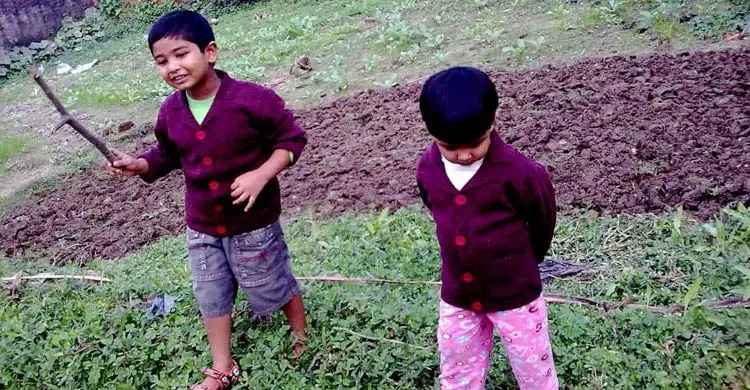
Mushfiq’s childhood picture.
A mother’s cry: ‘Being born black—is that a crime?’
At their home in Khilgaon, Mushfiq’s mother repeats one question over and over: “Why did they treat my son like this?”
“Being born with darker complexion – is that a crime?” she cried. “My son was gentle, polite, focused only on studies. He carried the pain quietly. But he would never take his life. I know my son.”
She cannot accept suicide.
“My son was good, innocent. He didn’t smoke, didn’t waste time, didn’t hurt anyone. He cared only about studies and family. He cannot take his own life. Somebody pushed him emotionally — or physically.”
His father added: “Three days ago, some classmates tried to take him to the roof. How is that not suspicious?”
Silence from the university, fear among students
For two days, students waited for the university’s response.
There was no press briefing.
No counselling announcement.
Only a short condolence message.
Inside the campus, fear hangs like thick fog.
Some students say they feel guilty.
Others fear being blamed.
Many are shocked at how normalised ridicule has become.
A teacher admitted: “He complained before about classmates’ behaviour. But we never imagined it would reach this point.”
From November 20 to 22, repeated attempts were made to contact the university’s proctor, Professor Dr Anisur Rahman, for comment. However, he did not respond to phone calls.
Later, when several assistant proctors were approached, they declined to speak to the media. Two of them, requesting anonymity, said the university had begun examining whether Mushfiquzzaman had been subjected to bullying or body shaming on campus. They added that the administration would review whether any prior complaints had been lodged with faculty members. A committee may be formed to investigate the matter, they said.
Police call it “probable suicide”, family calls it “murder”
Badda Police say CCTV footage shows him going to the rooftop alone. No one else appears before or after.
But the family insists the truth requires deeper digging.
Mushfiq’s father, BM Mukhleshuzzaman, said, “Three or four days ago, Mushfiq had an argument with some classmates over academic matters. I heard about it from his mother. He told her that they had tried to take him to the roof. That is why we suspect he may have been killed in a planned manner.”
He added, “I’ve heard that Mushfiq was bullied — that hurtful comments were made about his body and skin colour. If that is true, then those who pushed my son to this point must be held accountable for incitement.”
Mushfiq’s uncle, Mushfiquzzaman Monir, echoed the family’s disbelief. “Under no circumstances could our Mushfiq have taken his own life by jumping. Whether someone pushed him or he fell due to some other reason, it must be thoroughly investigated.”
“We want a proper investigation,” he said. “If anyone drove him to that rooftop, then this is murder.”
When asked about the case or potential legal action, Badda Police Station officer-in-charge (OC) Habibur Rahman told Jago News, “A case of unnatural death has been filed in this incident. However, if the autopsy report reveals anything different, or if the family or the university files a complaint, it will be taken into consideration and investigated.”
Experts warn: Bullying leaves invisible scars
Psychiatrist Professor Dr Helal Uddin Ahmed told Jago News that body shaming and bullying amount to severe psychological abuse. “When such behaviour comes from people close to you, it causes deep emotional wounds. Classmates are the individuals students spend the most time with – studying, talking, and socialising. When those same people constantly mock someone’s appearance, skin colour or mannerisms, it creates intense mental distress. No matter how strong a person is, continuous humiliation becomes unbearable,” he said.
He emphasised that educational institutions must work with all students – not just victims – to stop such behaviour. “Simply advising those who suffer is not enough. Those who bully, whether knowingly or unknowingly, should also receive counselling. Teachers must remain alert, and institutions should treat bullying and body shaming as punishable offences. Only then will genuine awareness grow among students,” he added.