
Schools going hybrid: 3 days in-person, 3 days online

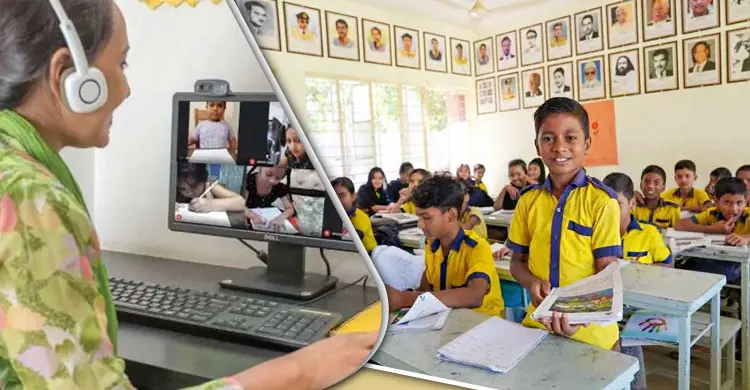
The government is planning to introduce a hybrid learning system under which students will attend classes in educational institutions three days a week and join online sessions on the remaining days, Education Minister Dr ANM Ehsanul Haque Milon said on Thursday.
The announcement signals a potential shift in Bangladesh’s education model, blending traditional classroom teaching with digital learning to adapt to changing realities.
The minister said the Ministry of Education is considering holding in-person classes on Saturdays, Mondays and Wednesdays. Online classes would be conducted on the other days.
“We want to bring students to educational institutions on Saturdays as well,” he said, adding that academic activities would continue in person on Sundays in line with institutional schedules.
The minister shared the update at a press conference at the International Mother Language Institute on Thursday.
Why the shift
The move comes as Bangladesh continues to reassess its education system following the disruptions caused by the COVID-19 pandemic, which forced a prolonged reliance on online learning. While virtual classes helped maintain continuity, they also exposed gaps in access to devices, internet connectivity and student engagement.
Education experts have since been advocating a blended model that can combine the flexibility of online learning with the effectiveness of face-to-face instruction.
Officials say the proposed structure aims to ease classroom pressure, better utilise infrastructure and gradually strengthen digital education capacity across institutions.
What it could mean
If implemented, the hybrid system would mark one of the most significant structural changes in the country’s education delivery in recent years. It could also require adjustments in academic calendars, teacher training and digital infrastructure.
The ministry has not yet announced when the new model might be rolled out, but officials indicated that preparations are underway to expand capacity and ensure a smoother transition.
The government believes the initiative could modernise the education system while making it more resilient to future disruptions.