
Breaking barriers on the rail Everyone forbade, but Tanzina didn’t give in
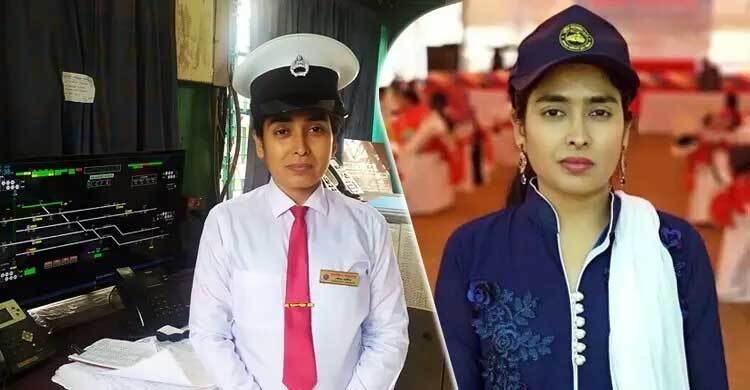
When Tanzina Shahnaz first told her family she wanted to join the railway, the response was unanimous: No.
Her father, Mohammad Abul Kalam Azad, a veteran railway official, warned her of the punishing night shifts and the dangers of station work.
Her mother urged her to choose teaching – a safer, more respectable profession for a young woman.
But Tanzina, sitting today before the glowing control panel of Chattogram Junction cabin, remembers those words with quiet defiance. Everyone forbade it, but she did not give in.
Growing up on the rails
Tanzina’s childhood was steeped in railway life. Her father began as an assistant station master and retired as Chattogram station manager in 2019. She grew up in the railway colony, where the tracks were both playground and backdrop. Train rides to her ancestral home in Brahmanbaria were magical journeys – watching birds skim the horizon, farmers bent over fields, and humming songs against the rhythm of the wheels. Those journeys planted a fascination that would later become her profession.
Interrupted dreams, renewed resolve
Illness forced her to pause her studies before completing higher secondary school. She taught at a kindergarten, feeling left behind as her peers advanced. Later, in Chattogram, she rebuilt her academic path – earning degrees in political science and even an MBA, imagining a career in banking. But destiny intervened. A cousin encouraged her to apply for the railway recruitment exam. Against her father’s protests, she sat for it and passed.
Learning the signals
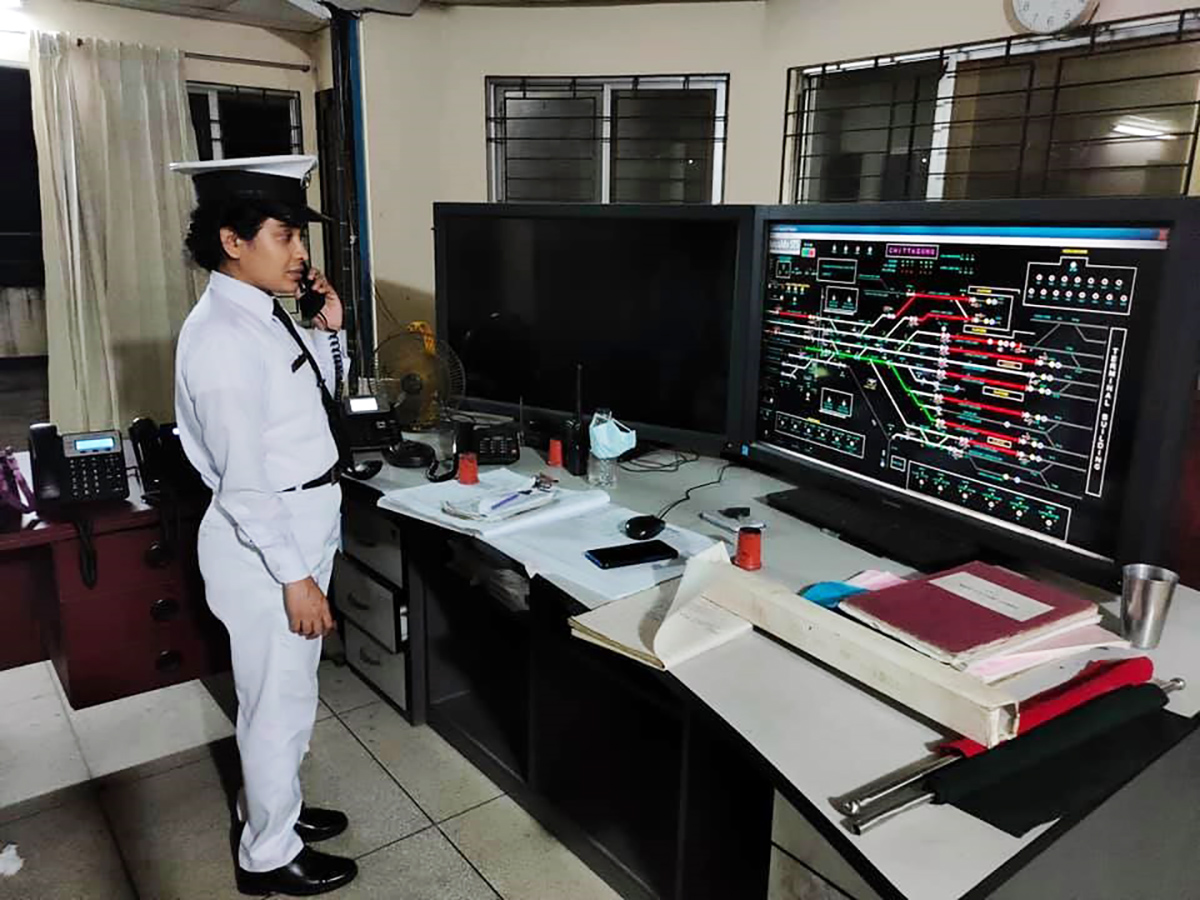
At the Railway Training Academy in Halishahar, she endured four months of rigorous training: mastering control panels, signalling, platform allocation, and emergency response. She learned to coordinate with control centres, gatemen, and locomotive sheds. “Digital or manual, this work requires full concentration. Even a slight deviation can lead to disaster,” she explains. In six years of night shifts, she has never made a major mistake.
Strategy and recognition
From the very beginning of her career, Tanzina made schedule optimisation her hallmark. “I have always tried to set clear priorities for train arrivals and departures so delays can be reduced as much as possible,” she explained. “Sometimes this meant taking calculated risks, and my colleagues warned me against it. But I trusted my judgement.”
She illustrated the point with a vivid example. At Chattogram terminal, a locomaster might hesitate for two or three minutes after receiving the clearance signal, allowing passengers to board. For most, those minutes were dead time. For Tanzina, they were opportunity. She would use that narrow window to signal an incoming train to enter the station, rather than leaving it idling outside.
It was a small but decisive adjustment, one that kept the system flowing smoothly. The manoeuvre caught the attention of senior officials at the Pahartali Control Office. What began as a risky calculation soon became a recognised strategy, earning her praise and trust long before her position was made permanent.
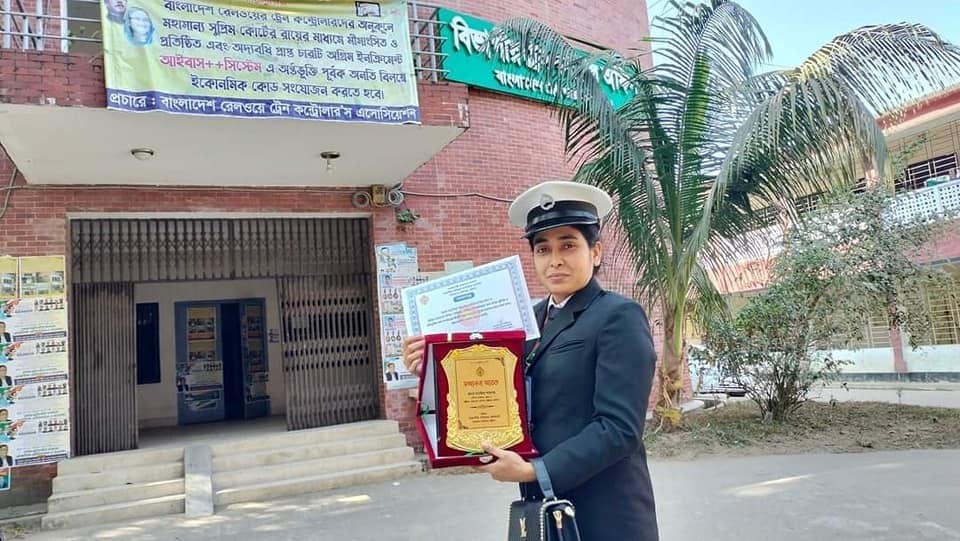
Praise turned into trust, and recognition came early. In 2023, the Divisional Transport Officer’s office formally honoured her sense of responsibility. “I was thrilled,” she recalls. “It inspired me to do better.”
Fearless in the night
Night duty is the hardest part of the job. Her mother worried about safety, warning her of trouble. But Tanzina laughs off the fears. “If someone told me there was something scary in the dark, I would be eager to go there.” She has walked the station grounds at midnight, never encountering the ghosts of railway lore. Instead, she found only the hum of engines and the silence of steel tracks.
Sacrifice and style
She has worked sick, carrying medicine in her bag. She has endured exhaustion, nightmares of train collisions, and relentless phone calls. Yet she never quit. Colleagues call her a robot for her speed and precision. She smiles at the nickname. “Working quickly and being serious is my style. I really enjoy my job. I really like sitting in the station master’s room.”
A woman’s place on the rails
Tanzina believes women need only the chance to prove themselves. Facilities exist, but safety remains a concern. “If the environment is harassment-free, women can work long hours,” she insists. She is not married, but she does not see her career as a sacrifice. Instead, it is fulfilment. Her advice to aspiring women station masters: be punctual, be focused, and trust your ability.
The railway girl who would not give in
From a childhood of train rides to Brahmanbaria, humming songs over the wheels, to nights spent ensuring trains run safely through Chattogram Junction, Tanzina’s journey is one of resilience. Everyone forbade it. Her father, her mother, her colleagues. But Tanzina, the railway girl, did not give in. And in the rhythm of the rails, she found her calling.