
Are India’s skies safe?

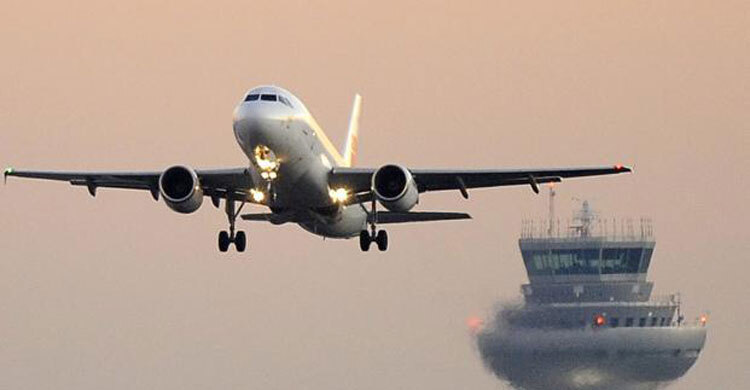
The catastrophic Air India crash on June 12, 2025, which claimed at least 274 lives when a London-bound Boeing 787-8 Dreamliner crashed seconds after take-off from Ahmedabad, has reignited political and public debate over the safety of India’s rapidly expanding aviation sector.
The tragedy, the third major aviation accident in India in 15 years, has intensified scrutiny on regulatory oversight, airline maintenance practices, and the government’s prioritisation of the sector amid budget cuts.
Faiz Ahmed Kidwai, Director General of the Directorate General of Civil Aviation (DGCA), defended India’s aviation safety record in an interview with the BBC, stating, “India’s skies have always been safe, and they remain so today.”
Citing International Civil Aviation Organisation (ICAO) metrics, Kidwai noted that India’s accident rate per million flights consistently outperforms the global average, with only two years between 2010 and 2024 exceeding it—2010, when Air India Express Flight 812 crashed in Mangalore (158 deaths), and 2020, when Flight 1344 skidded off a runway in Kozhikode (21 deaths).
However, opposition leaders, including Congress MP Shashi Tharoor, have criticized the government’s handling of aviation safety, arguing that budget cuts to the Ministry of Civil Aviation—down 15% since 2023—have strained regulatory capacity.
Recent incidents have fuelled concerns. In March 2025, the DGCA reprimanded Air India Express for delaying mandatory engine part replacements on an Airbus A320 and falsifying compliance records, a lapse the airline acknowledged and addressed with remedial measures.
Separately, The Economic Times reported that SpiceJet, India’s fourth-largest carrier, faced DGCA scrutiny after a British firm, Dowty Propellers, flagged premature propeller failures on two De Havilland Q400 turboprops. The issue, linked to damaged internal bearings, was exacerbated by SpiceJet’s alleged practice of applying excess grease rather than addressing the root cause. The DGCA’s April audit uncovered further maintenance deficiencies, prompting the suspension of several SpiceJet officials.
Kidwai emphasised a growing culture of self-reporting, noting that airlines reported 2,461 technical faults since 2020, with IndiGo (1,288), SpiceJet (633), and Air India/Air India Express (389) leading the tally as of January 2025. “This is good,” he told the BBC. “It’s better for every snag to be reported than to operate aircraft unsafely.” However, critics argue that the DGCA’s reactive approach—often relying on external alerts, as in the SpiceJet case – highlights understaffing and inadequate proactive oversight.
A May 2025 IndiGo flight from Delhi to Srinagar, carrying 222 passengers, encountered severe turbulence and hail, damaging the Airbus A321’s nose and dislodging overhead bins.
The crew’s emergency landing was successful, but the incident led to the grounding of two pilots and a DGCA investigation. Kidwai said the regulator has since tightened pilot guidelines for turbulent conditions, mandating specific actions – such as diversions – when weather risks are detected.
India’s aviation sector has grown dramatically, with 1,288 aircraft in operation (up from 400 a decade ago), 239 million annual passengers (double the 2014–15 figure), and 130-140 commercial aerodromes. By 2030, the fleet is projected to exceed 2,000 aircraft. Yet, the Ministry of Civil Aviation’s budget cuts have sparked political friction, with opposition leaders like Aam Aadmi Party’s Sanjay Singh accusing the Modi government of neglecting safety for profit-driven expansion.
Civil Aviation Minister Jyotiraditya Scindia countered that the DGCA’s “stringent oversight” ensures safety, citing plans to hire 200 additional inspectors by 2026.
The Air India crash has not significantly dented passenger numbers, with Kidwai reporting only a marginal, temporary dip in traffic. “Time heals anxiety,” he said, though public trust remains fragile. As investigations into the Ahmedabad crash continue, with preliminary findings suggesting a dual-engine failure, political pressure is mounting for systemic reforms to address maintenance lapses, training gaps, and regulatory funding to secure India’s skies.
Source: BBC