
Ukraine should abandon Crimea, and NATO ambitions: Trump

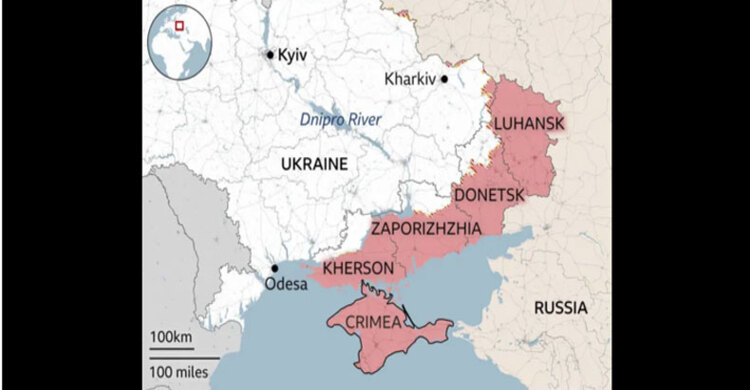
US President Donald Trump has urged Ukraine to relinquish hopes of regaining the annexed Crimean Peninsula or joining NATO, as he prepares to host President Volodymyr Zelenskyy and European leaders in Washington in a bid to push Kyiv toward a peace deal with Russia.
The remarks come ahead of high-stakes meetings at the White House on Monday, following Trump’s controversial summit with Russian President Vladimir Putin in Alaska on Friday. After welcoming Putin with what critics called an overly warm reception, Trump is now pressuring Ukraine to accept a negotiated settlement to end Europe’s deadliest conflict in over 80 years – one that has killed tens of thousands and displaced millions.
The White House confirmed that Trump will meet Zelenskyy first in the Oval Office at 1:15 pm EDT (17:15 GMT), followed by a joint session with leaders from the UK, Germany, France, Italy, Finland, the European Union, and NATO in the East Room at 3:00 pm EDT (19:00 GMT).
European leaders are travelling to Washington to demonstrate solidarity with Ukraine and to advocate for strong, enforceable security guarantees in any post-war arrangement.
Trump’s team said on Sunday that both sides must make concessions. However, the US president has placed the onus squarely on Zelenskyy to end the war that Russia escalated with its full-scale invasion in February 2022.
His comments on Crimea, seized by Russia in 2014 during Barack Obama’s presidency, and Ukraine’s NATO aspirations suggest he will apply significant pressure during Monday’s talks.
“Zelenskyy can end the war with Russia almost immediately, if he wants to, or he can continue to fight,” Trump posted on Truth Social. “Remember how it started. No getting back Obama-given Crimea (12 years ago, without a shot being fired!), and NO GOING INTO NATO BY UKRAINE.”
Ukraine and its Western allies have long feared that Trump might broker a deal favourable to Moscow. Yet some have taken cautious encouragement from signs that he may support post-conflict security assurances for Ukraine.
Still, Zelenskyy has already effectively dismissed the outline of Putin’s demands discussed in Alaska, including Ukraine’s surrender of the remaining parts of the eastern Donetsk region, where Kyiv currently controls around a quarter.
Instead, Zelenskyy is calling for an immediate ceasefire to allow for deeper peace negotiations. While Trump previously supported such a pause, he shifted position after the Alaska summit, now backing Russia’s preference for pursuing a comprehensive agreement while fighting continues.
Arriving in Washington late on Sunday, Zelenskyy sought to avoid a repeat of his tense Oval Office meeting with Trump in February. He expressed gratitude for the invitation, stating: “We all equally want to end this war swiftly and reliably. Russia must end this war, the war it started. And I hope that our shared strength with America and our European allies will compel Russia toward real peace.”
Even as diplomacy unfolds, the war rages on. Overnight, Russia launched missile and drone attacks across Ukraine, including on Kharkiv—its second-largest city, near the Russian border—killing seven people, among them two children, officials said.
“They hit an ordinary apartment block,” said local resident Olena Yakusheva as firefighters battled flames and rescue workers sifted through rubble. “Many flats, many families lived here -small children, a playground, a residential complex. There are no offices or military installations. We lived here peacefully in our homes.”
On the battlefield, Russian forces continue to make slow but steady advances, leveraging their superiority in manpower and firepower. President Putin has vowed to fight until his military objectives are achieved.
The proposed terms from Putin, as reported by Reuters, appear unacceptable to Kyiv. Ukrainian forces remain entrenched in the Donetsk region, where towns and elevated terrain form a vital defensive buffer against further Russian incursions.
Fearing exclusion from key decisions after being left out of the Alaska summit, European leaders held a coordination call with Zelenskyy on Sunday to align on a common strategy ahead of the Washington talks.
“It’s important for the Europeans to be there,” said Oleksandr Merezhko, a Ukrainian MP from Zelenskyy’s party. “Trump respects them. He behaves differently when they are present.”
British media captured the moment with dramatic headlines: the Daily Mail dubbed it “D-Day at the White House,” while the Daily Mirror declared “Europe takes a stand.” Germany’s Die Welt described it as the “moment of truth” for the US president.
“It is probably not an exaggeration to say the whole world is watching Washington,” said German Foreign Minister Johann Wadephul at a press briefing.
Relations between Kyiv and Washington, once exceptionally close, have been strained since Trump’s return to the White House in January. Yet Ukraine’s urgent reliance on American weapons and intelligence, much of which has no viable alternative, has left Zelenskyy and his allies with little choice but to engage.