
Taliban’s rules, Delhi’s compliance: India silences women journalists for Afghan FM

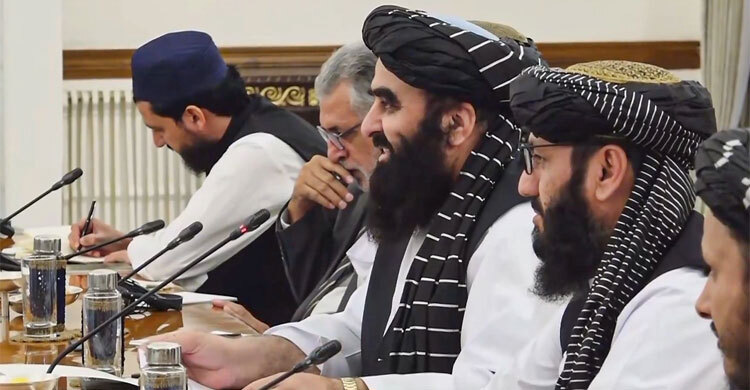
A storm of outrage has erupted in India after women journalists were barred from attending a press conference held by Afghanistan’s Taliban Foreign Minister, Amir Khan Muttaqi, during his official visit to New Delhi.
The event, hosted at the Afghan Embassy on Friday, selectively invited only male journalists—sparking condemnation from across India’s political spectrum and the media community.
What has shocked many even more is New Delhi’s silence. The Indian Ministry of External Affairs (MEA) neither condemned the blatant act of gender discrimination nor clarified whether it protested against the exclusion. On Saturday, the MEA merely distanced itself, claiming it “had no role” in the embassy’s press arrangements—an explanation critics have called a cop-out.
The Hindu’s diplomatic editor Suhasini Haidar posted sharply on X: “They are guests of the Indian government, yet the Afghan Foreign Minister is allowed to impose his misogynistic policies here. The Taliban have brought their discrimination to India. This is not realism—it’s surrender.”
Smita Sharma, another senior journalist, noted bitterly that “not a single word in Jaishankar’s speech or statement mentioned Afghan women’s suffering. Yet the Taliban FM was welcomed with red carpet treatment in a country that prides itself on women’s progress.”
Several journalists urged male colleagues to boycott the event in solidarity. “Male journalists should have refused to attend,” wrote Bijeta Singh. “This is not just the Taliban’s insult to women—it’s India’s complicity.”
The political backlash was swift. Congress leader Priyanka Gandhi Vadra demanded answers from Prime Minister Narendra Modi, asking, “How could this humiliation of our country’s women be allowed? If your recognition of women’s rights isn’t just an election slogan, clarify your stance.”
Trinamool MP Mahua Moitra called it “an insult to every Indian woman” and accused the government of “spinelessness in the face of Taliban diktats.” Former Finance Minister P. Chidambaram wrote that he was “shocked by India’s surrender to primitive customs,” adding that “male journalists should have boycotted the event in protest.”
Despite the uproar, the Indian government has yet to issue a statement condemning the exclusion. The optics have only worsened as Muttaqi’s visit—officially invited by New Delhi—continues amid reports that India plans to fully reopen its embassy in Kabul and accept new Afghan diplomats in Delhi.
In a particularly symbolic moment, Muttaqi’s press conference featured no Indian or Afghan national flags—except a small white Taliban flag he placed on the table himself.
For a government that often champions “nari shakti” on global platforms, its silence on Taliban-style misogyny inside the capital has left many asking: has India just hosted a press conference where women’s rights were erased—with official permission?