
Pakistan closes border crossings with Afghanistan

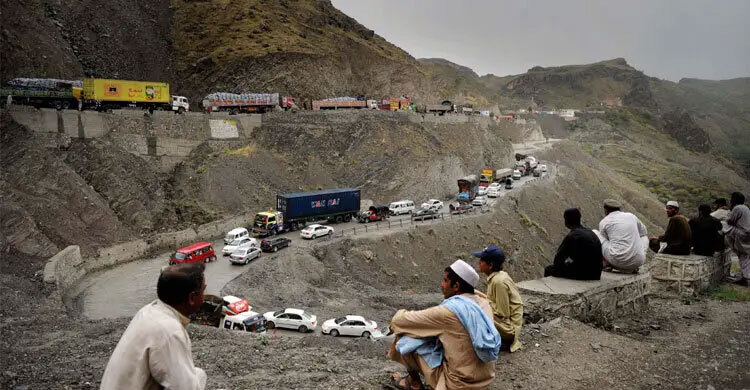
Pakistan shut all major land border crossings with Afghanistan on Sunday following a deadly exchange of fire between the two nations’ security forces, officials confirmed.
The escalation began late Saturday when Afghan troops opened fire on Pakistani border posts. Afghanistan’s Ministry of Defence stated the attack was in retaliation for unconfirmed Pakistani airstrikes inside Afghan territory earlier in the week—reportedly targeting a senior leader of the Tehreek-e-Taliban Pakistan (TTP) in Kabul on Thursday. It remains unclear whether the TTP commander survived.
Pakistan responded with sustained gunfire and artillery, destroying several Afghan border outposts, according to Pakistani security sources. While the bulk of the fighting subsided by Sunday morning, intermittent gunfire continued in Pakistan’s Kurram district, local officials and residents reported.
In response to the security situation, Pakistan closed its two primary border crossings—at Torkham (Khyber Pakhtunkhwa) and Chaman (Balochistan)—along with at least three minor crossings at Kharlachi, Angoor Adda, and Ghulam Khan.
There was no immediate comment from the Taliban-led administration in Kabul regarding the border closure. However, Taliban spokesman Zabihullah Mujahid asserted on Sunday: “There is no kind of threat in any part of Afghanistan’s territory,” adding that Afghan forces had concluded their operation at midnight local time.
Relations between the two neighbours have sharply deteriorated since the Taliban’s return to power in 2021. Islamabad accuses the Afghan Taliban of providing safe haven to TTP militants who launch attacks inside Pakistan—a charge Kabul denies. The TTP, which seeks to overthrow Pakistan’s government and impose a strict Islamic regime, has long maintained close ideological and operational ties with the Afghan Taliban.
With the 2,600-kilometre (1,600-mile) border now effectively sealed, trade and civilian movement between the two countries face significant disruption, raising concerns over humanitarian and economic fallout in border regions.